What a 12V battery is
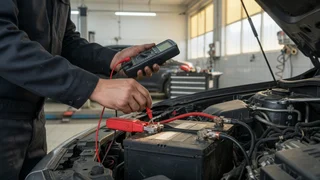
A 12V battery is the rechargeable electrical storage unit that supplies baseline low-voltage power to most passenger vehicles. Drivers searching for what is a 12v battery usually encounter this component as the familiar rectangular unit under the hood, yet its role extends well beyond starting the engine. It stabilizes system voltage for lighting, infotainment, body controllers and security modules. Because modern cars depend on steady electrical behavior, understanding this unit helps owners interpret normal terminal readings, charging output changes and the occasional voltage drop that can cause confusing symptoms.
Essential answer
In automotive terms, a 12V battery is a six-cell lead-acid storage device. Each cell produces approximately 2.1 volts, giving a nominal system voltage of about 12.6 volts at rest. The twelve-volt label is a practical classification, not a constant measurement. The unit stores chemical energy and converts it to electrical current at the battery terminals when the starter, lights or accessories demand power. Its ability to release a large current quickly makes it suited to cranking an internal combustion engine.
The key qualification involves operating state. With the engine off, a healthy unit typically rests in the mid-to-upper twelve-volt range. After starting, the alternator raises charging output above that resting value. A reading in the low fourteen-volt range while running does not mean the battery is overcharged; it indicates the charging system is actively restoring energy. Both measurements belong to the same 12-volt architecture and help owners distinguish battery condition from charging system performance.
How it works
Inside the case, lead dioxide and sponge lead plates sit in a sulfuric acid solution. During discharge, a chemical reaction converts the plates to lead sulfate and releases electrons through the battery terminals. Recharging reverses this process. The design stores enough energy for repeated starts while accepting current from the alternator. Because the reaction slows in cold weather, available cranking current falls even when state of charge is unchanged, which explains harder starting on winter mornings.
The battery also functions as an electrical buffer. When charging output briefly falls below demand at idle, the unit supplies the difference to keep system voltage stable. When the alternator produces more current than the vehicle needs, the battery accepts a charge. This exchange smooths voltage spikes and ripple from the alternator. In parked vehicles, small but continuous loads such as memory circuits and security receivers create a mild parasitic draw that the battery must sustain without falling below usable reserve.
Strengths, limitations and suitability
A conventional 12V lead-acid battery offers high cranking current, broad availability and relatively simple state-of-charge estimation from rest voltage. For most gasoline and diesel vehicles, it remains a cost-effective power source that tolerates underhood temperature swings. Its predictable behavior lends itself to basic testing with a voltmeter or load tester. Owners can interpret terminal readings without specialized electronics, making routine checks accessible even for non-specialists.
The main limitations appear under repeated deep discharge and short-trip driving. Draining the unit well below its normal range accelerates sulfation and permanently reduces capacity. A vehicle used mostly for brief errands may not allow enough charging time to recover after each start. Some newer models with start-stop systems or numerous electrical accessories require an absorbent glass mat design with better charge acceptance. Selecting an appropriate replacement involves matching group size, terminal orientation and capacity to the vehicle wiring diagram and fuse rating.
Procedure
A routine inspection starts with the engine off and the key removed. Confirm the battery is secure in its tray and that the terminal connections are tight and free of heavy corrosion. A wiring diagram helps identify any auxiliary leads attached directly to the clamps. Corrosion on contact faces increases resistance and can create a voltage drop under starter load. If cleaning is needed, disconnect the negative cable first and reconnect it last to reduce the chance of a short circuit.
For a state-of-charge check, allow the vehicle to sit undisturbed for several hours so surface charge dissipates. Measure across the battery terminals with the ignition off. A reading in the upper twelve-volt range generally indicates a full charge, while a lower value suggests the unit needs recharging or has lost capacity. To evaluate the charging system, start the engine and measure again. Voltage should rise by several volts and remain relatively steady, confirming the alternator is producing sufficient charging output.
Diagnosing a problem
A slow crank, click, or no-start condition may not mean the battery has failed. Loose or corroded terminals and poor ground connections can produce the same symptoms by adding resistance in the high-current starting circuit. A measurable voltage drop across a connection while cranking indicates a contact issue rather than an internal fault. If the resting voltage remains low after a full recharge, reduced capacity from age or repeated discharge is more likely.
A car that is dead after sitting may point to excessive parasitic draw or a module that is not entering sleep mode. Measuring current draw with the ignition off can reveal whether the background load exceeds expected levels, especially if the symptom began after adding an accessory. A fault code from a body control module may hint at a circuit staying active, but such a code is evidence to investigate, not confirmation that a specific component has failed. Manufacturer-dependent codes require vehicle-specific information before parts are replaced.
Repeated undercharge, overcharge, or a battery warning light shifts attention to the alternator, voltage regulator, or wiring. The battery may be the victim of a failing charging system rather than the cause. Observing whether the symptom occurs during high electrical demand, after long highway runs, or only on short trips helps distinguish a weakened unit from insufficient charging output or a faulty connection in the vehicle electrical path.