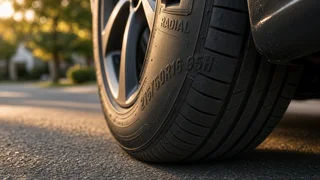
What Happens If You Exceed the Tire Speed Rating
Exceeding the speed rating molded into a tire sidewall is a serious operating condition, not a harmless brief overshoot. The letter code tied to your tire size and load index represents a maximum sustained speed under controlled conditions, with the vehicle placard and inflation pressure establishing the intended baseline. Going over that limit can raise heat, stress the casing, and eventually cause tread or belt separation. The risk depends on duration, load, pressure, and how far beyond the rating the vehicle travels, so even a short high-speed run deserves attention after the event.
Essential answer
A tire speed rating is a laboratory-derived capability, not an open-ended performance promise. When a driver exceeds it, the tire operates outside its validated thermal and structural range. Heat builds faster than it can dissipate, and the compounds that hold the tread, belts, and sidewall together begin working under unproven stress. The immediate consequence may be invisible, but damage can accumulate and later appear as a bulge, vibration, or sudden air loss.
This does not mean a tire instantly fails the moment the rating is passed. Brief excursions above the marked limit can occur during overtaking or downhill acceleration without immediate destruction. However, the safety margin narrows quickly, especially with a heavy load, low inflation pressure, worn tread depth, or hot pavement. Because the failure potential rises with speed and duration, the practical answer is to treat exceeding the rating as a reason to slow down, inspect the tires, and avoid repeating the condition until the tire can be evaluated.
How it works
The rating describes how a tire manages the energy created by flexing at speed. As the tire rolls, the sidewall and tread deform at the contact patch, and that repeated bending generates heat. A higher speed rating generally reflects a construction and rubber compound designed to remain stable while this heat builds. The tire size and load index affect how much weight and stress the casing carries, so the speed rating should be read together with the vehicle placard information rather than as a standalone number.
Tread depth and inflation pressure directly change that heat balance. A worn tire has less rubber mass to absorb and shed energy, while underinflation increases flexing and internal friction. Even if the speed rating is respected, these variables can lower the real-world threshold. Conversely, a properly inflated tire with adequate tread and a conservative load has more reserve. That is why drivetrain compatibility and matching similar ratings across an axle can matter for stability during sustained highway travel.
Heat is the main enemy, but centrifugal force also rises with wheel speed. At very high rotation rates, the tread mass tries to expand outward and can begin pulling away from the belts. Tire engineers account for this when assigning the speed rating, so staying within it keeps those forces inside a proven range. Going over the rating pushes both heat and centrifugal load into territory where the tire's internal bonds are no longer validated for consistent service.
Strengths, limitations and suitability
The strength of a specific speed rating is the predictability it offers. A driver who stays within the listed letter code and observes the placard pressure, correct tire size, and appropriate load index is operating within a documented performance envelope. This matters for owners who regularly drive long interstate distances, tow, or live in hot climates, because sustained high-speed heat cycling is exactly the condition the rating is meant to address.
The limitation is that the rating is not a guardrail that gives a warning before failure. Tires rarely announce that they are about to separate. Suitability also depends on how the vehicle is used. A touring tire with a lower speed rating may be sufficient for moderate driving, while aggressive highway use may justify the extra margin of a higher rating. Matching the original equipment specification or a suitable upgrade recommended for that drivetrain helps preserve handling and stability.
Who it suits depends on driving habits more than the vehicle alone. A commuter who rarely approaches the posted limit and keeps loads modest has less exposure than a driver who frequently covers long stretches at high speed. The valuable rule is that a higher rating does not make a damaged or underinflated tire safe, and a lower rating is not automatically unsafe if the vehicle is operated well below its limit with proper maintenance.
Procedure
Before a high-speed trip, check the tire sidewall letter code and compare it with the vehicle placard. Confirm that the installed tire size and load index suit the axle and drivetrain, and verify that inflation pressures match the manufacturer's recommendation for the current load. A cold pressure check is the most useful starting step because underinflation silently erodes the speed capability of any tire. If the vehicle has been heavily loaded, use the pressure guidance for that condition rather than a generic number.
After any run that may have gone over the tire speed rating, slow to a moderate pace and allow the tires to cool. Then inspect each sidewall for bulges, cuts, cracking, or signs of tread irregularity. Watch for new vibration or steering wander during the return drive. Any visible deformation, persistent shake, or rapid air loss means the tire should be taken out of service and inspected by a tire professional before further use. Avoid aggressive braking or cornering until a post-event inspection confirms the casing condition.
Diagnosing a problem
If a bulge appears near the sidewall after exceeding a tire speed rating, it often signals internal damage where the body ply or belt package has separated. This is a structural concern rather than a balance issue. A vibration that arrives only at higher speeds can mean a shifted belt or internal separation, and it may worsen as heat builds. In these cases, the tire should not simply be reinflated or rebalanced; the likely cause is internal damage that calls for a careful inspection.
A gradual pressure loss after the event may also be significant. If the wheel and valve are sound, the leak may be coming from a compromised casing or bead area. Manufacturer-dependent codes or dashboard warnings should be confirmed against the specific vehicle, but a persistent warning from the direct tire pressure system deserves immediate attention. Continuing to drive on a suspect tire at highway speed multiplies the risk, so the safest next step is to reduce speed, limit the journey, and have the tire dismounted and examined for evidence of internal damage before returning to normal use.