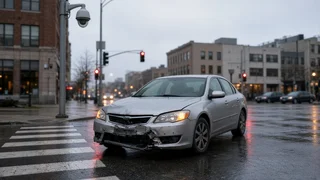
What an intersection is
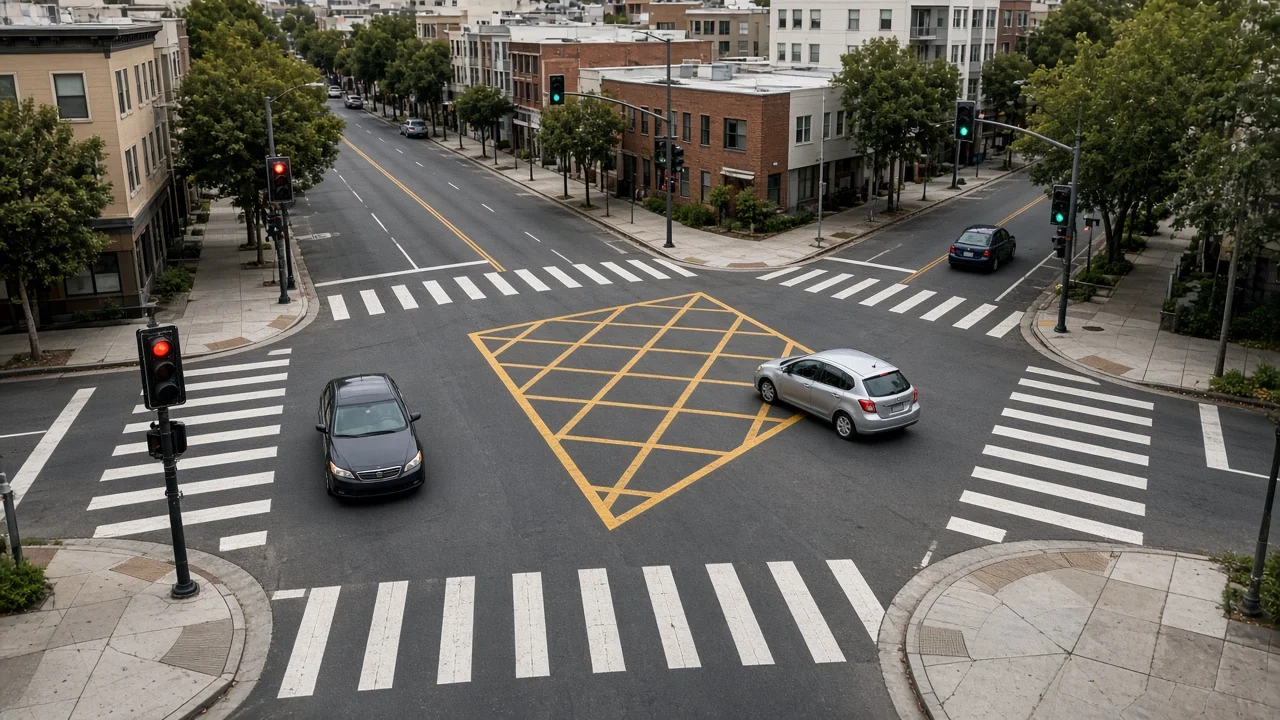
An intersection in driving is any at-grade place where two or more public roadways meet, cross, or join, creating a shared area where vehicle paths conflict. Understanding what an intersection means goes beyond a definition: it affects speed choice, lane position, and the point where you must scan for crossing traffic. The word covers signalized crossings, signed junctions, and unmarked openings alike. Recognizing that shared space early helps you predict what other drivers, cyclists, and pedestrians may do.
Essential answer
An intersection is the area where roadways connect at the same level, and its legal boundary is normally formed by extended curb lines or pavement edges rather than only by a painted stop bar. That means your obligations can begin slightly before the visible crossing. The concept includes T-junctions, four-way crossroads, offset junctions, and multi-leg arrangements. Recognizing that boundary matters because yielding, stopping, and turning duties attach to the approach even when a line is faded or missing.
The practical meaning also depends on control type. A controlled intersection uses traffic signals, stop signs, or yield signs to assign movement priority. An uncontrolled intersection has no active control, so drivers must decide priority from position, arrival timing, and local right-of-way rules. In both cases, the intersection is a point of conflict: vehicles may cross, turn across, or merge into another path. That shared space explains why driver attention, visibility, and speed adjustment are emphasized before entry.
How it works
Intersections work by organizing potential conflicts into predictable sequences. A signal separates movements by time, giving one group a green phase while holding others. Stop signs create a priority hierarchy, often using first-come, first-served rules for simultaneous arrivals. Yield control requires an entering driver to adjust speed and merge only when a safe gap exists. Each method reduces the chance that two vehicles attempt to occupy the same piece of pavement at the same moment.
Road markings and lane design provide part of the practical mechanism. Guide lines, stop bars, crosswalks, and dedicated turn lanes show where a vehicle should be positioned and where it must pause. Wider curb radii can allow faster turns, while tighter geometry slows traffic and improves visibility near crosswalks. The driver's job is to read these cues early: identify whether the path is open or closed, estimate the clearance needed, and match speed to the information available before the decision point.
Strengths, limitations and suitability
A key strength of well-designed intersections is predictable movement. Clear signs, visible signals, and consistent road markings help drivers decide whether to proceed, yield, or stop without guessing. The main limitation is that complexity grows with the number of approaches: a simple T-junction requires fewer decisions than a skewed five-leg crossing. Even a familiar junction can change with road conditions, so the driver still needs to reassess sightlines, glare, or a blocked view created by a large vehicle.
Intersections suit drivers who scan actively and adjust speed before the conflict point. They are more demanding when visibility is limited by buildings, vegetation, or weather, or when a driver follows too closely to see a changing signal early. For a new driver, intersections deserve a slower entry because other road users may be hidden in blind areas. Experienced drivers benefit from the same habit: choose a lane early, reduce speed gradually, and keep enough following distance to react to a sudden stop.
Procedure
Approaching an intersection begins with early observation. Look for the control type ahead—signal, stop sign, yield sign, or no control—and identify your intended path before you are too close to change lanes safely. Reduce speed smoothly so that you can stop without braking hard if needed. Check the road markings and lane signs, and position the vehicle in the correct lane for your turn or through movement. This early setup gives other drivers a clearer view of your intention.
Before entering, scan from left to right and back again, then check for pedestrians and cyclists crossing the road you are about to enter. Look into the oncoming traffic stream even when you have a green light, because another driver may run a red. If the intersection has a signal, watch it far enough ahead to avoid stopping inside the crosswalk. Make the turn only when the path ahead is clear and you can complete the maneuver without stopping in the middle of the junction.
Diagnosing a problem
A common problem at intersections is failing to recognize that an uncontrolled crossing still requires a right-of-way decision. If two vehicles arrive at the same time, the driver on the left usually yields, but the exact rule can vary by state or local ordinance. Do not assume the other driver sees you; reduce speed and make eye contact when possible. A vehicle approaching slowly may still fail to stop, so covering the brake is a useful precaution.
Another symptom is overshooting a stop line or crosswalk because the driver looked only at the signal and not at the road surface. If visibility is blocked by a parked car or turning truck, wait until you can see the conflicting lane before creeping forward. Treat a green light as permission to proceed only if the intersection is clear. If a signal is flashing red or dark, follow the stop-and-yield rules for an uncontrolled junction until reliable traffic control is restored.