WearCheck Oil Analysis: What It Is, What It Tests and How It Compares

WearCheck oil analysis is a laboratory service that tests a sample of used lubricant (engine oil, transmission fluid, hydraulic oil, gear oil or coolant) to report on the condition of the fluid and the machine it came from. WearCheck is a condition-monitoring laboratory brand that mainly serves fleets, heavy equipment operators and industrial users, though private vehicle owners can also use its services where kits are offered. Used oil analysis cannot replace a mechanical inspection, but it can show wear trends, contamination and fluid degradation before they become visible problems. How useful it is depends on sampling regularly and comparing results over time, not on a single test.
What WearCheck Oil Analysis Is
Oil analysis treats lubricant as a diagnostic fluid. As an engine, transmission or hydraulic system runs, tiny metal particles, combustion byproducts, dirt and moisture end up in the oil. The oil's own chemistry also changes as additives deplete and the base oil oxidizes. A laboratory such as WearCheck measures these changes and returns a report, usually with a severity rating and comments from a diagnostician who interprets the numbers.
WearCheck operates through regional laboratories in several markets, and test packages, pricing, turnaround times and ordering methods vary by region. US readers should check what the US operation currently offers rather than relying on details from another country's service.
What the Lab Typically Measures
The exact tests depend on the package chosen and the type of component. A typical used oil analysis program covers some combination of the following:
Wear metals: elements such as iron, copper, lead, aluminum and chromium, measured by spectrometric analysis, which can point to wear in specific parts such as cylinders, bearings, bushings or pistons. Contaminants: silicon (often linked to dirt ingestion), sodium and potassium (which can indicate coolant entering the oil), and water. Fuel dilution: unburned fuel in engine oil, which thins the oil and reduces its protective film. Soot: combustion residue, mainly relevant to diesel engines. Viscosity: whether the oil has thinned or thickened compared with its expected grade. Oxidation and nitration: chemical breakdown of the oil caused by heat and combustion gases. Additive elements: levels of elements such as zinc, phosphorus, calcium and magnesium, which help confirm the oil type and show additive depletion. Base number or acid number: the oil's remaining ability to neutralize acids, or the build-up of acidic compounds. Particle counts: common for hydraulic systems and some transmissions, where cleanliness matters greatly.
Coolant analysis, where offered, focuses on different properties: freeze and boil protection, inhibitor levels, pH and signs of contamination or electrolysis. It is a separate test from oil analysis, not a by-product of it.
How the Sampling Process Works
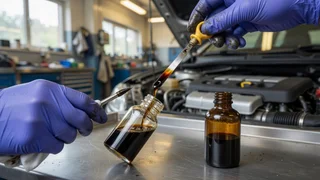
The process is broadly the same for most oil analysis labs. You get a sample kit, take a small amount of oil from the component, fill in the sample details, and send it to the laboratory. The quality of the result depends heavily on how carefully the sample is taken and labeled.
Take the sample from warm, circulated oil so contaminants and particles are evenly mixed rather than settled at the bottom. Use a consistent method each time: the same sampling valve, drain point or extraction pump. Changing methods makes trends harder to read. Avoid the very first or very last oil out of a drain plug, which can carry settled debris that misrepresents the overall condition. Record equipment identification accurately, including the make, model, engine or transmission type and a unit number if you run more than one vehicle. Note the oil brand and grade, the lubricant specification it meets, the hours or miles on the oil, total hours or miles on the component, and whether any oil was added since the last change. Ship the sample promptly so the result reflects current conditions.
Top-up information matters more than many owners expect. If a significant amount of fresh oil has been added between changes, it dilutes wear metals and additives and can make a component look healthier than it is. Recording top-ups alongside routine level checks gives the diagnostician the context needed to interpret the numbers.
Reading the Report
A WearCheck report generally presents measured values next to a severity indicator, plus written comments explaining what the results suggest and what action, if any, is recommended. The numbers matter less on their own than in context: the component type, the oil used, the time on the oil and, above all, how the results compare with previous samples from the same unit.
A single elevated reading is a prompt to look closer or resample, not proof of failure. A steady upward trend in a wear metal is usually more meaningful than one high value. High silicon combined with rising wear metals often points to an air intake or filtration problem. Sodium or potassium alongside water can suggest a coolant leak, which warrants prompt inspection. Low viscosity together with fuel dilution may indicate injector issues, excessive idling or short-trip driving. Additive levels that don't match the stated oil can reveal a mix-up in what was actually put in.
Comments from the diagnostician are written for the information supplied. Incomplete or wrong details on the sample form, such as an incorrect oil grade or missing mileage, can lead to misleading conclusions.
How It Differs From Other Oil Testing Options
WearCheck is one of several laboratories offering used oil analysis. The main differences between options lie in who the service is designed for, how detailed the testing is and how the results are delivered, rather than in the basic science, which is similar across reputable labs.
Option | Typical focus | What you get | Main trade-off; Commercial condition-monitoring lab (such as WearCheck) | Fleets, heavy equipment, industrial machinery, also individual vehicles | Broad test menus, severity ratings, diagnostician comments, trend tracking across many units | Packages and ordering may be geared toward business users; individual owners should confirm what kits are available to them; Consumer-oriented oil analysis lab | Private car, truck and motorcycle owners | Simpler reports with plain-language comments, often compared against averages for similar engines | Test menus may be narrower than industrial programs; At-home test strips or blotter tests | Quick checks by owners | Rough indication of contamination or soot | No wear-metal measurement and limited diagnostic value; On-site fleet analysis equipment | Large operations testing in-house | Fast results without shipping | Equipment cost and the need for trained staff
For a typical passenger car driver, the practical difference between a commercial lab and a consumer-oriented lab is mostly about the format of the report and the ordering experience. For fleets and equipment owners managing many units, a condition-monitoring program with trend tracking across the whole fleet is where a provider like WearCheck is generally positioned.
When Oil Analysis Makes Sense
Oil analysis is most valuable where a failure would be expensive, where operating conditions are severe, or where an owner wants evidence before changing maintenance practice. Common reasons include:
Running fleet vehicles, diesel trucks or heavy equipment where downtime is costly. Assessing whether an extended service interval is appropriate for your specific vehicle and driving conditions. Checking a used vehicle's engine or transmission condition, ideally with more than one sample over time. Investigating a suspected problem such as a coolant leak, fuel dilution or unusual consumption. Monitoring a rebuilt engine or transmission during and after break-in. Tracking components that rarely get attention, such as differentials, transfer cases or hydraulic systems.
For a vehicle under warranty, oil analysis can add useful information, but it does not override the manufacturer's maintenance schedule. Extending drain intervals beyond what the vehicle manufacturer specifies, or using an oil without the required manufacturer approval, can create warranty complications regardless of what a lab report shows. Fill quantity, oil grade and service intervals should still follow the owner's manual or the manufacturer's guidance for the specific model year and engine.
Limitations to Keep in Mind
Spectrometric analysis detects very fine particles well but may under-report larger wear debris, so a sudden mechanical failure can occasionally happen with little warning in the oil. One sample provides a snapshot; reliable conclusions usually require a baseline and several follow-up samples. Results vary with oil brand, oil age, driving style and sampling method, so comparing your numbers with another vehicle's can be misleading. Oil analysis indicates where to look; it does not replace physical inspection, pressure testing or other diagnostics when a problem is suspected. The cost of testing should be weighed against the value of the vehicle or equipment and the cost of the failures it may help prevent.
Bottom Line
WearCheck oil analysis is a laboratory test of used lubricant that reports on wear metals, contamination, fluid condition and, through trend tracking, the health of the component over time. It is best suited to fleets, heavy equipment and owners who want hard data to guide maintenance decisions, and it works best as an ongoing program with consistent sampling and accurate equipment details. Before ordering, confirm which test packages and kits the regional operation offers for your type of vehicle or machine, and keep following the manufacturer's lubricant specification and service schedule while you build up a history of results.