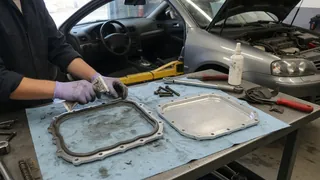
Water pump gasket and gasket sealant
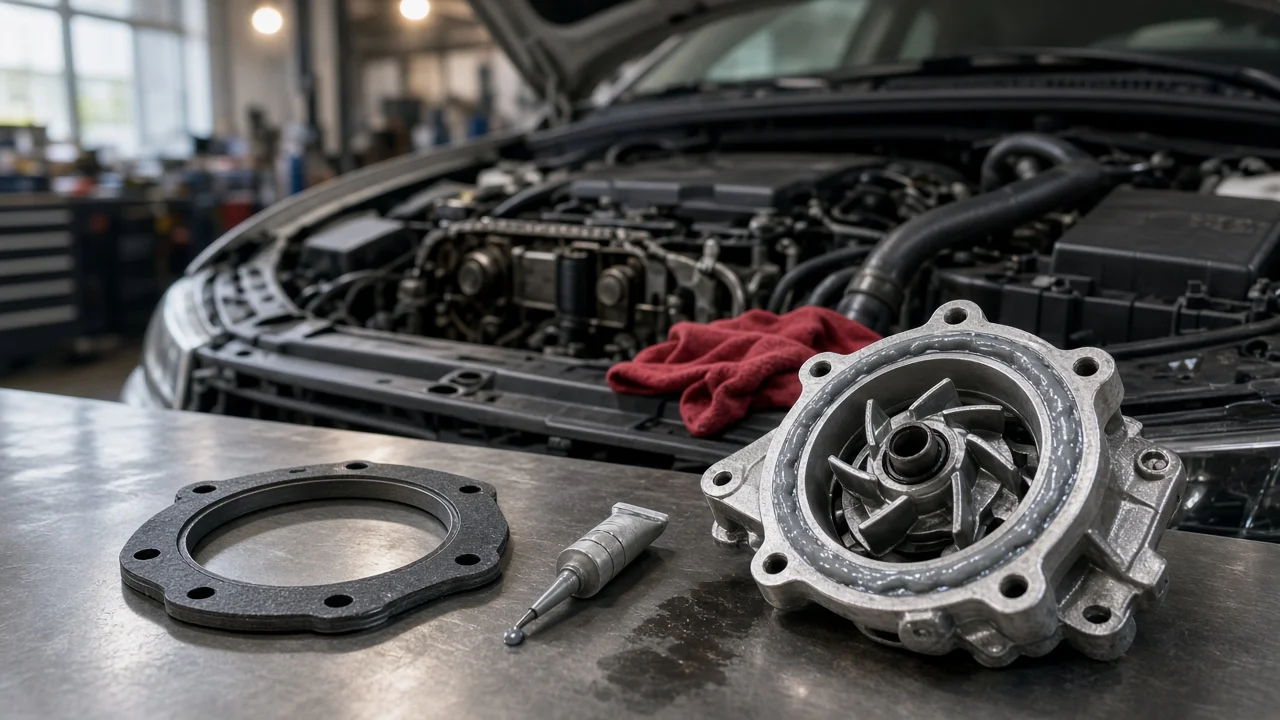
A water pump gasket and the sealant sometimes used with it sit at the boundary between the engine block and the pump that circulates coolant through the cooling circuit. When this joint degrades, coolant can seep past the mounting face and leave stains near the accessory drive or timing cover. Understanding the difference between the dry gasket, a thin sealant film, and the surrounding sealing system helps a reader interpret leaks, choose a repair approach, and avoid masking a larger cooling-system problem.
Essential answer
The car water pump gasket is a shaped sealing element that fills the small irregularities between the pump housing and the engine mounting surface. It prevents pressurized coolant from escaping at the flange while the pump impeller moves fluid through the radiator, thermostat, and engine passages. Some designs use a preformed fiber, multilayer steel, or elastomer gasket, while others rely on a liquid gasket maker applied as a continuous bead. During a water pump replacement, the correct gasket or a compatible gasket sealant must create a stable seal without blocking the coolant passages or the pump weep hole.
Gasket sealant is not always required, and using it incorrectly can cause as many problems as it solves. A thin, even coating can help hold a dry gasket in place during assembly or fill minor surface imperfections on an older mounting face. Too much sealant, or the wrong chemistry, may squeeze into the cooling circuit, interfere with the thermostat, or create uneven clamp load. The essential point is that the gasket and sealant work together as a sealing system; the repair should match the water pump design, the condition of the machined surfaces, and the coolant specification for the vehicle.