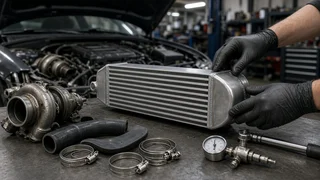
VR6 turbo intercooler
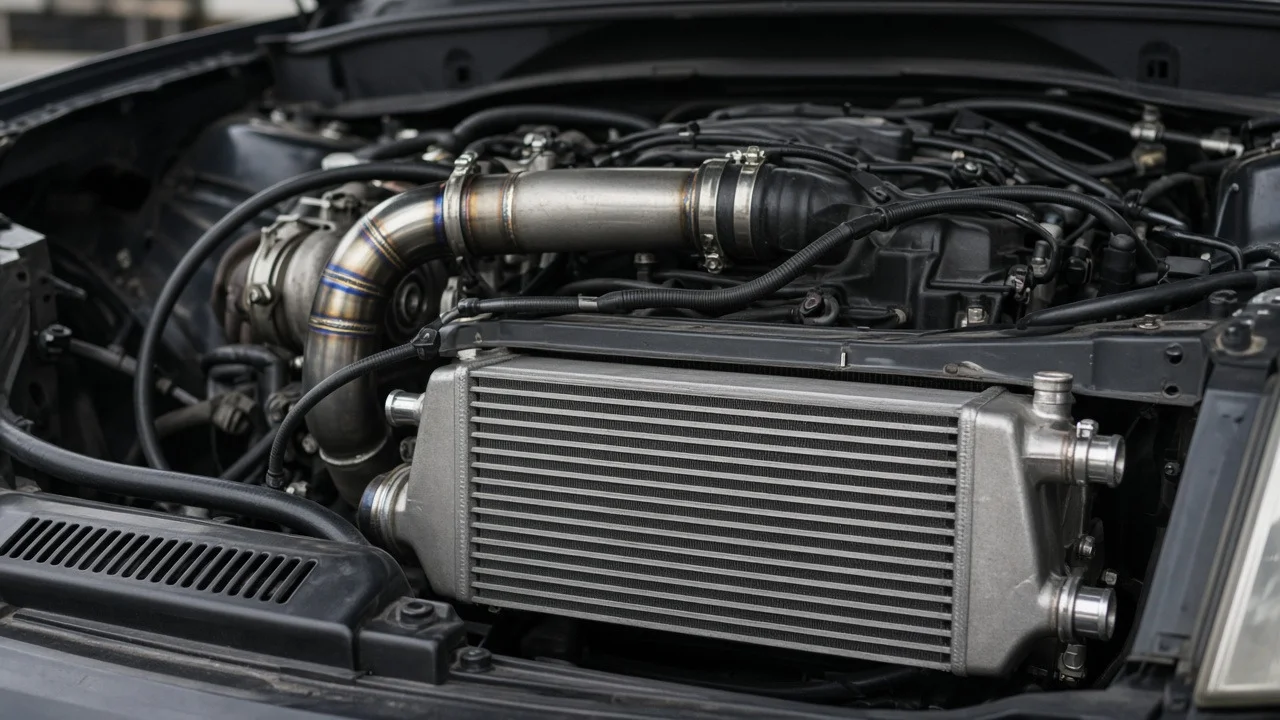
Adding forced induction to a VR6 changes the air path fundamentally. The turbocharger’s compressor outlet feeds dense, heated air toward the intake manifold, and every connection in that path influences boost pressure, charge-air temperature, and response. An intercooler is the heat exchanger placed between the compressor outlet and the throttle body. When you research a VR6 turbo intercooler, the immediate question is what to check before buying so the unit fits, cools effectively, and does not create excessive pressure loss or hose-connection trouble.
The direct answer
For most VR6 turbo builds, the answer is that a front-mount intercooler sized to the boost level, turbo airflow, and available bumper or core-support space is the practical choice. The unit must match the piping diameter and hose connection style already used on the charge side. A core that is too small may not remove enough heat, while an overly large core can add noticeable pressure loss and lag without meaningfully lowering intake temperature on a moderate-boost street engine.
Oil contamination in the charge piping is also worth considering, because a small amount of crankcase vapor or turbo seal seepage can coat the intercooler’s internal fins over time. That film reduces heat transfer and may hide a boost leak at a loose coupler. When comparing parts, look for a bar-and-plate or tube-and-fin core with smooth end tanks, sturdy mounting tabs, and inlet and outlet positions that let the piping route cleanly past the radiator and front structure without pinching.