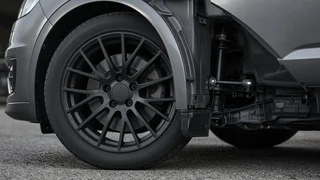
Volvo Wheel Offset (850, C30)

Wheel offset directly shapes how a Volvo sits over its suspension and how steering feedback reaches the driver. For the 850 and C30, getting this dimension right matters because it moves the tire contact patch inward or outward relative to the hub face. A small change can affect fender clearance, strut clearance, and bearing wear. Understanding offset helps an owner compare replacement wheels or aftermarket fitments without guessing. The correct rim width, tire compatibility, and bolt pattern all work with offset to produce a stable, predictable package.
Essential answer
Offset is the distance between the wheel's mounting surface and the true centerline of the rim barrel. On a Volvo 850 or C30, a higher positive offset pulls the wheel inward toward the chassis, while a lower offset pushes it outward toward the fender. Because offset is measured in millimeters, even a modest change alters scrub radius and how the tire loads the suspension during cornering. The stock setup is generally a positive offset, meaning the hub mounting face sits outboard of the rim's geometric center. This positions the tire correctly between the brake components and the outer bodywork.
No universal offset value applies to every Volvo, because hub design and body clearance differ between models. A wheel that fits an 850 may not suit a C30 without checking the application. The relevant meaning of a fitment query is not a single number but the relationship among offset, rim width, rim diameter, and bolt pattern. If the offset is too high for a given width, the inner sidewall may contact suspension parts. If it is too low, the outer shoulder can rub the fender lip under compression. Tire compatibility depends on keeping the complete wheel and tire assembly within the available clearance envelope.