Vehicle Towing Capacity by VIN: What the VIN Can and Cannot Tell You

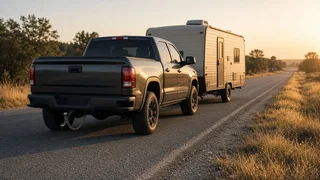
Many buyers and owners hope to find a vehicle's towing capacity by entering its VIN, the vehicle identification number. A VIN gets you partway there, but usually not all the way. A standard VIN identifies the manufacturer, model, model year, assembly plant and often the engine and body style. Towing capacity, however, also depends on factory equipment that the VIN often does not encode, such as axle ratio, tow package, cooling upgrades and hitch hardware. The VIN is the best starting key for finding the correct tow rating, but on its own it rarely settles the answer.
The Short Answer
No public field in the 17-character VIN states a towing capacity. What the VIN does is narrow the vehicle to a specific make, model, model year and frequently a specific powertrain. Two vehicles with nearly identical VINs can still have different tow ratings because one was built with a higher numerical axle ratio or a factory trailering package and the other was not. To get a reliable figure, use the VIN to pull the vehicle's original build data, such as a window sticker, build sheet or option code list. Then match that equipment to the manufacturer's towing chart for that model year.
What a VIN Actually Encodes
Vehicles sold in the US since the 1981 model year use a standardized 17-character VIN. Its structure is fixed, but much of the content in the middle section is defined by each manufacturer. That is why the detail you can extract varies by brand and year.
VIN positions | Section | What it typically identifies; 1–3 | World Manufacturer Identifier | Manufacturer, country or region of origin, sometimes vehicle type; 4–8 | Vehicle Descriptor Section | Manufacturer-defined details such as model line, body style, cab type, engine, restraint system or weight class; 9 | Check digit | A calculated value used to validate the VIN; 10 | Model year | The model year code; 11 | Assembly plant | The factory where the vehicle was built; 12–17 | Sequential number | The individual vehicle's production serial
For towing, positions 4 through 8 matter most. Depending on the manufacturer, they may reveal the engine, drivetrain, cab and bed configuration, or a gross vehicle weight rating class. Those details shape the tow rating, but they are inputs to it, not the rating itself.
Why the VIN Alone Usually Isn't Enough
Manufacturers publish towing capacity as a chart, not as a single number per model. Within one model year and one model, the maximum trailer weight can change significantly with factory equipment. The variables most likely to change the answer are listed below. Many of them are not captured in the VIN.
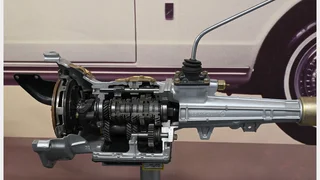
Engine and transmission: often decodable from the VIN, and usually the largest single factor. Axle ratio: a numerically higher ratio generally supports a higher tow rating, but it is rarely encoded in the VIN. Drivetrain: two-wheel drive versus four-wheel or all-wheel drive affects curb weight and sometimes the rating. Cab, bed and wheelbase: these change vehicle weight and stability, and they are sometimes decodable. Factory tow or trailering package: this may add a receiver hitch, transmission or oil cooler, wiring, brake controller or upgraded cooling. It is typically not in the VIN. Suspension and GVWR package: a heavier-duty payload or weight package can raise the gross ratings. Trim code: trim levels can bundle equipment that changes weight or towing hardware, so the trim name alone can be misleading.
Market specification can also matter. A vehicle originally built for another market, such as a Canadian-market or imported unit, may carry different equipment or ratings than the US version of the same model. When the VIN shows an assembly plant or configuration that differs from typical US builds, confirm which market's specifications apply.
How to Find the Correct Towing Capacity Using the VIN
The practical approach is to use the VIN to recover the vehicle's exact factory equipment, then apply the manufacturer's towing information for that configuration.
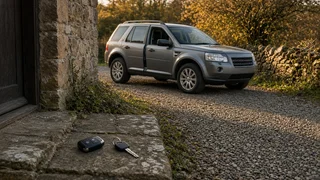
Decode the VIN to confirm make, model, model year, engine, drivetrain and body configuration. A free VIN decoder or the vehicle's title and registration can help. Retrieve the original build record. Some manufacturers and dealers can reproduce the window sticker or build sheet from the VIN, and a franchised dealer's service department can often look up the factory option codes. Check for option code labels on the vehicle. Some manufacturers place a label listing factory equipment codes in the glove box, the trunk or another interior panel. These codes can identify the axle ratio and trailering package. Read the labels on the driver's door jamb. The safety certification label lists the gross vehicle weight rating (GVWR) and gross axle weight ratings (GAWR). The tire and loading placard shows the maximum combined weight of occupants and cargo. Match the confirmed equipment to the towing chart in the owner's manual or the manufacturer's towing guide for that model year. Find the row that matches engine, axle ratio, drivetrain, cab and bed, and package. Inspect the hitch. The receiver and ball mount carry their own ratings, and the lowest-rated component in the towing chain limits what you can safely pull.
Key Ratings to Understand
A towing capacity figure is a maximum under specific conditions, usually with minimal passengers and cargo. Several related ratings decide what you can actually tow on a given trip.
Rating | What it means; Towing capacity (maximum trailer weight) | The heaviest trailer the manufacturer rates the vehicle to pull in a given configuration; GVWR (gross vehicle weight rating) | The maximum allowed weight of the vehicle itself, including passengers, cargo and trailer tongue weight; GCWR (gross combined weight rating) | The maximum allowed weight of the loaded vehicle and loaded trailer together; GAWR (gross axle weight rating) | The maximum load each axle may carry; Payload | Roughly GVWR minus the vehicle's curb weight; the capacity left for people, cargo and tongue weight; Tongue weight | The downward force the trailer coupler places on the hitch
These limits interact. A truck loaded with passengers and gear in the bed has less payload left for tongue weight and less room under the GCWR for the trailer. For conventional bumper-pull trailers, common guidance is a tongue weight of about 10 to 15 percent of the loaded trailer weight. That load counts against payload, so payload is often the limit buyers hit first, before the advertised towing capacity.
Approximate usable trailer weight = GCWR - actual loaded weight of the tow vehicle; Also confirm: tongue weight + passengers + cargo <= payload; each axle load <= its GAWR; trailer weight <= hitch and receiver rating
Using a VIN When Buying a Vehicle for Towing
If you are shopping for a vehicle to pull a specific camper, boat or equipment trailer, ask the seller for the VIN before you visit, and use it to request the build record. A listing that says the vehicle has a tow package or a particular engine is worth confirming against the factory data. Equipment can be misdescribed, and an aftermarket hitch does not make a vehicle equivalent to one with a factory trailering package.
Confirm the model year and engine from the VIN. Confirm the axle ratio and any trailering or heavy-duty package from the build sheet or option codes. Check the door jamb GVWR and compare the published payload to your expected passengers, cargo and tongue weight. Look up the matching row in that model year's towing chart rather than relying on the highest figure advertised for the model. Be cautious with aftermarket changes. Lift kits, larger tires, airbags or upgraded hitches do not raise the manufacturer's ratings, and some modifications can effectively reduce safe capacity.
Where VIN-Based Tow Lookups Fall Short
Some online tools return a towing capacity after you enter a VIN. Treat these results as estimates unless the tool clearly shows the configuration it used. Many tools decode the model and engine, then display the maximum rating published for that model, which may assume an axle ratio or package your vehicle lacks. If the result doesn't state the axle ratio, drivetrain and package behind it, check it against the build data and the manufacturer's chart.
Rating methods have also changed over time. Many pickup manufacturers have adopted the SAE J2807 standard for determining tow ratings, which tests vehicles under defined conditions. Comparing ratings across very different model years, or across brands that used different methods, may not be an exact like-for-like comparison.
Bottom Line
A VIN does not directly reveal towing capacity, but it is the key that unlocks the information you need. Use it to confirm the model year, engine and configuration, then recover the factory equipment through the build sheet or option codes, especially the axle ratio and trailering package. Match those details to the manufacturer's towing chart, and check the door jamb ratings and your hitch. The safe towing limit is the lowest of the towing capacity, remaining payload, GCWR, axle ratings and hitch rating for your actual load.