Valvoline Transmission Fluid Change: Service Options and Cost
Before you start
A transmission fluid change at a Valvoline service location is a performed service, not a local software process. The vehicle is brought to the facility, and a technician drains or extracts the old fluid and installs new fluid according to the vehicle requirements. You do not need camera, microphone, or image tools for this task, but you may want to photograph the fluid condition or the service receipt for your records.
Before visiting, check your vehicle information: year, make, model, engine, and transmission type. The required fluid specification and service interval can depend on these details. If you plan to record still images or video at the service location, confirm first that the location permits photography in the service area. Many shops restrict recording near lifts and work zones for safety and privacy reasons.
Step-by-step instructions
Start by selecting a Valvoline service location and confirming that it offers transmission fluid service for your vehicle type. Transmission service coverage can vary by location and equipment, so call or use the official location finder to confirm availability before traveling. Provide the vehicle details accurately because the fluid and filter requirements may differ between models.
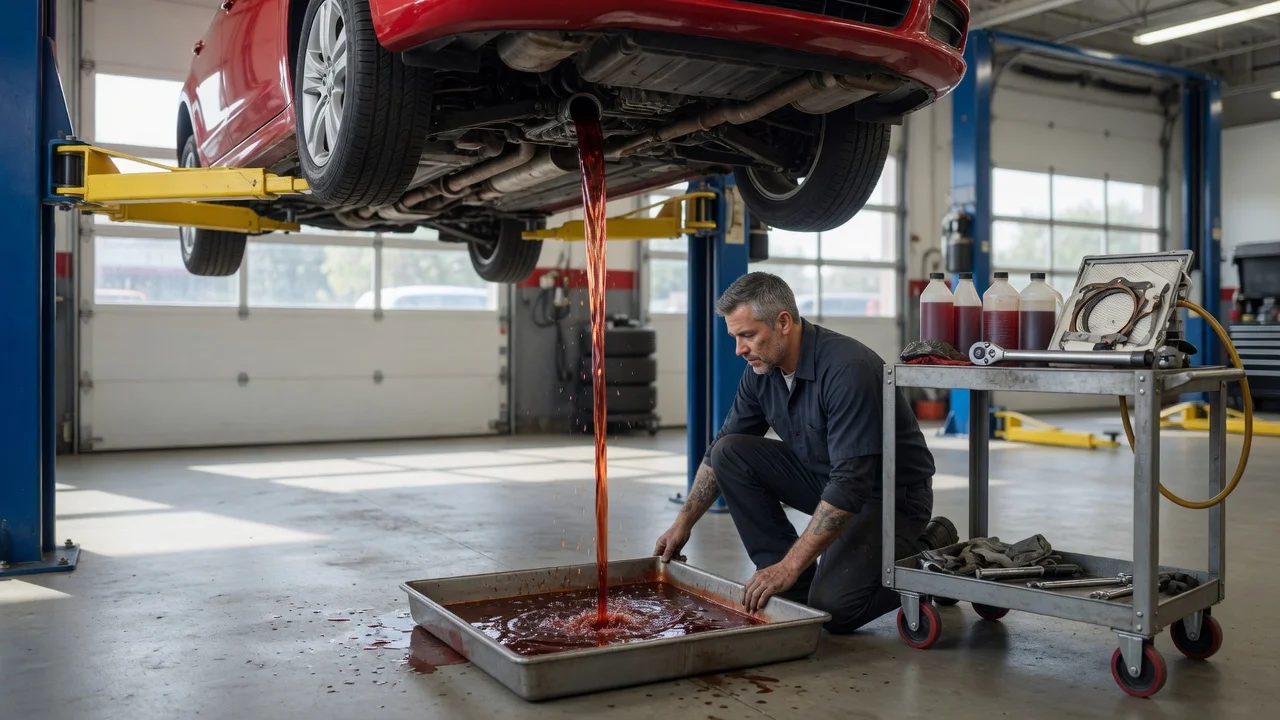
At the service location, state that you want a transmission fluid change rather than a flush or other repair. A fluid change typically removes the available old fluid from the pan, replaces the filter when applicable, and installs new fluid. A flush is a different process that may not be offered for every transmission. Ask the technician to explain which procedure is being performed and whether the filter is included.
Confirm the service scope before work begins. The estimate should identify the transmission fluid product, the quantity required, and any additional parts such as a pan gasket or filter. For a sealed transmission or a unit without a serviceable pan, the procedure may require specific equipment or a different service route. Ask whether the work is reversible if a problem is discovered during inspection.
When the technician provides the final documentation, keep the receipt or service record. If you use your phone camera, position the document flat and avoid reflections so the text remains readable. In low light, enable the camera flash or move closer to a light source. A clear photo can help you retain the service details, fluid specification, mileage, and date without needing to keep the paper copy.
Check the output
After the service, verify that the receipt lists the correct vehicle, transmission service performed, fluid specification, and quantity installed. Compare the recorded mileage and date with your dashboard reading and calendar. If the vehicle has a transmission fluid dipstick, use the vehicle manual to check the level only when the transmission is at the specified temperature and the vehicle is on level ground. Do not rely on a photo to judge fluid condition alone because color can appear differently under varied lighting, but use images to document changes over time with consistent conditions.
During a short drive, watch for changes in shifting, unusual noise, or warning lights. Some transmission shifts may feel different immediately after a fluid change while the system adapts. Record any concern with a short voice note or video only if it is safe and legal to do so while the vehicle is stationary. Keep hands-free recording and driving rules in mind if you document a symptom.
Common problems and next steps
One common question is about Valvoline transmission fluid change cost. The final price depends on the vehicle, the fluid specification and amount needed, the transmission design, whether the filter or gasket is replaced, and the service location. A transmission requiring a specialty fluid can cost materially more than a basic drain-and-fill. The most reliable approach is to obtain a vehicle-specific estimate from the selected location before approving service.
If the service is quoted as a simple fluid exchange but the transmission is sealed, the process may take longer or require additional labor. In that case, ask for the updated scope before continuing. If shifting problems or leaks appear after the service, return to the same service provider promptly with the receipt and note the symptom, mileage, and conditions. A clear photo or video clip of a visible leak location can help explain the issue, but do not go under the vehicle to capture it.
Schedule the next transmission service using the interval recommended for your vehicle and usage pattern. Keep the service record in a consistent place, such as a vehicle maintenance folder or a dated photo album. For any subsequent quote or diagnosis, provide the exact service history instead of relying on memory.