VAG fault code 00778 steering angle sensor
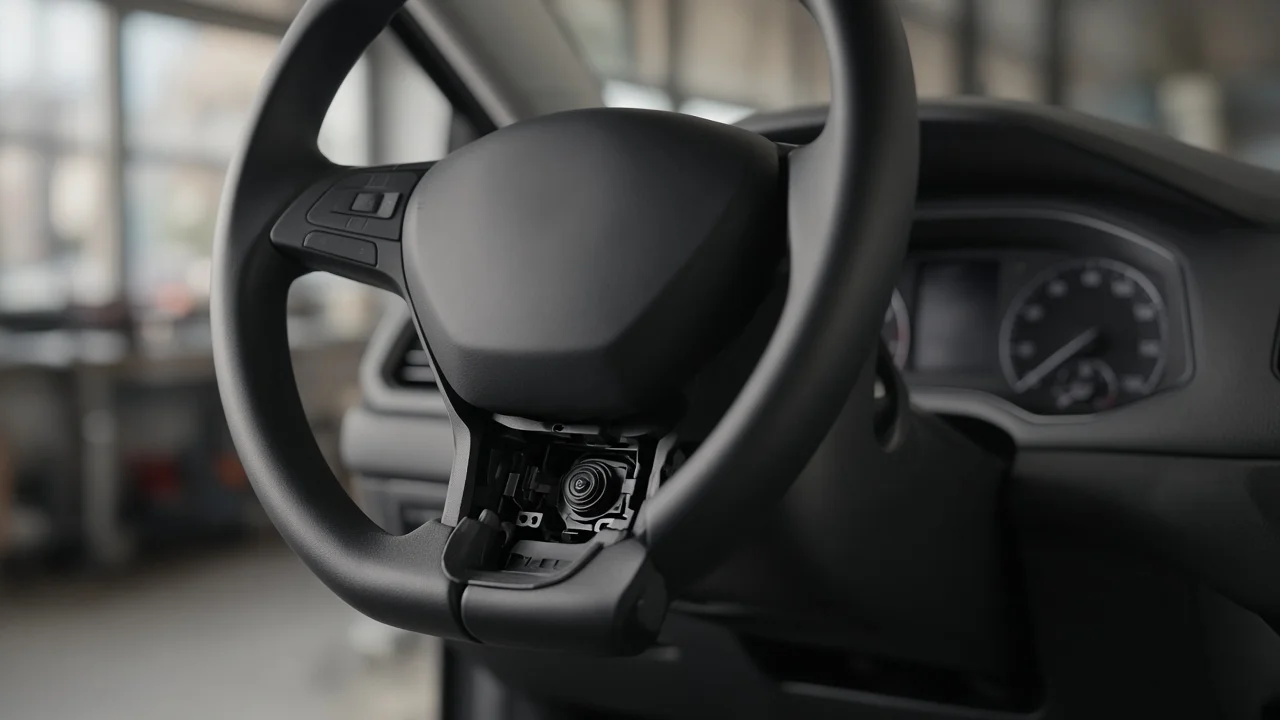
Seeing VAG fault code 00778 can be unsettling, especially when the steering wheel still feels normal. The code indicates that a control module is receiving an implausible, missing, or out-of-range signal from the steering angle sensor. This sensor measures steering wheel position and the rate of movement, and those values feed stability control, electric power steering, and adaptive lighting decisions. A stored code is evidence of a communication or calibration issue, but it does not by itself prove the sensor has failed. Interpreting the surrounding symptoms and test conditions is what separates a simple relearn from an unnecessary replacement.
Direct answer
Fault code 00778 is a VAG-specific diagnostic trouble code related to the steering angle sensor circuit or its plausibility. It most often appears after a low battery event, steering rack work, wheel alignment, or a steering column component has been disconnected. In many cases the sensor simply needs to be recalibrated with the correct scan tool and the steering wheel centered, because the module has lost its stored zero point. The code can also return when the sensor wiring, connector, or power supply is unstable, so confirmation requires looking beyond the code to the vehicle's current sensor values.
The same numeric code can carry slightly different meanings depending on the control module, model generation, and scan tool wording. One vehicle may report a mechanical zero position that is no longer plausible, while another may flag an intermittent signal or a supply voltage problem. Owners should therefore record the full code description and live steering angle readings before condemning the sensor. Treat the code as a starting point for a diagnostic path: confirm the steering angle value changes smoothly and matches wheel position, then verify calibration before considering internal sensor failure.
Interpreting symptoms and test results
A useful first observation is whether the code appears alone or with warning lamps for stability control, traction control, or steering assistance. If the steering angle reading is frozen, jumps erratically, or stays at zero while turning the wheel, the issue may involve sensor power, ground, or data communication rather than the sensing element itself. Check whether the fault returns immediately after clearing and completing the basic setting. A code that comes back only after driving may point to looseness in the steering shaft, coupling wear, or an unstable connector that changes with cabin temperature and vibration.
Live data comparison is the most discriminating next step. With the wheels straight and the steering wheel centered, the angle should read near zero and move smoothly in both directions. If the value is offset but consistent, a calibration or recent wheel alignment issue is likely; if the signal drops out or spikes, inspect the clock spring, column wiring, and sensor mounting points. Joint play in the steering linkage or suspension can also make the sensor position disagree with the yaw and wheel-speed data, so the code may reveal a mechanical alignment or ride-height condition rather than an electronic defect. Confirm the vehicle support and secure any loose components before repeating the basic setting, because moving the wheels without stable support can corrupt the calibration. Remember that a manufacturer-dependent definition and test plan require vehicle-specific confirmation, and a fault code should never be treated as proof that a specific part requires replacement.