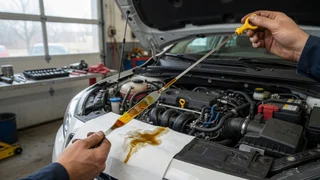
Use the Castrol oil checker

When the Castrol oil checker is mentioned, the goal is usually to match a specific engine to a suitable crankcase lubricant and the correct fill quantity before a level check or an oil change. Navigating that step carefully matters because the right lubricant specification and manufacturer approval support oil pressure, deposit control, and bearing protection. The tool is not a substitute for a dipstick reading, but it helps narrow the selection when service interval work is planned and the exact product recommendation is not already printed in the owner’s manual.
Essential answer
The Castrol oil checker is a product-selection aid that asks for a vehicle, equipment type, or registration detail and then returns a recommended engine oil. Its practical value is matching the fluid to the manufacturer approval called for in the service documentation. Because the result may include viscosity grade, lubricant specification, and fill quantity, it gives a useful starting point before buying supplies. However, the suggestion remains a lookup result, not a laboratory finding or a guarantee that the previous owner used the same formulation.
Before relying on the output, confirm the identified vehicle and engine against the underhood calibration label or owner’s handbook. A near match with the same displacement can still have a different valvetrain, aftertreatment system, or oil specification. For a level check, the oil checker can remind you of capacity, but the final confirmation still comes from the dipstick after the vehicle is parked on level ground and the engine has reached its normal procedure for an accurate reading.