USAA Liability Car Insurance: What It Covers and How to Choose Your Limits
The short answer
USAA sells liability car insurance, either on its own as a liability-only policy or as the base of a broader policy. The main condition is eligibility. USAA serves the military community, so you generally need to be a current or former service member or an eligible family member to get a quote. If you qualify, the main decision is how much liability coverage to carry and whether liability alone is enough for your car and finances.
Liability coverage pays for damage and injuries you cause to other people. It does not repair or replace your own vehicle. If your car is financed or leased, or would be costly to replace, liability-only is usually not the right choice.
What liability coverage includes
Auto liability insurance has two parts. Insurers, including USAA, usually show them as separate limits on a quote.
Bodily injury liability: pays for other people's medical costs, lost wages and related claims when you are at fault in a crash. It can also help cover legal defense if you are sued. Property damage liability: pays to repair or replace property you damage, most often another vehicle. It can also cover fences, buildings, signs or other structures.
Limits are often written as three numbers separated by slashes. In order, they are the bodily injury maximum per person, the bodily injury maximum per accident, and the property damage maximum per accident. Costs above those limits can become your personal responsibility.
Liability coverage does not pay for your own injuries or your own car. Those are handled by other coverages, such as collision, comprehensive, medical payments, personal injury protection, and uninsured or underinsured motorist coverage. What is available, and what is required, depends on your state.
Who can buy a USAA policy
USAA membership is generally open to the following groups:
Active-duty service members; National Guard and Reserve members; Veterans who were honorably discharged; Cadets and midshipmen at service academies and those in qualifying commissioning programs; Eligible family members, such as spouses and children of USAA members
Eligibility rules can change, and the details for family members can be specific. Confirm your status with USAA before you spend time comparing coverage. If you are not eligible, the advice in this article still applies to liability coverage from any insurer.
Liability-only vs. full coverage
Situation | Liability-only | Liability plus collision and comprehensive; Car is financed or leased | Usually not allowed by the lender or lessor | Usually required; Older car with low market value | Often a reasonable way to lower premiums | Payouts may be small compared with the extra premium; You could not easily afford to repair or replace your car | Leaves you exposed | Covers your own vehicle, minus the deductible; You need proof of insurance to register and drive legally | Meets the requirement if the limits meet state minimums | Also meets the requirement; Car is in long-term storage, such as during a deployment | Check whether your state allows reducing coverage | Some insurers offer reduced coverage for stored vehicles
A practical test is to compare your car's current value with the yearly cost of adding collision and comprehensive, plus your deductible. If the car is worth little and you could absorb its loss, liability-only can make sense. If losing the car would cause real financial strain, keep the physical damage coverages.
Choosing liability limits
Every state that requires auto insurance sets a minimum liability limit. Those minimums are legal floors, not recommendations. Medical bills and vehicle repair costs from a serious crash can exceed low limits quickly, and you can be personally liable for the difference.
Start with your garaging state's minimum. Then decide how far above it to go. The more income, savings and property you have, the higher your limits should be, because those are what a claimant could pursue after your policy pays out. If you plan to add an umbrella policy, ask what underlying auto liability limits it requires. Umbrella policies usually require higher limits than state minimums. Ask for quotes at several limit levels. The price difference between low and higher limits is often smaller than people expect, but it varies by driver and location.
Related coverages to consider
Even if you keep physical damage coverage off your policy, a few related coverages are worth looking at closely:
Uninsured and underinsured motorist coverage: pays for your injuries, and in some states your property damage, when an at-fault driver has no insurance or too little. Some states require it. Others let you reject it in writing. Personal injury protection (PIP): required in no-fault states. It pays your own medical costs and some other losses regardless of who caused the crash. Medical payments coverage: optional in many states. It helps with medical bills for you and your passengers. Roadside assistance and rental reimbursement: convenience add-ons. They are less important than liability and injury coverage.
Military-specific situations to plan for
Insurance rules follow the state where the vehicle is garaged, so service members face a few issues that other drivers rarely do.
Permanent change of station (PCS) moves: when you relocate, your policy usually needs to be updated to meet the new state's requirements. Liability minimums, PIP rules and uninsured motorist rules may all change. Deployment and vehicle storage: reducing coverage on a stored car can save money. However, some states require continuous liability coverage on registered vehicles, and a lapse can create registration problems. Check before you remove liability. Vehicles overseas: coverage outside the US works differently and depends on the country. Ask USAA directly what applies to your duty station. Other drivers: if a spouse, family member or someone else will drive your car while you are away, make sure they are listed or covered under the policy's driver terms.
What to have ready for a quote
Proof of military affiliation or the family relationship that makes you eligible; The vehicle identification number (VIN), year, make and model of each car; Where each vehicle is garaged; Driver's license details for everyone who will drive the cars; Your current policy's declarations page, so you can compare limits directly; Any recent accidents or violations, since leaving them out can affect the price or coverage later
Comparing a USAA quote with other insurers
Compare quotes with identical limits and deductibles. Otherwise, a lower price may just mean less coverage. Check which discounts were applied, and note that some depend on bundling, vehicle storage or enrolling in a driving-monitoring program. Prices vary a lot by driver, vehicle and location, so even if USAA has a reputation for competitive rates, it is worth getting at least one or two outside quotes.
How a liability claim works
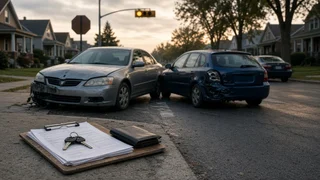
If you cause a crash, the other party files a claim against your liability coverage, and your insurer handles investigation, negotiation and payment up to your limits. Report the accident to your insurer promptly, even if the other driver says they will not file. Exchange insurance and contact information at the scene, take photos, and avoid admitting fault or agreeing to pay anyone directly. With liability-only coverage, the claim pays the other party, but repairs to your own car are your responsibility.
Next step
First, confirm that you are eligible for USAA. Then look up your state's minimum liability limits and choose limits that protect your income and assets, not just the legal floor. Decide whether your car's value justifies collision and comprehensive. Finally, request quotes at two or three limit levels and compare them against at least one other insurer using the same coverage.