Universal turbo intercooler
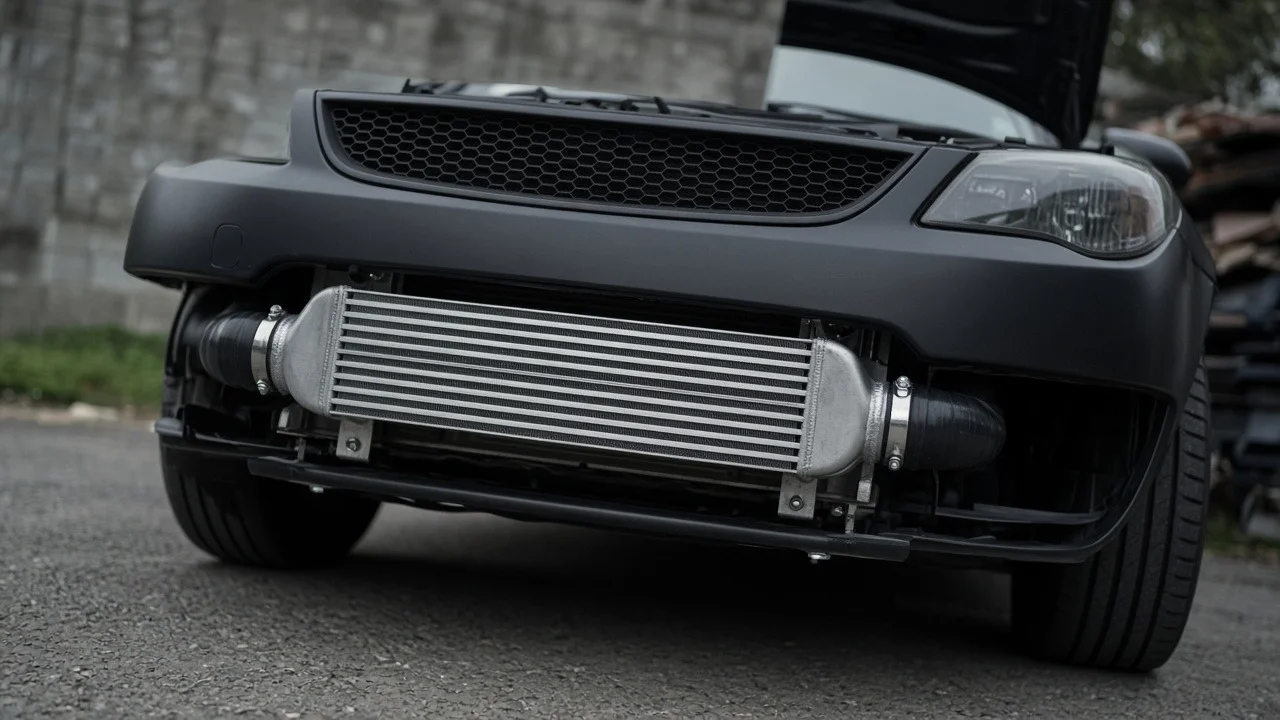
Choosing a universal turbo intercooler starts with understanding how it fits your intake tract and what it must do under boost. The right core lowers charge-air temperature without introducing excessive pressure loss, while the wrong sizing or inlet orientation can create hose routing headaches and uneven throttle response. Because these components are sold in many widths, depths, and tank styles, a buyer should compare the compressor outlet path, available space behind the bumper, and the diameter of existing piping before ordering. That practical check helps avoid a kit that looks correct online but fights the installation in the engine bay.
The direct answer
A universal turbo intercooler can work well when the core size, inlet and outlet position, and tube diameter match your charge piping and cooling airflow. Universal does not mean it fits every vehicle without changes; it means the part is not pre-shaped for one chassis. The most important measurements are overall core width and height, core thickness, tank style, and the location of the hose connections. For many street setups, a moderately sized bar-and-plate core offers a useful balance between cooling and response.
Fitment becomes more predictable when you also check the space between the bumper beam, radiator support, and lower grille opening. A thicker core may cool better, but if it blocks airflow to the radiator or forces sharp pipe bends, the installation can create a new problem. Pay attention to whether the tanks route both connections to one side or place them on opposite ends. That single layout detail often decides whether an otherwise promising universal turbo intercooler kit can be installed cleanly without cutting more than expected.













