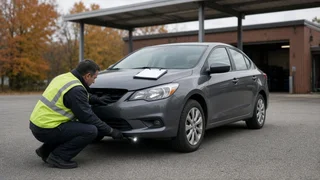
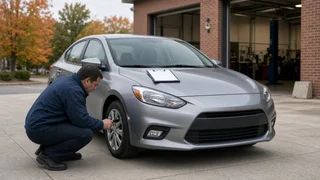
Uber TNC Vehicle Inspection Requirements: What Drivers Need to Know
If you plan to drive for Uber in the United States, your vehicle will usually have to pass an inspection before it can be activated on the platform, and often again on a recurring schedule. This TNC Uber inspection is a roadworthiness check focused on passenger safety. It is separate from your state's registration requirements, although in some places the two overlap. The most important qualification is that the exact rules depend on where you drive: Uber sets requirements by city or market, and some states and cities add their own transportation network company (TNC) rules on top.
The short answer
In most US markets, Uber requires a vehicle safety inspection before you can start driving. You complete it using an inspection form accepted in your market, and the signed results are uploaded to your driver account. The inspection confirms that core safety equipment works and that the car is in fit condition to carry paying passengers. How often you need it, where you can get it done, and whether a state inspection can stand in for it all vary by location. Your driver app or account dashboard is the authoritative place to see what your specific market requires.
What a TNC inspection is and why it exists
A transportation network company is the regulatory term used in many US states for app-based ride-hailing services such as Uber. Because drivers use personal vehicles rather than commercially licensed taxis, many TNC laws and platform policies require a periodic safety inspection as a substitute for the stricter oversight applied to commercial fleets. The goal is to confirm that a privately owned car is safe enough to carry members of the public.
Depending on the jurisdiction, the inspection requirement can come from Uber's own platform policy, from state or local TNC regulations, or from both. Where a regulator sets the rule, it may specify frequency, approved inspection locations or the form that must be used. Where it is purely a platform rule, Uber defines the process for that market.
Typical inspection criteria
The precise checklist depends on the form used in your market, but Uber-style inspection criteria generally cover the systems that affect occupant safety and basic roadworthiness. Common items include the following.
Lighting: headlights (high and low beam), tail lights, brake lights, turn signals and hazard lights; Visibility: windshield condition, with cracks or chips in the driver's line of sight often a fail point; working wipers and washers; intact side and rear-view mirrors; Brakes: service brake performance and parking brake function; Tires: adequate tread depth, no visible damage or uneven wear that suggests a problem, and correct sizing; Steering and suspension: no excessive play, looseness or worn components; Seat belts: present and working in every seating position; Doors and windows: all doors open and close from inside and outside; windows operate; Horn: functioning; Climate control: working heating and air conditioning, which some markets list as a passenger comfort requirement; Exhaust: no obvious leaks or excessive noise; Body and interior: no major damage, sharp edges or conditions that could injure passengers
Some markets also check items unrelated to mechanical condition, such as whether the vehicle carries commercial branding or has a salvage or rebuilt title. Treat this list as a general guide rather than a definitive standard; the form provided for your market is what the inspector will follow.
Vehicle identification on the inspection form
Inspection forms record the vehicle's identifying details, typically the vehicle identification number (VIN), license plate, make, model, year and color. These must match the registration and insurance documents on your driver account. A mismatch, such as a transposed VIN digit or an outdated plate number, is a common reason for an otherwise passing inspection to be rejected during document review. Check these details before you leave the inspection location.
How the Uber inspection differs from state safety and emissions tests
Drivers often confuse the TNC inspection with the inspections a state requires for registration. They serve different purposes and are not automatically interchangeable.
Inspection type | Purpose | Who requires it | What it covers; Uber TNC inspection | Eligibility to drive on the platform | Uber, and in some places state or local TNC rules | Passenger-focused safety items using the market's inspection form; State safety inspection | Legal roadworthiness for registration | The state (only some states require one) | State-defined safety equipment; criteria vary by state; Emissions test | Air quality compliance | The state or specific counties or metro areas | Tailpipe or onboard diagnostic emissions results, not general safety
An emissions test is not part of the Uber safety inspection. If your state or county requires emissions testing for registration, you still need to meet that requirement separately to keep your registration valid, which is itself a condition of driving. In some markets a current state safety inspection may be accepted in place of the Uber form, but you should not assume this. Confirm it in your driver account before relying on it.
Where to get the inspection done
Depending on the market, options usually include Uber-operated support locations that offer inspections, partner repair shops, or licensed independent mechanics who complete the official form. Some markets restrict inspections to approved facilities. Others accept any qualified mechanic as long as the correct form is fully completed and signed. Costs and availability differ by location and provider, so compare options in your area rather than assuming a standard price.
The test certificate and uploading results
After a passing inspection, you receive a completed and signed form, which serves as the test certificate for platform purposes. You then upload a clear photo or scan through the driver app or account portal, unless the inspection facility submits it directly. Make sure every required field is filled in, the inspector's signature and the date are present, and the image is legible. Incomplete or blurry forms are frequently sent back. Keep the original, since you may need it if a question arises later.
What happens if the vehicle fails
If any item fails, the vehicle cannot be approved until the problem is fixed. The usual path is to have the repairs done and then arrange a retest. Depending on the facility, the retest may cover only the failed items or require a complete new inspection. Many failures involve inexpensive, easily fixed items such as a burned-out bulb, worn wiper blades or a low tire. For that reason, a quick pre-check at home can save a return trip.
Walk around the car with a helper and test every exterior light, including brake lights and turn signals; Check tire tread and look for sidewall damage or bulges; Inspect the windshield for cracks in the driver's view; Confirm every seat belt latches and releases; Test each door from inside and outside, and every window; Verify that the horn, wipers, washers, heating and air conditioning all work; Compare the VIN and plate on your registration with the vehicle itself
How often you need to repeat it
Most markets require periodic re-inspection, commonly on an annual cycle, though frequency is set by market and local regulation and can differ. You may also be asked for a new inspection when you add a different vehicle to your account. The app typically shows when your current inspection expires. Letting it lapse can temporarily block you from accepting trips until a new one is uploaded and approved.
Inspection is only one part of vehicle eligibility
Passing the safety inspection does not by itself qualify a car for the platform. Uber also sets vehicle requirements that vary by market and service tier, such as a maximum vehicle age, a minimum number of doors and seats, valid in-state registration and qualifying insurance. Premium or larger-vehicle services generally have stricter standards. Before paying for an inspection, confirm that your vehicle meets the basic eligibility rules for your city and the service you intend to drive for.
Next step
Open your driver account and review the vehicle requirements and inspection instructions for your market. Note the approved form and locations, check whether a state inspection is accepted in its place, and run through the pre-check list above before your appointment. That approach gives you the best chance of passing the first time and getting on the road without a retest.