Types of Tire Pressure Gauges: Pencil vs Dial vs Digital
A tire pressure gauge seems simple, but the choice between a pencil, dial, and digital unit changes how easily you read inflation and how much you trust the number. These tools perform the same basic job through different mechanisms: a sliding scale, a mechanical needle, or an electronic sensor. Understanding how each type behaves at the valve stem helps you match a gauge to your glovebox, garage, or roadside kit. The best type depends on how often you check tires, where you use the gauge, and what level of readability matters most when you are kneeling beside a wheel.
Direct answer
For most drivers, a digital tire pressure gauge offers the easiest consistent reading and a pencil gauge offers the most compact low-cost backup, while a dial gauge sits between them with good mechanical readability. There is no single best type for every situation because each design trades accuracy, size, and convenience differently. The comparison matters most when a tire is a few psi low and the gauge must clearly show whether the pressure meets the vehicle specification on the door placard or owner's manual.
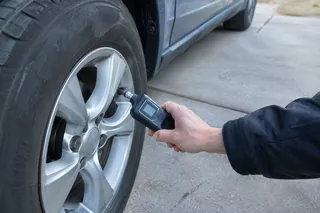
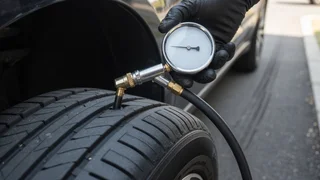
Pencil gauges are straightforward and fit anywhere, but their narrow scale can be harder to read in poor light. Dial gauges add a large numbered face and a needle, which makes the measurement range easier to see, though calibration can drift if the gauge is dropped. Digital gauges convert pressure into a direct numeric display and often switch between psi, bar, and kPa, but they depend on batteries. The right choice is the instrument you will actually use before a long trip or seasonal temperature change.