How to Choose the Best Tire Pressure Gauge for Your Car
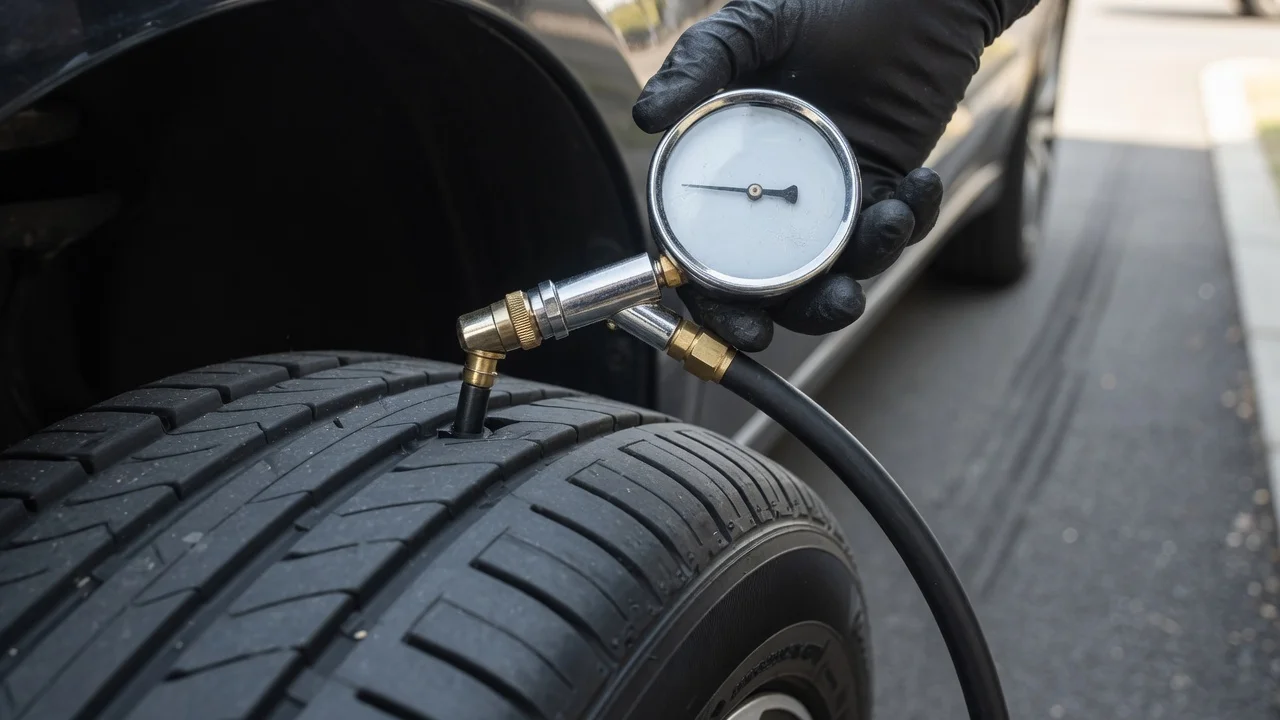
There is no single best tire pressure gauge for every driver. The right one depends on how often you check your tires, where you keep the gauge, how easily you can read small markings, and what kind of vehicle you drive. This guide covers the main types of handheld gauges sold for passenger cars and light trucks, the features that distinguish them, and how to match a type to your intended use.
What This List Covers and How It Is Ordered
This list includes the common categories of gauges a car owner can buy and use at home or on the road to read the air pressure inside a tire. It is a selection of gauge types, not an inventory of every product or brand on the market. Entries run from the simplest mechanism to the most feature-heavy. That order reflects construction, not quality. No brand or model rankings are given, because no comparable test data was available for this guide.
Two terms come up throughout. A chuck is the fitting at the end of the gauge that presses onto the tire's valve stem. Psi (pounds per square inch), bar and kPa (kilopascals) are different units for the same measurement. Many gauges display more than one. The unit you need is whichever matches the recommended pressure listed for your vehicle.
1) Stick Gauge (Pencil Gauge)
A stick gauge is a slim metal or plastic tube. When you press it onto the valve stem, air pushes out a marked bar, and you read the pressure where the bar stops. It needs no batteries and fits in a glovebox or door pocket, which is why it is a common choice to keep in the car. The trade-off is readability. The markings are small, and reading between them takes some care, which can be harder in poor light or for people with limited near vision.
2) Dial Gauge (Analog Gauge)
A dial gauge shows pressure with a needle on a round face, similar to a clock. Larger dials are easier to read than a stick gauge. Some models are liquid-filled, meaning the dial housing contains fluid that damps needle movement so the reading settles instead of flickering. Many dial gauges include a short hose between the dial and the chuck, which makes it easier to reach valve stems positioned awkwardly in the wheel. Dial gauges need no batteries but are bulkier than stick gauges, and a hard drop can affect the mechanism.
3) Digital Gauge
A digital gauge uses an electronic sensor and shows the reading as a number on a screen, so there are no scale markings to interpret. Many offer a backlit display for night use, switchable units, and automatic shut-off to save battery. The main dependency is power. A dead battery makes the gauge unusable until it is replaced, so it helps to know which battery type your gauge takes and keep a spare if the gauge lives in the car.
4) Inflator or Compressor With a Built-In Gauge
Some tire inflators, including handheld air chucks for shop compressors and portable 12-volt compressors, include their own gauge. This lets you check and adjust pressure with one tool instead of switching between a separate gauge and an air hose. Be aware that the built-in gauge is only as useful as its accuracy, and that cannot be assumed. Some owners use a separate handheld gauge to confirm the final reading after inflating.
Related but Not Equivalent: TPMS
A tire pressure monitoring system (TPMS) is built into many vehicles and warns the driver when pressure drops. It is not a substitute for a gauge. Direct TPMS uses sensors inside the wheels and, on some vehicles, displays individual tire pressures. Indirect TPMS does not measure pressure at all. It infers a low tire from differences in wheel rotation speed reported by the anti-lock braking system. Whether your vehicle has TPMS, which type it uses, and what it displays all depend on the make, model, model year and market. In either case, a warning light tells you something is wrong, while a gauge tells you the actual pressure so you can correct it.
Features That Separate One Gauge From Another
Readability: Dial size, digit size and backlighting determine how easily you can read the result, especially at dusk or in a dim garage. Measuring range: The gauge's range must comfortably include your vehicle's recommended pressure. Readings near the extreme ends of a scale can be harder to read precisely. Units: Confirm the gauge shows the unit used on your vehicle's tire information placard, or that it can switch units. Chuck design: Straight, angled and swivel chucks reach valve stems differently. A hose adds reach. Dual-head chucks are designed for vehicles with dual rear wheels. Bleed valve: A pressure-release button lets you let small amounts of air out to reach the target without removing the gauge. Reading hold: Some gauges keep the reading displayed after you remove them from the valve, so you can read it in a comfortable position. Power: Stick and dial gauges need no batteries. Digital gauges do. Durability and storage: Consider whether the gauge will sit in a hot or cold car, roll around a toolbox, or stay on a garage shelf.
Comparing the Main Types
Type | Power needed | Ease of reading | Size | Typical extras; Stick gauge | None | Small printed scale | Very compact | Usually none; Dial gauge | None | Needle on a dial, larger faces easier | Medium to bulky | Hose, bleed valve, liquid-filled dial; Digital gauge | Battery | Numeric screen | Compact to medium | Backlight, unit switching, auto shut-off, reading hold; Inflator with gauge | Varies by tool | Varies by tool | Larger | Inflate and measure in one step
Which Differences Matter for Your Use
For a gauge that stays in the car, compactness and independence from batteries matter most, which favors a stick gauge or a small dial gauge. A digital gauge also works if you check the battery periodically.
For regular checks at home, readability and convenience carry more weight. A dial gauge with a hose and bleed valve, or a digital gauge with a backlit screen and reading hold, makes routine checks quicker and reduces reading errors.
If you often add air yourself, an inflator with a built-in gauge saves steps. Pairing it with a separate gauge you trust gives you a way to cross-check.
If your vehicle has dual rear wheels or valve stems that are hard to reach, chuck design becomes the deciding factor. A dual-head or angled chuck, or a hose-mounted chuck, may be necessary to get a proper seal.
If you have difficulty reading fine markings, a digital gauge or a large-face dial gauge is the more practical choice over a stick gauge.
A Note on Accuracy Claims
Manufacturers often state an accuracy figure, but these figures are only comparable when they use the same units, apply across the same part of the measuring range, and come from similar test conditions. A tolerance quoted for one segment of the scale is not equivalent to one quoted across the full range. No independent accuracy measurements were available for this guide, so it does not compare specific products on precision. If accuracy is your priority, look for a gauge whose manufacturer documents the tolerance and the conditions behind it.
Gaps in This Guide
This guide explains gauge types and selection criteria only. It does not rank individual brands or models, quote accuracy or range specifications for particular products, or give step-by-step instructions for checking or inflating tires. The correct pressure for your tires is set by your vehicle's manufacturer and varies by make, model, trim, tire size and load. Use the figure on your vehicle's tire information placard or in the owner's manual rather than the maximum pressure molded into the tire sidewall.