Types of Hybrid Cars Explained for Buyers

There are four main types of hybrid cars sold in the US: mild hybrids, full hybrids, plug-in hybrids and range-extended electric vehicles. All combine a gasoline engine with at least one electric motor and a battery. They differ in how much the electric side can do on its own and whether you ever need to plug the car in. Those differences decide which one fits your driving, so the hybrid label alone tells you little until you know which type a vehicle is. Automakers do not always use these terms the same way, and capability can change between model years, generations and trims of the same nameplate. Treat the categories below as a framework, then check the vehicle specification for the exact version you are considering.
The Four Main Types at a Glance
Type | Can drive on electricity alone? | Plugs in? | Main benefit | Best suited to; Mild hybrid (MHEV) | No, or only in very limited situations | No | Smoother stop-start and modest efficiency gains | Drivers who want a familiar gas car with some efficiency help; Full hybrid (HEV) | Yes, at low speeds and for short distances | No | Strong efficiency in stop-and-go driving without changing habits | City and suburban driving, and drivers without home charging; Plug-in hybrid (PHEV) | Yes, for a meaningful distance on a charged battery | Yes | Electric daily driving with a gas engine for longer trips | Owners with reliable charging and mostly short daily trips; Range-extended EV (EREV) | Yes, the wheels are driven electrically | Yes | EV-like driving with a gas generator as backup | Drivers who want an EV experience but worry about charging gaps
Mild Hybrids (MHEV)
A mild hybrid adds a small electric motor-generator and a compact battery to an otherwise conventional gasoline powertrain. Many current systems run at 48 volts rather than the much higher voltages used in other hybrid types. The motor usually replaces or supplements the starter and alternator. It restarts the engine quickly after automatic stop-start, adds a little torque when pulling away, and recovers some energy during braking.
The electric motor cannot move the car on its own in most mild hybrids. Expect a smoother, more refined version of a regular gas car rather than a large change in fuel use. Some manufacturers market mild hybrids prominently, so check the details if electric driving is what you want.
Full Hybrids (HEV)
A full hybrid, often just called a hybrid, has a larger battery and a more powerful electric motor than a mild hybrid. It can drive the car on electricity alone at low speeds, such as in parking lots or slow traffic. At higher speeds and under heavier loads, it blends engine and motor power. The battery recharges from the engine and from regenerative braking, which turns the motor into a generator when you slow down. You never plug it in.
Full hybrids use one of three basic layouts. You don't need to memorize them, but they explain why hybrids from different brands feel different to drive:
Parallel hybrid: the engine and electric motor can both drive the wheels directly, often through a conventional-style transmission. It tends to feel familiar to drivers used to gas cars. Series hybrid: the engine acts mainly as a generator, and the electric motor drives the wheels. The car feels more like an EV. Series-parallel or power-split hybrid: the system switches between or blends both approaches, often using a planetary gearset in place of a traditional gearbox. Many widely sold hybrids use this layout.
Full hybrids usually show their biggest efficiency advantage in city and suburban driving, where frequent braking feeds energy back into the battery. On long steady highway runs the gap with a comparable gas car tends to narrow, though how much depends on the vehicle.
Plug-In Hybrids (PHEV)
A plug-in hybrid has a substantially larger battery that you charge from an outlet or charging station. With a charged battery, it can cover a useful distance on electricity alone before switching to hybrid operation. The rated electric range varies widely by model and is reduced by cold weather, high speeds and heavy accessory use. Once the battery is depleted, a PHEV behaves much like a full hybrid, so long trips do not depend on finding a charger.
The value of a PHEV depends heavily on charging habits. If you charge regularly and most daily trips fit within the electric range, much of your driving can be electric. If you rarely plug in, you are carrying a heavier battery without using its main advantage, and efficiency may be no better than a full hybrid's.
Range-Extended Electric Vehicles (EREV)
A range-extended EV is built primarily as an electric car. The wheels are driven by electric motors, and a gasoline engine works mostly as an onboard generator to recharge the battery or supply power when it runs low. That is essentially a series-hybrid layout with a large, pluggable battery. Electric range is typically intended to cover most daily driving, with the engine as a backup for longer trips or sparse charging.
The line between an EREV and a long-range PHEV is not always sharp, and manufacturers label vehicles differently. The practical question is how the car drives once the battery is low and whether the engine can ever drive the wheels directly.
Charging Compatibility for Plug-In Types
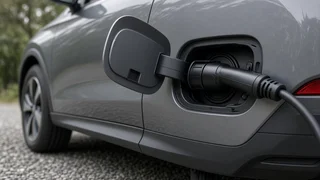
Only plug-in hybrids and range-extended EVs need charging. In the US, most can charge from a standard 120-volt household outlet (Level 1) or a 240-volt charger (Level 2). Level 2 is much faster and is what most regular users install at home or find in public. DC fast charging support varies. Many PHEVs do not offer it at all, while some EREVs and larger-battery PHEVs do.
Connector standards in North America are also shifting as more manufacturers adopt the connector standard originally developed by Tesla, now known as NACS. Before buying, confirm these points for the specific model year and trim:
Which charging port the vehicle uses and whether adapters are supported; Whether it accepts DC fast charging; The maximum onboard charging rate on Level 2; Whether your home electrical setup can support a Level 2 charger
What Is Under the Skin: Battery and High-Voltage System Basics
Full hybrids, plug-in hybrids and range-extended EVs use a high-voltage system to run the drive motor. Mild hybrids typically operate at lower voltage. In all of them, the battery is supervised by a battery management system. It monitors cell voltage and temperature, controls charging and discharging, and keeps the battery within a safe operating window. That control is a large part of how hybrid batteries are protected against premature wear.
Thermal management matters too. Batteries perform best and last longest within a moderate temperature range, so vehicles use air cooling, liquid cooling or a combination, and some add heating for cold climates. Larger plug-in batteries more often use liquid thermal management. High-voltage components are also electrically isolated from the vehicle body, and the system monitors that isolation as a safety measure.
For owners, the practical point is that high-voltage components are not a do-it-yourself area. Service and repairs should be done by technicians trained to work on them. Coverage for hybrid components is often separate from the basic warranty, so check the terms for any vehicle you are considering, new or used.
How to Choose the Right Type
Start with how you drive and where you park, not with the label. These general guidelines can narrow the choice:
No reliable access to charging: a full hybrid gives most of the efficiency benefit without changing your routine. A mild hybrid suits buyers who mainly want a refined gas car. Mostly short daily trips and home or workplace charging: a plug-in hybrid or range-extended EV can handle much of your driving on electricity. Frequent long highway trips: compare highway efficiency figures carefully, since the city-driving advantage of hybrids shrinks at steady speeds. Cold climate: expect reduced electric range in plug-in types, and look at how the vehicle handles battery heating. Towing or heavy loads: check the specific vehicle's ratings, because capability varies widely across hybrid models.
Purchase price, insurance, available incentives and expected maintenance also differ by type and model, and incentive rules change over time. Compare total ownership cost for the exact vehicles on your list, and verify current incentive eligibility at the time of purchase.
The Bottom Line
Mild hybrids assist the engine, full hybrids can drive briefly on electricity and never need plugging in, plug-in hybrids offer real electric driving when charged, and range-extended EVs drive electrically with a gas generator as backup. The best type for you depends mostly on your charging access and daily driving pattern. Once you have narrowed that down, check the vehicle specification for the exact model year and trim.