Troubleshoot a failing EGR valve
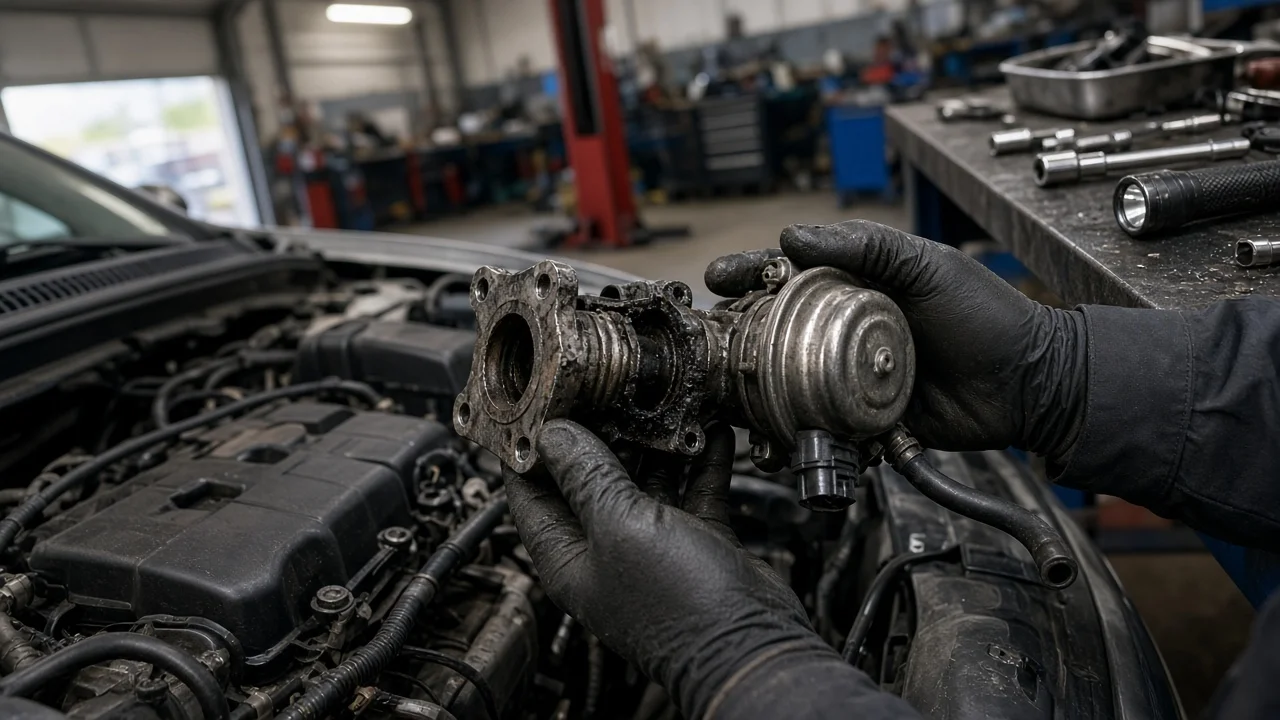
A faulty EGR valve can confuse a diagnosis because its early signs often resemble ignition, fuel, or vacuum problems. The valve lowers combustion temperatures by routing a measured amount of exhaust gas back into the intake, so trouble usually appears under specific symptom conditions: light throttle cruise, deceleration, or a warm idle. Matching those clues to the powertrain variant, service history, and any stored fault codes helps narrow the cause before parts are replaced.
Direct answer
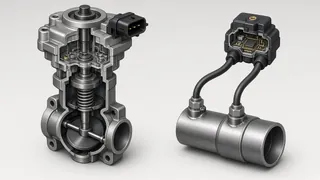
The direct answer is that EGR valve troubleshooting begins by separating control faults from mechanical faults. A valve that is commanded open but cannot move, or one that is stuck slightly open, will produce different drivability complaints. Model year and powertrain variant matter because some systems use vacuum-operated valves while others use electronic stepper motors, and each type fails differently. Recall applicability and repair records can also reveal whether the concern is a known calibration issue rather than a worn component.
Start with the simplest observable behavior before condemning the valve. Rough idle, light-throttle hesitation, or occasional stalling after a warm start suggests unwanted exhaust dilution, while elevated combustion temperatures may appear only as knock under load. Confirm that basic tune items are sound, because a vacuum leak or weak ignition can mimic EGR flow errors. If the history shows recent intake cleaning or sensor replacement, the symptoms may be related to disturbed connections rather than a failed valve.
Interpreting symptoms and test results
A stored diagnostic trouble code for exhaust gas recirculation is evidence that the control system saw an out-of-range condition, not proof that the valve itself has failed. For example, an insufficient flow code can come from a blocked passage, a failed position sensor, a broken vacuum line, or a wiring fault. Interpret the code in the context of the symptom conditions: does the problem occur only when the engine is warm, at a specific rpm band, or after a defined drive cycle?
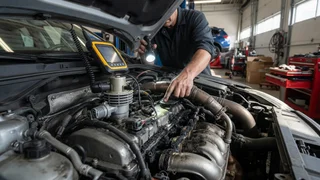
Testing should discriminate among plausible causes. With a scan tool, an electronically controlled valve can be commanded through its range while watching position feedback, but a stuck pintle may still need physical inspection. Checking for smooth movement, coking deposits, and proper vacuum signal on older designs reveals whether the issue is control or mechanical. Manufacturer-dependent codes require vehicle-specific confirmation, so treat generic descriptions as a starting point rather than a replacement order.