Transmission Output Speed Sensor Replacement Cost: What Drives the Price
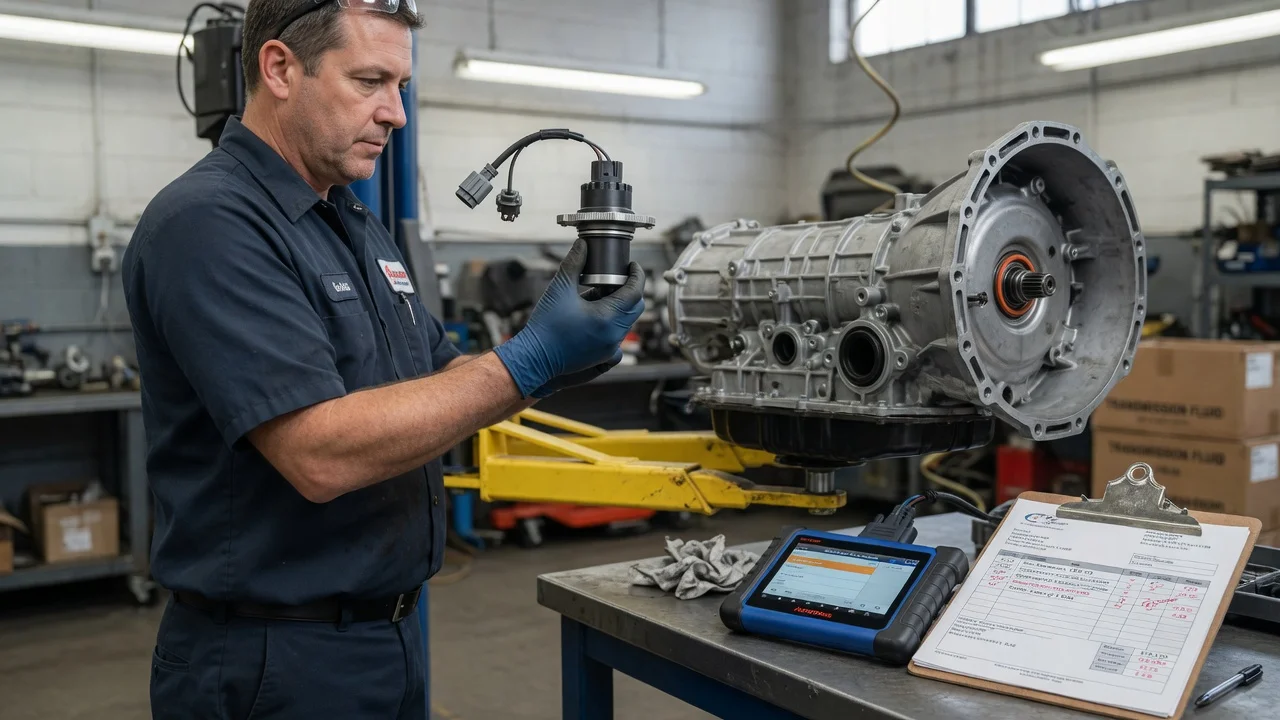
The price of replacing a transmission output speed sensor depends less on the sensor itself than on where it is mounted, how the shop confirms the fault, and what else the job disturbs. On some transmissions it is an external part held by a single bolt. On others it is built into an internal harness or control module. This guide explains what a fair estimate should cover, what moves the price, and how to compare quotes on equal terms.
What the estimate includes
The output speed sensor reports how fast the transmission output shaft is turning. The transmission control unit compares that signal with input or turbine speed to time shifts, judge clutch slip and control torque converter lock-up. On many vehicles the same signal also feeds the speedometer, cruise control or other modules. A complete replacement estimate normally covers diagnosis, the sensor, labor to remove and install it, any seal or O-ring, fluid to replace what is lost, clearing stored codes and a road test to confirm the repair worked.
Partial figures are common and easy to mistake for a total. A parts counter price covers only the sensor. A labor-only number may leave out diagnosis, fluid or connector repair. A diagnostic fee may appear as a separate line or be credited toward the repair if you approve it. Before comparing numbers, confirm whether each one is an installed total or a fragment, and whether it assumes the sensor is the confirmed fault or only the most likely suspect.
What changes the cost
Transmission type and configuration matter most. On many conventional automatics, and on some manual gearboxes and transfer cases, the sensor mounts on the outside of the case or extension housing and can be reached from underneath, which keeps labor short. On other designs it sits behind a heat shield, crossmember or exhaust component, or it is part of an internal harness, valve body assembly or mechatronic unit. In those cases the work may mean draining fluid, removing the pan or replacing a larger assembly. Front-wheel-drive transaxles, rear-wheel-drive units, four-wheel-drive systems and CVTs all place the sensor differently, so fitment has to be checked against the exact vehicle, engine and transmission code.
Parts and labor choices shift the total further. Original-equipment, OE-supplier and aftermarket sensors differ in price, warranty and consistency. Labor rates vary by region and by shop type, and many shops bill from published labor times rather than minutes actually spent. Additional items can include fluid that meets the manufacturer's fluid specification, a pan gasket and filter if the pan comes off, connector or wiring repair, and programming or adaptation if a control module is replaced. Corrosion, seized fasteners or a sensor stuck in its bore can add time beyond the book figure.
Compare like-for-like options
Start with diagnosis. Diagnostic codes such as P0720, P0721 and P0722 point to the output speed sensor circuit, not necessarily to the sensor. The same codes, along with harsh or erratic shift behavior, a jumpy or dead speedometer or a limp mode with limited gears, can come from a chafed harness, a corroded connector, a damaged tone ring, metal debris on a magnetic sensor tip, low fluid or a control unit fault. A shop that tests the signal and circuit before ordering parts may charge more at first but reduces the chance of paying for a sensor that was never the problem.
When weighing repair options from a dealer, an independent shop or a transmission specialist, line up equal scope. Each quote should name the same part category, the same labor operation, the fluid type and quantity, and comparable parts and labor warranty. A low quote that swaps only an external sensor is not equivalent to one that includes connector repair, and neither matches a valve body or module replacement on a transmission where the sensor is integrated. If the vehicle is still covered by a powertrain or extended warranty, or a manufacturer service bulletin applies, check that before paying out of pocket.
An externally mounted sensor can be a reasonable do-it-yourself job for owners with basic tools. Plan for some fluid loss, the correct level-check procedure, which on transmissions without a dipstick may require a specific fluid temperature, and a scan tool to clear codes and run any required relearn.
Read an itemized quote
A useful quote identifies the vehicle by VIN and transmission model, records the diagnostic finding and stored codes, and lists the part number and brand. It should show labor hours and the hourly rate, fluid type and quantity, seals or gaskets, shop supplies, disposal fees and taxes, plus warranty terms in both time and mileage. It should also state whether the diagnostic charge is included, separate or credited toward the repair.
Look closely for exclusions and conditional lines, such as extra charges if wiring damage is found, pan removal only if needed, programming, or a second diagnostic fee if the fault returns. Ask what happens if the new sensor does not clear the code: whether further testing is billed at the same rate and whether the part can be returned. Share your service history as well, since a recent fluid service or earlier transmission work can explain debris, a disturbed connector or an incorrect fluid fill.
Decide the next step
Before approving work, save the stored codes and freeze-frame data, and note when the symptoms appear, such as cold starts, highway speed or after a rainstorm. Identify the exact transmission from the VIN, build label or service records, then confirm where the sensor sits on that unit and whether it is external or internal. Ask for a diagnosis that checks the signal and wiring, request two or three itemized quotes covering the same scope, confirm the required fluid and fill procedure, and check any warranty coverage.
Avoid shortcuts that tend to cost more later. Clearing codes and continuing to drive leaves the cause unresolved, and replacing a sensor on the strength of a code alone can miss a wiring or tone ring fault. Topping up with a fluid that does not meet the specification can create new shift complaints. If the transmission is in limp mode or shifting erratically, limit driving until the fault is diagnosed, because repeated harsh engagement adds wear that a simple sensor repair would not fix.