Trailer hitch ball alignment and hitching guides
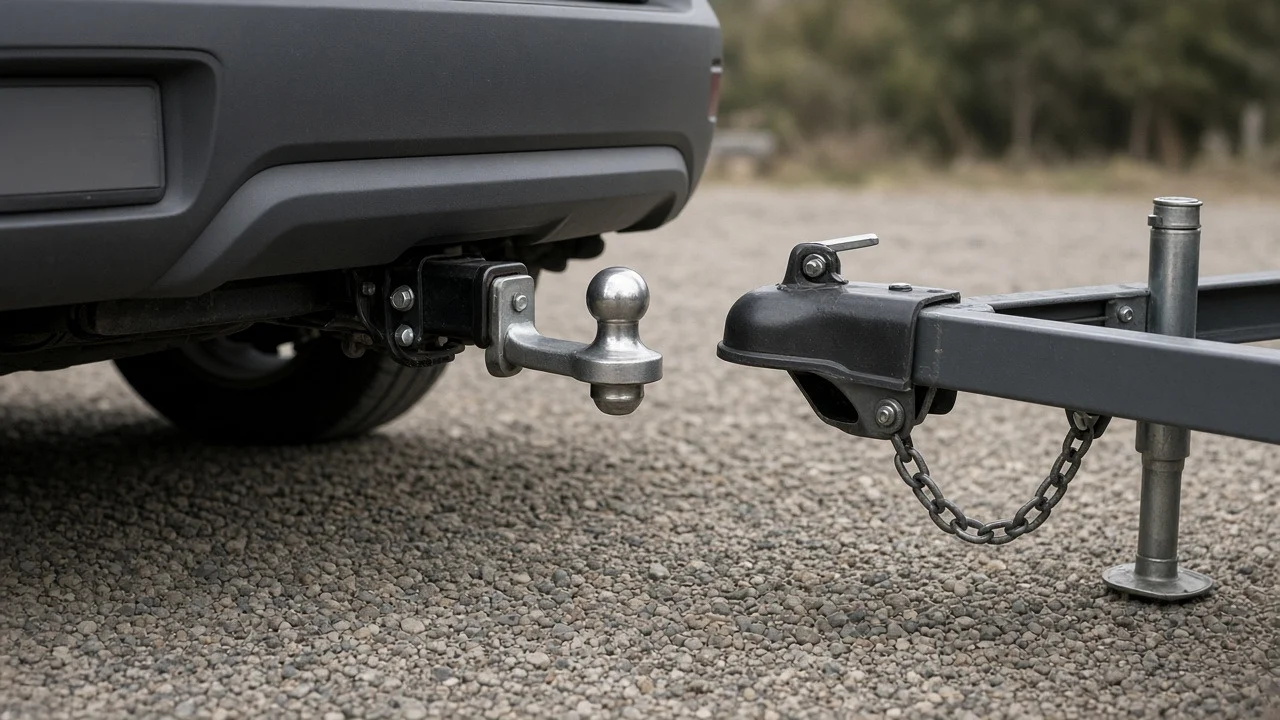
Getting a trailer coupler to drop cleanly onto the hitch ball is one of the most common slow-speed frustrations in towing. A small mismatch in angle, height, or lateral position can turn a routine connection into repeated climb-outs and hard shoves. Trailer hitch ball alignment is not the same as wheel alignment; it describes how the ball, coupler, and surrounding guide surfaces line up before the latch closes. Understanding the geometric and mechanical reasons behind a difficult hitching process helps a driver correct the setup safely and avoid damage to the coupler, safety chains, and tow vehicle.
Essential answer
Trailer hitch ball alignment is the process of positioning the tow vehicle and trailer so the coupler socket approaches the ball at a usable height, angle, and side-to-side location. A trailer hitch ball guide is a physical aid that narrows the margin of error, usually by creating ramps or funnel surfaces that steer the coupler toward the ball during the final few inches of backup. The underlying problem is simple but unforgiving: the coupler must be slightly higher than the ball until it is nearly centered above it, then it must settle down without binding on the latch area or jack post.
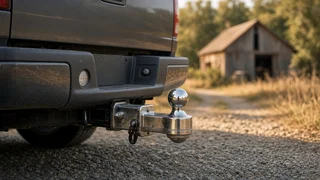
Because a trailer moves on its own suspension and the tow vehicle squats under tongue load, the correct relationship changes with load, slope, and surface. Joint play in the coupler, hitch bar, or receiver can add loose movement that makes the guide less effective. Mounting points for a guide accessory should place the funnel or V-shaped plate below and behind the ball so the coupler contacts the guide first, slides up, and reaches the latch-ready position without the ball being used as a battering surface. Confirming manufacturer-dependent fit before any modification is important because receiver and ball platform shapes vary.
A hitching guide works best when the driver backs slowly and uses the guide surfaces rather than the ball itself to correct small errors. The ball should act as the final locating pin, not as the first impact point. If the coupler repeatedly strikes the ball shank or latch housing, the approach height is usually wrong or the guide is set too far forward. Vehicle support and ride height also matter: a truck bed loaded with cargo or a trailer tongue resting on soft ground changes the approach angle enough to defeat a guide that worked on flat pavement.
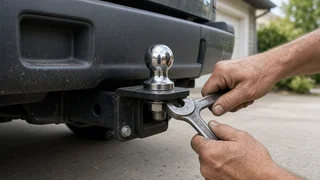
Practical next steps are to check the ball diameter matches the coupler marking, verify the ball platform is tight, and observe where the coupler first touches during a slow test. Use the trailer jack to set the coupler slightly above the ball, align the receiver centerline with the trailer tongue by looking down through the rear window or using a backup camera, and stop before force builds. Wrench torque and fastener specification should follow the values supplied with the hitch or guide, not generic assumptions. The guide is a locating aid, not a reason to apply excessive driving force.