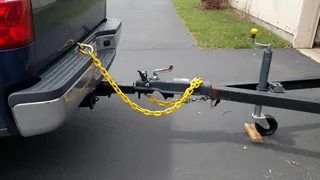
Trailer Coupler Locks
A trailer sitting on a coupler is only as secure as the connection you can control. When the tow vehicle is unhitched, an exposed ball mount or coupler becomes an invitation for a fast grab-and-go theft. A lock for trailer ball hitch hardware closes that gap by adding a mechanical deterrent at the point where a thief would otherwise lift, lower, and pull away. Whether you store a utility trailer in a driveway, leave a boat trailer at a ramp, or park a camper between trips, the right ball hitch lock for trailer use changes the risk calculation. Choosing one means matching the locking mechanism to your coupler size, mounting position, and how you actually tow.
The direct answer
A trailer ball hitch lock works by securing the coupler socket so it cannot be dropped onto a hitch ball or removed from one without releasing the lock. Most designs fit over the coupler latch or replace the standard hitch pin, blocking the lever movement or preventing the clamp from opening. The lock itself does not prove a trailer is immovable, but it removes the fastest theft method: backing up, coupling, and driving off in seconds. The best trailer ball hitch lock is the one sized for your coupler class and the ball diameter you actually use, because an undersized lock leaves enough clearance to defeat the deterrent.
If a coupler can still accept the ball with the lock installed, you have the wrong style. A ball lock for trailer hitch setups must occupy the socket or block the latch in the closed position. For lighter Class I and II couplers, a compact ball-fill lock may be sufficient. For heavier A-frame couplers, a lock that replaces the latch pin or wraps over the top often provides better access control. Rhino USA trailer coupler lock kit with hitch pin shows the common two-piece approach: one piece stops the coupler from opening, and the hitch pin stops the drawbar from separating from the receiver while towing or parked.