What Is a Trailer Coupler?
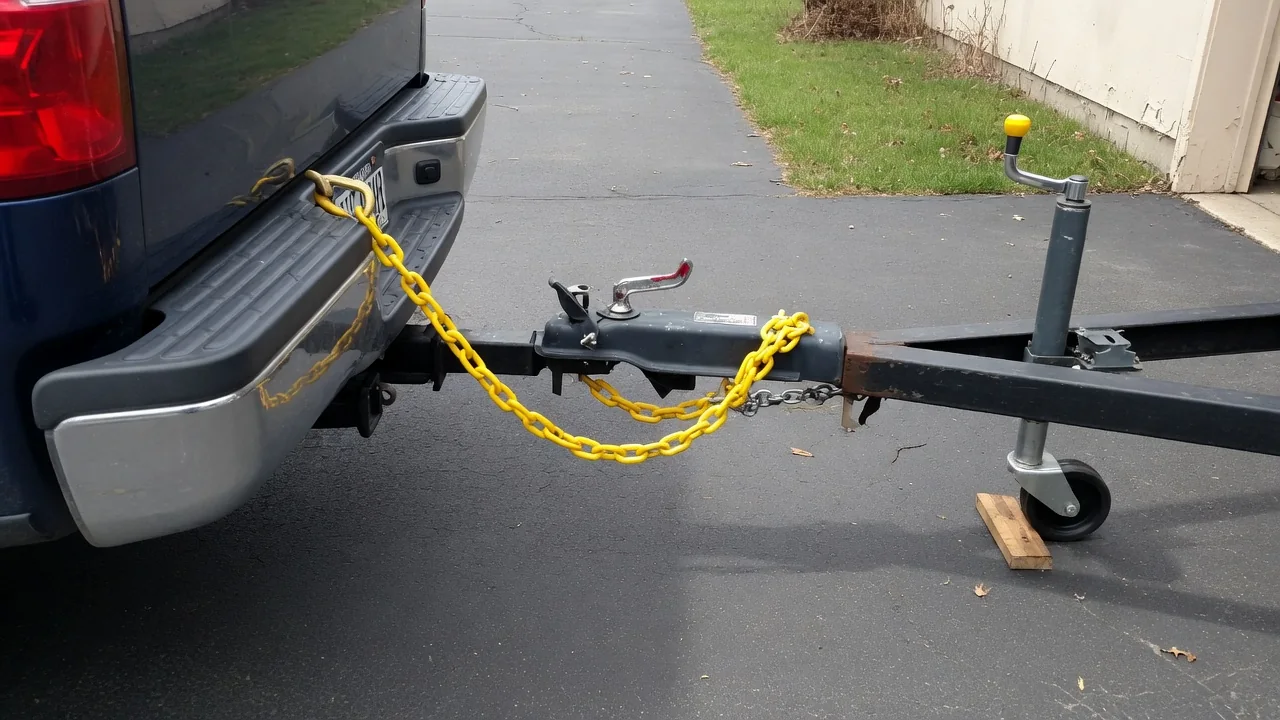
Anyone asking what is a trailer coupler is really asking how a trailer stays attached to a tow vehicle. The coupler is the forged or stamped socket at the front of the trailer tongue that drops over the hitch ball, clamps beneath it, and lets the trailer pivot through turns, dips, and bumps while remaining firmly connected.
Latch and fit
Inside the coupler is a rounded cavity shaped to match the hitch ball. When the tongue is lowered, the ball seats into that cavity, and a movable clamp, often called a jaw or underjaw, swings up beneath the ball's widest point. Closing the latch handle on top holds that clamp in place, so the ball cannot pull back out. The connection works like a ball-and-socket joint, allowing the trailer to swivel side to side and tilt as the road changes.
Fit depends on matching sizes. Hitch balls are made in several diameters, and the coupler must be built for the same one; the required size is normally stamped on the coupler body and on the ball itself. A coupler placed on a ball that is too small may appear to latch yet lift off under load. Latch styles also vary, including lever, trigger, sleeve, and handwheel designs, so the exact closing motion depends on the trailer's hardware and its manufacturer's instructions.
Visual check
A quick look before every trip confirms that the coupler has actually captured the ball. The socket should sit fully down over the ball with no visible gap at the top, and the latch handle should rest completely in its closed position. Looking from underneath or from the side, the clamp should be tucked below the ball rather than resting on top of it, which is a common mistake when the latch is closed before the ball has fully seated.
Most couplers have a hole through the latch for a safety pin or coupler lock, and an inserted pin shows that the handle cannot spring open. Many owners also raise the tongue jack slightly after latching; if the rear of the tow vehicle rises with it, the coupler is holding the ball. The same walkaround is a good time to confirm that the safety chains are crossed and attached and that the wiring plug is connected, since details differ between trailers.
Wear signs
Because the coupler rides on steel and carries the trailer's tongue weight, it wears gradually. Visible signs include a socket that has become oval or deeply scored, a clamp with rounded or thinned edges, and rust that has pitted the metal rather than just discoloring the surface. Cracks near welds or mounting bolts, a bent latch handle, and a distorted lip around the opening all suggest the part has been overloaded or struck and deserves closer inspection.
Wear also shows in how the coupler behaves. A latch that closes with almost no resistance, or one that will not stay shut without the pin, may indicate a tired spring or a worn clamp. Noticeable vertical play between the ball and socket after latching is another clue. Some couplers include an adjustment nut underneath to take up that slack, while others are not adjustable, so the right response depends on the design and the manufacturer's guidance.
Everyday Use and Observations
In regular towing, the coupler does most of its work unnoticed. A thin film of grease on the ball helps the socket rotate smoothly and reduces the squeaks and groans often heard in tight turns. Some light clunking when starting or stopping is common, because a small amount of clearance is needed for the joint to pivot. Hooking up is easiest with the latch fully open and the coupler raised just above the ball before lowering the jack.
Changes from the usual pattern are worth noting. A clunk that grows louder over time, a tongue that seems to shift over bumps, or a latch that suddenly feels different can point to wear, a loose ball mount, or an incorrect ball size. Surge brake trailers use a coupler assembly that slides to apply the brakes, so some fore-and-aft movement is normal on those units. Trailer type, load, and hitch setup all influence what counts as ordinary.
Limits and Next Steps
A coupler is only one link in the towing system, and its rating sets a ceiling. Each coupler is stamped with a maximum trailer weight, and the hitch ball, ball mount, receiver, and tow vehicle carry their own limits. The lowest rating among them governs what can be towed safely. A secure latch does not compensate for an overloaded trailer or poor weight distribution, both of which can cause sway and stress the connection well beyond its intended capacity.
When a coupler shows cracks, heavy pitting, a latch that will not hold, or looseness that adjustment cannot correct, replacement is generally safer than continued use. Because couplers are welded or bolted to the tongue and must match the frame style and ball size, a trailer shop or qualified technician is the sensible choice for that work. The trailer's documentation and the markings on the coupler itself remain the best references for sizes, ratings, and maintenance recommendations.