Toyota Tacoma Brake Pads: What to Check Before You Buy
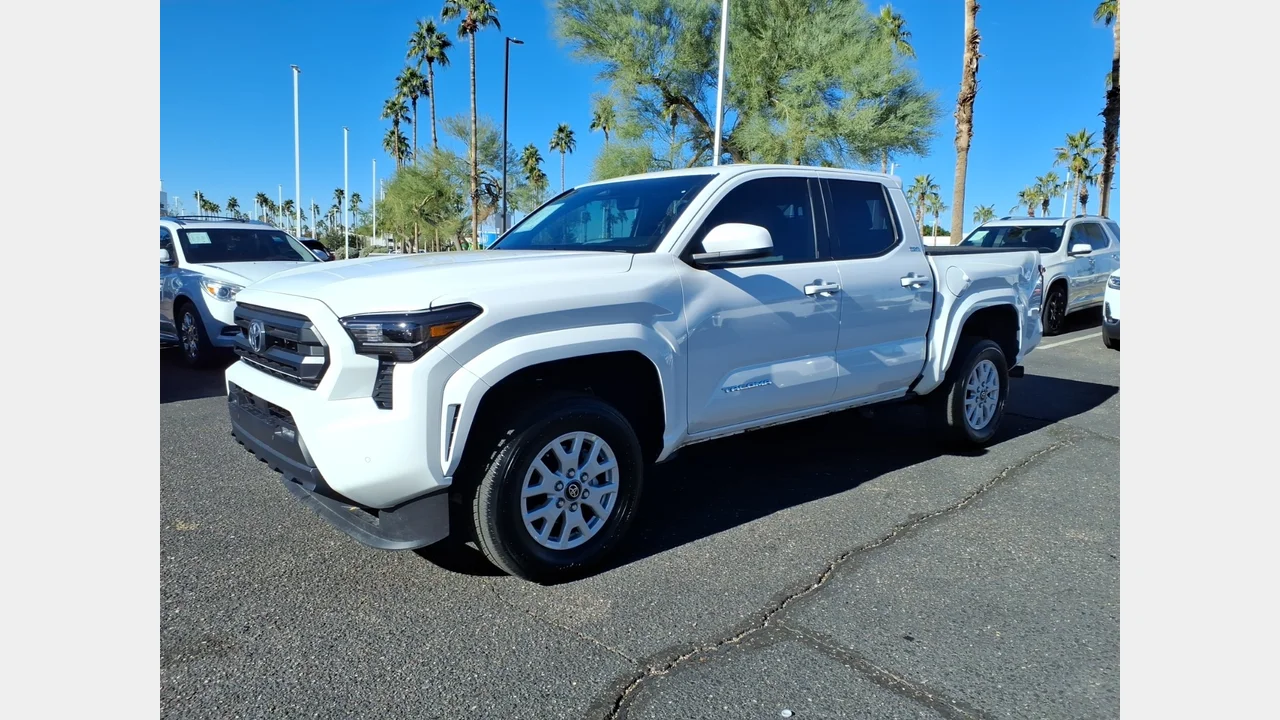
The right brake pads for a Toyota Tacoma depend first on fit and second on how you drive. Fit comes from your truck's model year, generation, drivetrain and trim. Driving style decides the pad material. For a daily-driven Tacoma that mostly sees commuting and light hauling, a quality ceramic or OE-style pad is usually the sensible choice. If you tow often, carry heavy loads, run larger tires or drive steep trails, a semi-metallic or heavy-duty pad built to handle more heat may suit you better. Confirm the part fits your exact truck before you compare anything else.
Start with fitment, not the brand
The Tacoma has gone through several generations since the mid-1990s, and the brake hardware changed between them. Even within one generation, caliper and rotor designs can differ between two-wheel-drive and four-wheel-drive trucks, between trims, and between model years. A pad listed only as fitting a "Tacoma" is not enough to go on.
Model year, and the generation that year belongs to; Drivetrain: 2WD, 4WD, or a 2WD trim built on the taller 4WD-style chassis; Trim level, especially off-road or performance trims that may use different brake components; Front or rear axle, since pads are sold by axle; Whether the rear brakes are discs or drums
Entering your VIN in a parts retailer's lookup, or giving it to a dealer parts counter, is the most reliable way to narrow the choice. If a catalog asks you to pick between two caliper types or rotor sizes for the same year, check your truck before ordering. You can read the casting marks on the caliper, measure the rotor diameter, or compare your old pads with the product photos.
Front pads versus rear brakes
Front pads do most of the stopping and wear fastest, so they are what most Tacoma owners are shopping for. Many earlier Tacomas use drum brakes at the rear. Those trucks take brake shoes, not pads, on the rear axle. Newer trucks may have rear discs. Look behind a rear wheel before buying a rear set: a flat rotor with a caliper clamped over it means pads, while a closed round drum means shoes.
Choosing a pad material
The friction material is the compound that presses against the rotor. It determines how the pads feel, how much dust and noise they make, how well they handle heat, and how quickly they wear the rotors. No compound is best at everything, so match it to how the truck is actually used.
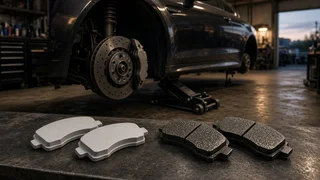
Material | Typical strengths | Typical trade-offs | Good fit for; Ceramic | Quiet, low visible dust, smooth pedal feel, gentle on rotors | Can handle sustained heavy-load heat less well than metallic compounds; often costs more | Daily driving, commuting, light hauling; Semi-metallic | Strong bite, tolerates heat from towing and repeated hard stops | More noise and dark dust; tends to wear rotors faster | Frequent towing, heavy payloads, mountain driving; Organic (NAO) | Quiet, soft feel, usually inexpensive | Wears faster and fades sooner under heat | Light-duty use only; less common for trucks; OE-style / low-metallic | Designed to feel close to the original brakes | Performance depends on the specific formulation | Owners who want the factory feel
Brands often sell several lines in the same material, such as a standard ceramic and a "severe duty" or "truck and SUV" ceramic. The heavier-duty lines are usually built for higher temperatures. They are worth considering if your Tacoma regularly works hard but you still want lower dust than a semi-metallic pad gives.
Match the pads to how the truck is used
A Tacoma's brakes carry very different loads depending on the owner, and several common changes add to that load:
Towing a trailer, or regularly carrying a loaded bed; Oversized tires, which add rotating mass and leverage against the brakes; Lift kits, armor, bumpers, winches and rooftop tents, which add weight; Long downhill grades or slow, brake-heavy trail descents
If one or more of these describes your truck, choose a pad rated for heavier duty. You may also want to look at rotors and brake fluid along with the pads, because pads are only one part of how the system handles heat. If the truck is close to stock and mostly sees pavement, a premium daily-driver pad will usually be quieter and cleaner without giving up anything you would notice.
Details that separate good pads from cheap ones
Shims and backing: Multi-layer shims bonded to the backing plate reduce vibration and squeal. Chamfers and slots: Angled edges and a center slot help with noise and with venting gas and debris. Wear indicators: A small metal tab that squeals when the pad is nearly worn gives an audible warning. Check that the replacement keeps this feature if your truck uses it. Hardware included: Some sets come with new abutment clips and anti-rattle springs, which saves a separate purchase. Edge code: Most pads have a two-letter friction code stamped on the edge, such as "FF" or "GG". The first letter describes friction when the pad is cold and the second when it is hot. The letters are broad ranges, not a full rating of quality, but they let you compare products roughly. Warranty terms: Some brands offer long or "lifetime" warranties, but these often cover only the pad itself, not labor or rotors, and may require proof of purchase.
Check the rotors before you order
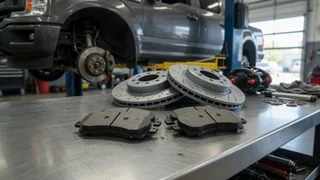
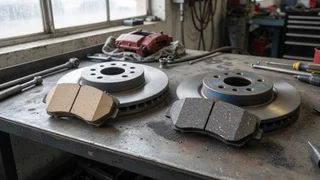
New pads work best on rotors that are flat, smooth and above the minimum thickness, which is usually stamped on the rotor itself. If the old pads wore down to metal, the rotors are scored, or you felt a pulsing through the pedal or steering wheel when braking, plan to resurface or replace the rotors at the same time. Putting fresh pads on damaged rotors often brings back noise and vibration and shortens pad life. Many retailers sell pad-and-rotor kits for the Tacoma, and those kits still need the same fitment check.
Signs your Tacoma needs new pads
A steady high-pitched squeal while driving or braking, often the wear indicator; Grinding or scraping, which can mean the pad material is gone and metal is touching the rotor; Longer stopping distances or a pedal that sinks further than usual; The truck pulling to one side when braking; Pad material that looks thin when viewed through the wheel spokes; A brake warning light, on trucks equipped with electronic wear sensors
Some of these symptoms, especially a soft or sinking pedal and pulling, can come from the hydraulic system or a sticking caliper rather than worn pads. Have the system inspected if new pads don't fix the problem.
Installation and break-in
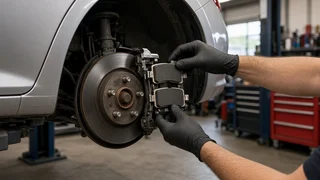
Replacing front pads on a Tacoma is a common do-it-yourself job for owners with basic tools, a jack and jack stands. Clean and lubricate the caliper slide pins and the pad contact points with a brake-specific lubricant, and tighten the caliper bolts and lug nuts to the factory torque values for your truck. Afterward, follow the pad maker's bedding-in procedure, usually a series of moderate stops from speed without coming to a full stop. Bedding lays down an even layer of friction material on the rotor, which helps prevent noise and uneven wear. If you are not comfortable working on brakes, a shop can install the pads you choose.
Quick buying checklist
Confirm fitment by VIN or by exact year, drivetrain and trim; Know whether you need front pads, rear pads or rear shoes; Pick a material that suits your driving: ceramic for most daily use, heavier-duty or semi-metallic for towing and hard use; Check that shims, a wear indicator and any needed hardware are included; Inspect the rotors and budget for rotors if they are worn or warped; Read the warranty terms rather than relying on the headline length; Plan to bed in the new pads after installation