Toyota Corolla Brake Pads: How to Find the Set That Fits Your Car
The short answer
No single brake pad fits every Toyota Corolla. The Corolla has been built across many generations and sold in many markets, and the correct pad depends on the car's model year, market, trim, powertrain and axle (front or rear). The reliable way to get the right set is to match pads to your specific vehicle, ideally by its VIN (vehicle identification number) or by the part number on the pads currently fitted, rather than by the model name alone.
This article does not list part numbers, prices or year-by-year fitment, because no verified fitment data was supplied for it. Treat any compatibility claim, including those from sellers, as something to confirm against your own vehicle details.
What changes which pads fit
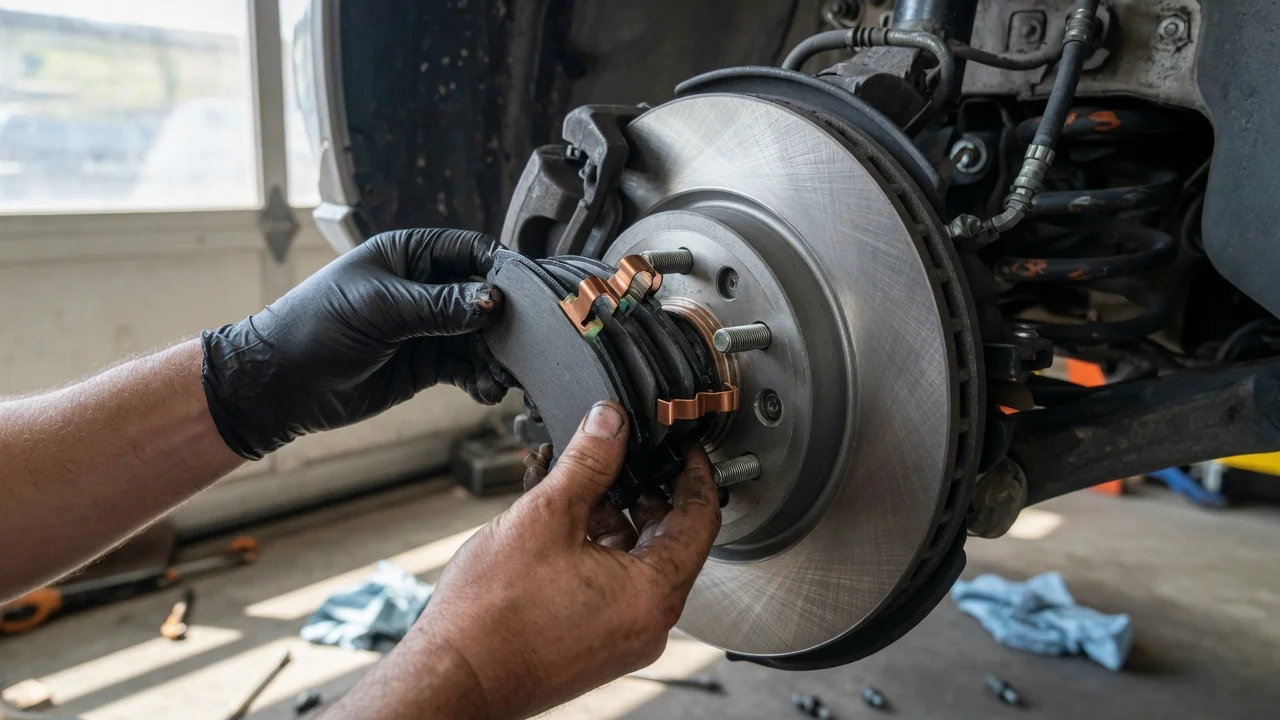
Generation and model year: brake components can change between generations, and sometimes within one. Market: a Corolla sold in one region may use different brake hardware from one with the same name and year elsewhere. Trim and powertrain: the hybrid and performance-oriented variants, such as the GR Corolla, should be treated as separate fitments, and the GR Corolla in particular uses a larger, performance-focused brake setup. Body style: sedan, hatchback and wagon versions are not guaranteed to share parts. Front or rear axle: front and rear pads are different parts and are sold separately. Rear drums or rear discs: some Corolla versions have used rear drum brakes, which take brake shoes rather than pads. If your car has rear drums, rear brake pads will not apply to it.
How to confirm fitment before buying
Find your VIN on the registration document, the driver's door jamb or the base of the windscreen, and use it with a parts catalogue or a dealer parts counter. If the current pads are original or a known brand, note the part number printed on the pad backing plate or the original packaging. Confirm whether you need front pads, rear pads or rear drum shoes. Check that the listing names your exact model year, body style and trim, not only the word Corolla. If two listings for the same car disagree, resolve the difference with the dealer or catalogue before ordering.
Choosing a pad type
Once fitment is settled, the main choice is the friction material, the compound that presses against the brake disc (also called the rotor). The common categories trade off noise, dust, wear and cold performance in different ways. Specific results vary by brand and product, and no test data was supplied here, so the descriptions below are general tendencies rather than measured comparisons.
Pad type | General tendency | Typical consideration; Ceramic | Usually quiet with relatively low visible dust | Often chosen for everyday commuting; Semi-metallic | Usually strong heat tolerance, may be noisier and dustier | Often considered for heavier use or frequent hard braking; Organic (non-asbestos organic) | Usually soft and quiet, may wear faster | Often found at lower price points; OE (original equipment) or OE-equivalent | Designed to match the factory pad's behaviour | A safe default when you want braking to feel as it did new
For a typical daily-driven Corolla, an OE or OE-equivalent pad, or a reputable ceramic pad listed for your exact vehicle, is a reasonable starting point. A performance variant or a car used for towing, mountain driving or track days may justify a pad specified for higher heat, and the manufacturer's or pad maker's guidance should take priority there.
Related checks worth making
Pads are often replaced alongside other parts, so check whether the discs are worn below the minimum thickness stated in your service information, whether new hardware such as clips and shims is included, and whether the brake fluid is due for a change. Minimum pad and disc thicknesses differ by vehicle, so use the figures in your owner's manual or service manual rather than a general rule. Because brakes are safety-critical, have the job done or checked by a qualified technician if you are not confident doing it yourself.
What this guide cannot confirm
Without your model year, market, trim and powertrain, it is not possible to name the exact pad your Corolla needs, quote a price or confirm availability. Those details, checked against a VIN-based parts lookup or a dealer, are the step that settles the question.