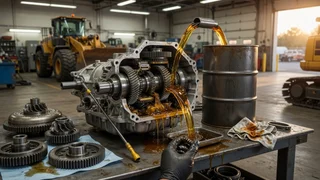
TO-4 Transmission Oil: What It Is and How to Choose the Right Grade
TO-4 transmission oil is a drivetrain fluid made to the Caterpillar TO-4 lubricant specification. It is used mainly in off-highway and heavy equipment, in compartments such as powershift transmissions, final drives, and systems with wet brakes or wet clutches. If your equipment manual or fill-point label calls for TO-4, you need an oil that meets TO-4 in the viscosity grade listed for that compartment and your operating temperatures. Most often that is SAE 30, sometimes written as TO-4 30W. If your manual does not list TO-4, do not assume it is a safe substitute for the fluid that is specified.
What the TO-4 specification covers
TO-4 is a performance specification, not a brand or a single product. Many oil makers blend oils to it. The specification focuses on the demands of heavy-duty drivetrains: controlled friction for clutch and brake engagement, wear protection for gears and bearings, resistance to heat and oxidation, and compatibility with seals and friction materials.
Friction behavior is the main difference between TO-4 fluids and many other oils. Powershift transmissions and wet brakes rely on clutch packs that must grip firmly and release cleanly. TO-4 oils are formulated so those friction surfaces engage predictably without excessive slipping or chatter. An oil with the wrong friction characteristics can cause clutch slippage, harsh shifts, brake noise, heat buildup and faster wear of friction discs, even when its viscosity looks right on paper.
Where TO-4 oil is used, and where it is not
TO-4 fluids are common in equipment such as loaders, dozers, graders, haul trucks, excavators and other machines with powershift drivetrains. Within one machine, the manual may call for different TO-4 grades in different compartments. For example, a lighter grade may be specified for the transmission and a heavier one for final drives. Some manufacturers other than Caterpillar also reference TO-4 for certain compartments, so the requirement is not limited to one brand of equipment. Only the manual for your specific machine settles which compartments take it.
TO-4 oil is generally not the right choice for these applications:
Passenger car and light truck automatic transmissions, which need an automatic transmission fluid (ATF) matching the vehicle maker's specification. Engine crankcases, unless a product explicitly carries the engine oil approvals your engine requires; TO-4 oils are drivetrain fluids. Axles or gearboxes that call for API GL-5 or similar gear oil, especially where no wet brakes or clutches share the oil. Tractors and equipment specifying a universal tractor transmission oil (UTTO) or a manufacturer's own hydraulic/transmission fluid, unless the manual lists TO-4 as acceptable.
TO-4 vs. similar-looking fluids
Several fluid types can sit side by side on a shelf with similar labels. The comparison below explains the general differences. Your equipment manual always takes priority over this summary.
Fluid type | Typical purpose | Key difference from TO-4; TO-4 drivetrain oil | Powershift transmissions, final drives, wet brakes and clutches in heavy equipment | Reference point: tuned for heavy-duty clutch and brake friction; Heavy-duty engine oil | Diesel and gasoline engine crankcases | Additive balance aimed at engines; may not give the friction control TO-4 compartments need; UTTO / tractor hydraulic fluid | Shared transmission, hydraulic and wet-brake systems in tractors | Different friction and viscosity targets; interchangeability depends on the equipment maker; GL-5 gear oil | Hypoid axles and gearboxes | Extreme-pressure additives can be unsuitable for wet friction components; Automatic transmission fluid (ATF) | Car and light truck automatic transmissions | Much lighter viscosity and a different friction profile
Choosing a viscosity grade, including TO-4 30W
TO-4 oils come in several SAE grades, commonly 10W, 30, 50 and 60, plus multigrade versions sometimes labeled TO-4M. The grade affects how easily the oil flows when cold and how well it holds its film strength when hot. TO-4 30W transmission oil is a widely used single-grade option for transmissions in moderate climates. A 10W grade is typically chosen for colder starts. Heavier grades such as 50 are often specified for final drives or hot operating conditions.
Equipment manuals usually include a viscosity chart that matches each compartment to an ambient temperature range. Use that chart rather than a general rule of thumb. If your machine runs through large seasonal temperature swings, the manual may allow a multigrade or recommend switching grades between seasons. A grade that works well in one climate may be too thick for cold starts or too thin for sustained heavy work in heat.
What to check before you buy
Equipment identification: confirm the make, model and serial number. Specifications can change between serial-number ranges of the same model. Compartment: identify exactly which compartment you are servicing, such as the transmission, final drive, differential or hydraulic system. Each one can call for a different fluid or grade. Specification wording: look for a clear statement that the product meets Caterpillar TO-4 or TO-4M. Vague wording such as "for use where TO-4 is recommended" is weaker than a stated claim of meeting the specification. Manufacturer approval: some products list formal approvals or registrations from equipment makers, while others only claim to meet performance requirements. If your warranty or service contract requires an approved product, check for that on the label or product data sheet. Viscosity grade: match the SAE grade to the manual's chart for that compartment and your temperature range. Other listed specifications: many TO-4 oils also list additional specifications, such as Allison or Komatsu-related ratings. These can help if one oil needs to serve several machines, but only if each machine's requirement is actually listed. Base oil: conventional and synthetic TO-4 oils are both available. Synthetics may suit extreme temperatures or extended drain programs, but meeting the specification matters more than the base oil type. Fill quantity: check the manual's capacity for each compartment so you buy enough for a full change, plus extra for top-ups. This helps you choose between jugs, pails or drums.
Filling, level checks and service intervals
Level check procedures differ by machine and compartment. Some transmissions are checked with the engine running and the oil warm. Others are checked cold, or with the machine parked on level ground in a specific gear or brake position. Checking at the wrong temperature or machine state can make a correct level look low or high, and overfilling can cause foaming and overheating. Follow the procedure printed on the dipstick, sight gauge or in the operation manual.
Service intervals for drivetrain oils are set by the equipment maker and are often adjusted for operating conditions such as heavy loads, dusty sites or high temperatures. Many fleets use scheduled oil analysis to decide whether to extend or shorten drains, as long as it fits within the manufacturer's guidance. Filters on the same circuit are normally changed along with the oil.
Mixing brands, grades and fluid types
Topping up with a different brand of TO-4 oil in the same grade is generally less risky than mixing in a different fluid type, but a full change to one product is cleaner when you have the chance. Avoid mixing TO-4 with engine oil, gear oil, ATF or UTTO in a TO-4 compartment, because even a partial mix can change friction behavior. If the wrong fluid has gone in, draining and refilling with the correct oil is safer than diluting it. The equipment maker may also recommend a flush, depending on what was added and how long the machine ran.
Bottom line
Buy TO-4 transmission oil only for compartments where your equipment manual calls for it. Choose the SAE grade, often 30W for transmissions, from the manual's temperature chart for that specific compartment. Confirm the label clearly states the TO-4 specification and any manufacturer approval your warranty requires. Then buy enough to cover the listed fill quantity, and follow the machine's own level check procedure and service interval.