Tire Bead Seater Ring, Strap and Bead Expander Guide
Direct Answer
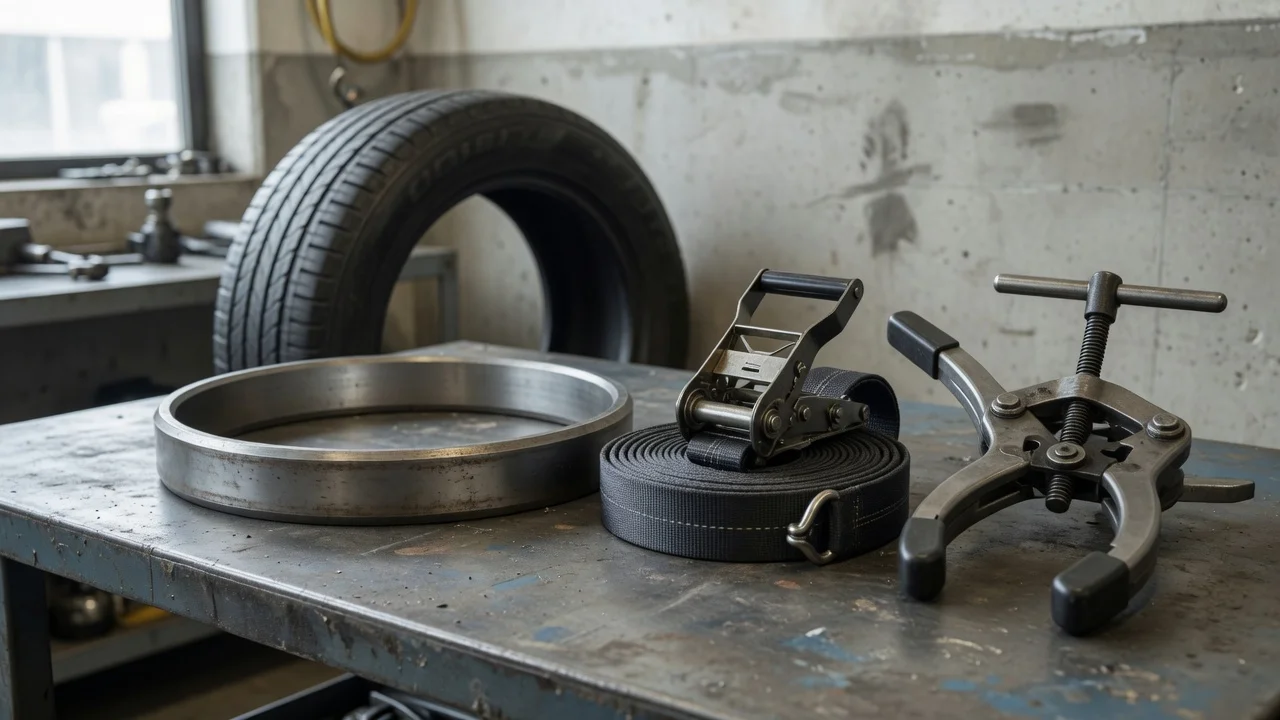
A tire bead seater ring is a ring-shaped or band-style tool used to help push a tire bead outward against the wheel rim so the bead can climb the rim flange and seat under air pressure. The term is applied loosely to different equipment: rigid bead seater rings, flexible bead expander belts or straps, and sealing rings used on some wheel and tire assemblies. The right choice depends on the tire size, rim profile, shop air supply and whether the job is automotive, light truck, off-road, agricultural or industrial.
Tire Bead Seater Ring
A dedicated tire bead seater ring is typically a rigid circular tool that is centered over the wheel face. When a burst of compressed air is released from a bead seater tank, the ring shapes and directs the airflow into the gap between the tire sidewall and rim. That puff of air momentarily inflates the tire cavity and pushes the sidewall outward so the bead moves into the rim's bead seat area. The ring itself is not left on the wheel; it is a positioning and airflow aid placed outside the tire during the seating process.
This tool is used for difficult beads that will not start seating with a normal air chuck, especially after mounting a new tire, after a tire has been dislodged, or on stiff sidewall tires that lose their shape in storage. A ring can also reduce the amount of starting fluid or other improvised methods used in a shop environment, but it still requires enough tank volume and pressure to create the necessary air blast.
Tire Bead Expander
A tire bead expander is a device that stretches or spreads the tire bead to a larger diameter or holds it open. On normal passenger tires, a bead expander is less common because the tire already has enough diameter to rest near the rim. It becomes useful on some low-profile or stiff bead designs, but the term is most often applied to tools that keep the tire's lower bead open while the upper bead is worked onto the rim.
On industrial and agricultural tires, a bead expander can hold the tire's shape during transport and mounting. Some expanders are mechanical frames that press the beads apart; others are inflatable bladders. The benefit is preventing the beads from collapsing toward each other when the tire is stored flat or handled without a rim. This reduces pinch injuries and avoids starting a mount with a folded bead.
Tire Bead Expander Belt or Strap
A tire bead expander belt, sometimes called a bead strap, is a flexible band placed around the tire body or around the sidewall to apply pressure where a tank blast alone cannot reach. A strap works by compressing the tread or upper sidewall so air entering the tire is forced toward the lower bead. This can widen the contact area between the tire and rim and help a stubborn bead climb into position.
A tire bead seater strap is usually made of heavy webbing with a tightening mechanism such as a ratchet or cam buckle. It is wrapped around the circumference of the tire and snugged down. The strap should be released or repositioned as soon as the tire begins to take air and hold the rim, because leaving it cinched too long can distort the tire or trap pressure unevenly.
Tire Bead Seater Ring Set
A tire bead seater ring set may include multiple ring diameters or a ring plus interchangeable nozzles, gaskets, straps and storage fittings. The set is intended to match different wheel openings. A ring that is too large or too small for the wheel will not direct air cleanly into the sidewall gap, so shops handling several rim sizes may use a set rather than a single ring.
When evaluating a set, the supported rim diameter range and tank connection size matter more than the number of included parts. A ring designed for small automotive wheels may not work on a wide light-truck or off-road wheel, and a large agricultural ring can be awkward and unsafe on a compact passenger rim.
Tire Bead Sealer Ring
A tire bead sealer ring is a different component. Rather than helping the bead seat, a bead sealer ring is used on certain multi-piece wheels as a sealing interface between the rim and tire bead or between rim sections. On split-rim and lock-ring wheel designs, replacing a damaged or corroded sealing ring can be necessary to maintain an airtight assembly.
On a conventional one-piece automotive wheel, there is normally no separate sealing ring; the tire bead itself seals against the rim. A bead sealer ring should not be confused with liquid bead sealer, which is a paste or rubber coating applied to a corroded rim or leaking bead to fill small gaps.
Tire Bead Ring and Bead Stretcher
The phrase tire bead ring can mean the bead bundle inside the tire, which is the wire or cable core that gives the bead its strength. That is not an external tool, but the term is also used informally for an external seater ring. In a shop context, asking for a bead ring usually means the external tool used during inflation.
A tire bead stretcher is another term for a bead expander, especially one used to spread a folded or collapsed tire so the beads can be handled safely. It is not a routine passenger-car tool. It is more relevant to large tires that have been stored unmounted and whose beads have fallen inward, making them difficult to grip without mechanical spread.
How to Choose Between a Ring, Strap and Expander
Use a bead seater ring when the tire is on the rim but the lower bead is too far inward to catch air from a normal chuck, and you have a high-volume blast tank. Use a bead seater strap or belt when the tire is partially seated but air is escaping around a stubborn section, or when only one bead needs to be pushed outward while the other side is already sealing. Use a bead expander or bead stretcher when the unmounted tire has collapsed and the beads are touching, or when working with large stiff tires that cannot be manipulated by hand. Use a sealing ring only as part of a multi-piece wheel service, matched to the specific wheel design.
Safety and Practical Notes
Bead seating requires high momentary air pressure or volume. A ring or strap should be sized correctly for the wheel. Never stand over the tire or place hands between the tire and rim during the seating attempt. When a strap is used, position the buckle away from the direction the tire may shift and keep bystanders clear of the path of the strap end.
Documented specifications vary widely by manufacturer and market. No universal pressure setting fits every ring, and some units require a specific minimum tank size to work. If the tool documentation is not available, treat the claimed rim range as a guideline rather than a verified limit.
Gaps and Uncertainties
This guide does not provide model-specific part numbers, exact working pressure figures, or vehicle-by-vehicle fitment because those values are not supplied in the source material. Ring diameter, tank capacity, strap length and sealing-ring compatibility must be confirmed against the specific wheel, tire and tool before use.