Thermostat replacement cost
A thermostat replacement cost depends on the accessibility of the housing, whether the component is sold separately or with an integrated assembly, and the cooling system work required to refill and bleed the circuit. The job is usually a focused repair rather than a full cooling-system overhaul, but the final invoice shifts with vehicle packaging, coolant specification, and whether surrounding hoses or seals are disturbed. Readers researching this service should treat an estimate as a starting point and then confirm what their engine layout actually demands.
The direct answer
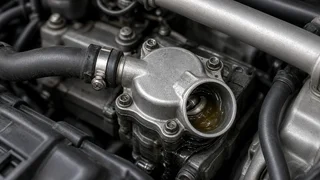
The direct answer is that replacing a car engine thermostat is generally an entry-level to mid-level cooling system repair, with the largest practical variables being labor access and the price of the replacement part. On many inline engines the thermostat housing sits near the upper radiator hose, making the job straightforward. On transverse V-engines or turbocharged layouts, buried fasteners, intake plumbing, or a chain-driven water pump housing can increase the time a shop charges even though the thermostat itself remains an inexpensive valve.
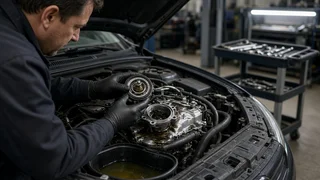
A materially important condition is whether the thermostat is available as a standalone wax-pellet unit or only as part of a housing, outlet, or manifold assembly. Some designs integrate the temperature-sensing element with a plastic coolant outlet that should be replaced as one piece, and aftermarket or dealer packaging follows that configuration. The service usually includes draining enough coolant to avoid a mess, replacing any one-time gasket or O-ring, refilling with the correct coolant concentration, and running the engine to remove air pockets before final verification.