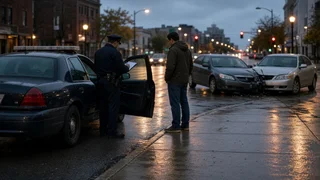
How to Obtain a Texas Car Accident Report
If a law enforcement officer investigated your crash in Texas, the officer completed a Texas Peace Officer's Crash Report, known as Form CR-3. You can usually get a copy in one of two ways. You can order it online through the Texas Department of Transportation (TxDOT) Crash Report Online Purchase System, or you can request it directly from the agency that responded, such as a city police department, a county sheriff's office or the Texas Department of Public Safety. Access is limited to people with a direct connection to the crash, and you will need some identifying details to locate the report. If no officer filed a report, there is nothing to order, and you will rely on your own records and your insurer's claim file instead.
What a Texas crash report contains
The CR-3 is the standardized form Texas officers use to document a crash. It typically records the date, incident time and location, the drivers and owners involved, vehicle identification details such as make, model and plate, insurance information, a narrative and diagram of how the collision happened, contributing factors noted by the officer, any injuries, and any citations issued. It also carries a crash ID number. That number is the report reference you will use when dealing with insurers, attorneys or repair claims.
The report reflects the officer's observations and conclusions at the time. It is an important document, but it does not by itself decide insurance fault or the outcome of a legal claim.
Who can request the report
Texas law treats crash reports as restricted records rather than fully public documents. Copies are generally released to people with a direct interest in the crash. That includes drivers and other people involved, vehicle owners, their insurance companies, their employers in some circumstances, and their legal representatives. If you are requesting on someone else's behalf, the ordering system or agency may ask you to state your relationship to the crash. Eligibility rules can change, so confirm them on the request form you use.
Before you start: gather these details
The crash ID or report reference number, if the officer gave you one at the scene (often written on a card or exchange form); The date of the crash; The county and city or road where it happened; The name of at least one person involved; The name of the responding agency, if you know it; A payment method, since a fee normally applies to copies
You rarely need every item. The crash ID alone, or a combination of the date, location and a driver's name, is usually enough to find the record. The more accurate your details are, the faster the search will be.
Step-by-step: how to get your Texas car accident report
Step 1: Allow time for the report to be filed
The officer has to finish the report and the agency has to submit it before a copy is available. This often takes several days and can take longer for complex crashes. If you search right after the incident and find nothing, wait and try again before assuming no report exists.
Step 2: Choose where to request it
The TxDOT online system is the most common route because it covers reports submitted by agencies statewide. Requesting directly from the investigating agency is a good alternative. It also makes sense if the online search fails, if the agency has not forwarded the report yet, or if you need related records the agency holds.
Step 3: Request the report online through TxDOT
Open the TxDOT Crash Report Online Purchase System. Search using the crash ID, or enter the date, county and a person's name. Confirm the result matches your crash by checking the date, location and names shown. State your eligibility as a person entitled to the report. Choose a regular or certified copy. A certified copy is generally needed for court or other formal legal use, and a regular copy usually works for insurance. Pay the fee and download the report, then save it in more than one place.
Step 4: Or request it from the investigating agency
Contact the records division of the police department, sheriff's office or Department of Public Safety office that responded. Many agencies accept requests online, in person or by mail. Expect to give the same identifying details and to show identification or proof of your connection to the crash. Ask about the fee, the accepted payment methods and the expected processing time.
Step 5: Check the report for accuracy
Read the whole report as soon as you receive it. Check names, addresses, insurance details, vehicle identification, plate numbers, the incident time and the location. Compare the diagram and narrative with what you remember and with your own evidence. You have the correct, complete report when the crash ID, date and parties match your incident and every page is present.
Step 6: Request a correction if something is wrong
Only the investigating agency can amend its report. TxDOT and insurers cannot change it. Contact the agency's records division or the officer named on the report and explain the error. Factual mistakes, such as a wrong plate number or misspelled name, are more likely to be corrected than disagreements about the officer's opinion of fault. If the agency will not change a disputed conclusion, ask whether you can submit a supplemental statement. Also tell your insurer about the disagreement in writing.
If no police report was filed
Police do not respond to every crash, especially minor collisions without injuries. If no officer investigated, no CR-3 exists to request. In that case, your claim will depend on the information you exchanged with the other driver, your photos and notes, and the records your insurer creates. Texas law may still require you to report certain crashes, such as those involving injury, death or significant property damage. If you are unsure whether your crash qualifies, contact the local law enforcement agency or your insurer promptly.
Evidence to keep alongside the official report
The crash report is only one piece of the record. Your own evidence helps you check the report and supports your claim if details are missing or disputed.
Photos of all vehicles, damage, plates, the road layout, traffic signals and conditions; The other driver's name, contact details, insurance information and vehicle identification; Witness details: names, phone numbers and a short note of what each person saw; The exact incident time and location, written down as soon as it is safe; The original recording from any dashcam or phone video, kept unedited, with the file saved separately from any copies you share; The responding officer's name, the agency and the report reference number; Medical visits, repair estimates, towing receipts and rental costs
Keep dashcam footage in its original form. Many cameras overwrite older files automatically, so move the clip off the memory card soon after the crash. Share copies rather than the original, so the original stays unaltered.
Record retention: keep your copies
Agencies and TxDOT keep crash reports only for a limited period under their record retention schedules, and older reports can be harder to obtain. Download your copy early and store it with your photos, recordings and claim correspondence. Keep everything until your insurance claim, any repairs and any legal matter are fully resolved, and longer if your attorney or insurer advises it.