Tesla and EV Tire Wear: Causes, Uneven Patterns, and Tire Care
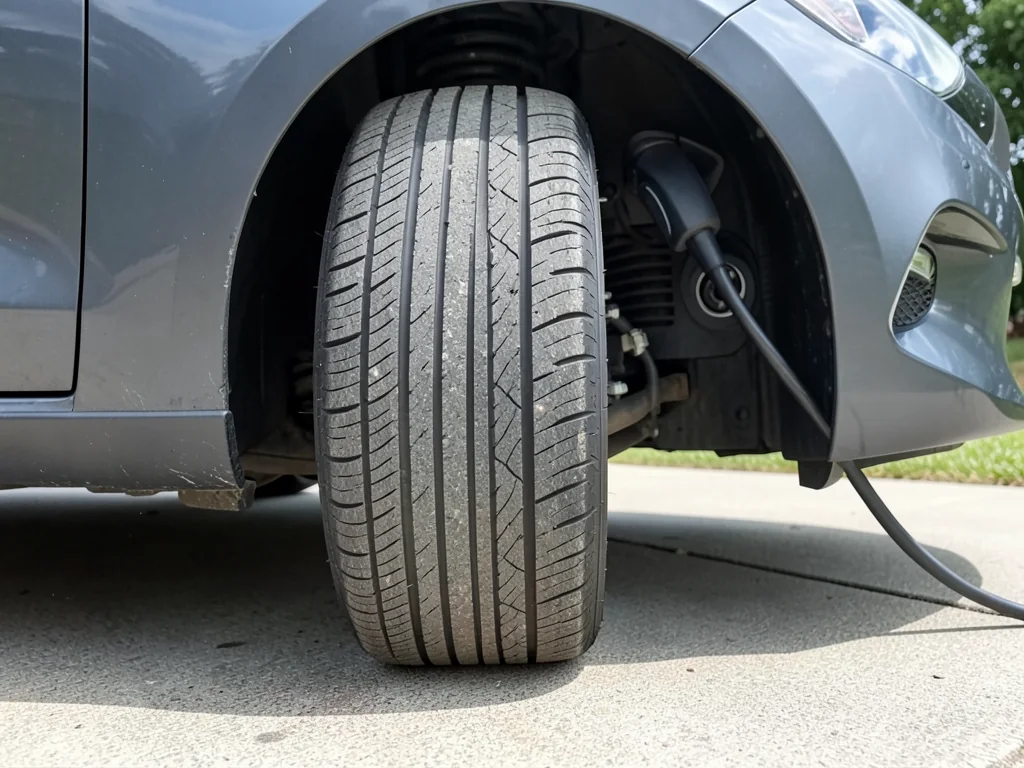
Tesla tire wear and electric vehicle tire wear share several mechanical reasons: extra mass, instant motor torque, and how drivers apply that torque on real roads. Rapid or uneven patterns are not automatic for every EV. Load, alignment, pressure, compound, and route conditions shape electric car tire wear on Teslas and other EVs. Those factors help owners interpret wear instead of treating it as a single defect.
How Vehicle Load, Torque, and Driving Conditions Affect EV Tires
Electric cars and tire wear are linked in part because battery packs raise curb weight, so passenger, cargo, and cornering loads press the contact patch harder than many similarly sized gasoline cars. Axle load and the tire's load rating matter on every trip. Extra force can consume rubber faster, yet tire wear on electric vehicles is not a fixed penalty. How the vehicle is loaded and how often it is driven hard through curves still change the outcome.
Strong acceleration and wheel slip also stress tread. Available motor torque is not the same as the torque a driver uses; a gentle launch wears rubber differently than repeated hard starts that spin the driven tires. Compound, road texture, temperature, and everyday routes then shape EV tire wear. Broadly even tread consumption differs from localized wear that warrants inspection. No single lifespan applies to every electric car or driving mix.
Assessing Tire Wear on a Tesla or Model 3
Tesla Model 3 tire wear cannot be judged from the badge alone. Note model year, trim, wheel and tire package, tire age, mileage, and service history before comparing cars. Dual-motor and rear-wheel layouts shift axle loading, and highway commuting versus short, aggressive city trips change where rubber is used. Those factors influence Tesla tire wear without creating one normal pattern for every Tesla. Two Model 3s with different wheels and drivers can look unrelated at the same mileage.
Recorded tread depth across inner, center, and outer ribs on each tire, repeated over time, shows whether wear is progressing evenly. Spot checks around the circumference also catch cupping a single location can miss. A glance at the outer shoulder is not a complete map of Tesla Model 3 inside tire wear. Consult the specified cold tire pressure for that configuration rather than assuming one inflation number covers every Model 3 wheel package. Confirm the placard and owner information for that car.
Tesla Inner-Edge and Uneven Wear: What the Pattern Can Reveal
Uneven tire wear on a Tesla often shows first as inner shoulder wear, a thinner band along the inside edge that is easy to miss from the curb. Feathering feels like a sawtooth across the tread blocks on a parked tire. Cupping appears as scalloped high and low spots around the circumference. Wear on both shoulders with a healthier center can point toward inflation history. Uneven tire wear on a Tesla Model 3 still needs the rest of the chassis story before anyone names a failed part.
Camber and toe settings can contribute to inside-edge wear because they change how the contact patch sits and how the tire rolls. Tread appearance alone cannot prove a wheel alignment fault; similar inner-edge patterns appear after impacts, bent parts, or long periods of low pressure. A technician may also inspect suspension condition and pressure history. An outer shoulder that looks healthy does not establish the inner shoulder's condition. When the inside edge is hard to see, arrange a professional inspection.
Checking Tire Wear on the BMW i4, i3, Rivian, ID.4, and LEAF
BMW i4 tire wear, BMW i3 tire wear, Rivian tire wear, ID.4 tire wear, and Nissan Leaf tire wear should each be assessed on the vehicle in front of you. Confirm exact configuration, fitted tire specifications, pressure history, load use, and wear location. EV car tire wear on these platforms still follows rubber, load, and geometry. A pattern on one i4, i3, Rivian, ID4, or Leaf does not transfer to another example of the same badge.
Verify wheel and tire sizes on both axles before discussing rotation. Staggered tire sizes and directional tires can block a simple front-to-rear swap. For a Rivian, include cargo, towing, and drive-mode use in the wear history without treating those as a model-wide defect or typical lifespan. Keep conclusions tied to the inspected vehicle and its documented setup. Tire wear on EVs in this group remains an individual measurement problem, not a slogan attached to a nameplate.
Regenerative Braking and Rivian Conserve Mode
Regenerative braking tire wear is often discussed as if regeneration itself sanded the tread. Regeneration transmits deceleration through the driven tires, so those contact patches work whenever the motor slows the car. How much that contributes depends on braking demand, traction, and whether one or both axles handle the regen torque. Tire wear on electric cars with strong regeneration can still be modest when stops are anticipated. The system is a force path, not proof the tires are finished.
Smooth accelerator release and looking farther down the road moderate abrupt tire forces without requiring anyone to disable regeneration as a wear remedy. For Rivian Conserve mode tire wear questions, first verify that Conserve is available on that vehicle, how it operates, and what the manufacturer says about using it. Drive-mode history belongs beside pressure, alignment, loading, and tread measurements. Use of Conserve mode alone does not prove it caused axle wear. It is one operating choice among several a technician should document.
Pressure, Rotation, and Habits That Support Tire Life
Check cold tire pressure against the vehicle placard or applicable manufacturer guidance for that wheel and tire package. The number molded on the sidewall is a maximum, not the everyday inflation target, and running far from the specified pressure can accelerate even and uneven wear. Follow the rotation guidance that belongs to the vehicle and confirm restrictions from staggered sizes, directional tread, or mixed load ratings. Do not invent a calendar interval; use the schedule documented for that EV and those tires.
Gentle launches, measured cornering, and anticipating stops reduce the sudden shear that strips rubber from the leading edge of tread blocks. EVs and tire wear still respond to those habits even when the motors can deliver a hard hit of torque. Keep a simple record of pressure, mileage, tire rotation, and tread depth so changes show up early. Rotation can even out remaining life when fitment allows it, but it cannot correct an underlying alignment or suspension problem.
When Tire Wear Needs Professional Attention
Rapid localized wear, persistent pulling, new vibration, or recurring pressure loss are reasons to arrange a tire and chassis inspection. Exposed cords, bulges, tread separation, or a visibly deflated tire are different: stop driving and arrange appropriate assistance. On electric vehicles, tire wear that suddenly becomes noisy or pulls the car is evidence to interpret, not proof a particular part has failed. A shop can sort geometry, inflation, and construction issues an owner cannot fully see from the curb.
Limit owner checks to a safely parked vehicle and the tread you can see and feel without lifting the EV or reaching beneath it. A professional assessment can measure remaining tread, inspect the tire for damage, compare alignment readings with the specifications for that vehicle, and check suspension parts that control camber and toe. Those steps explain tire wear on electric vehicles in mechanical terms. The useful question is what that car's measurements show, not whether EVs as a class always eat tires.