Synthetic Blend Oil Change Intervals
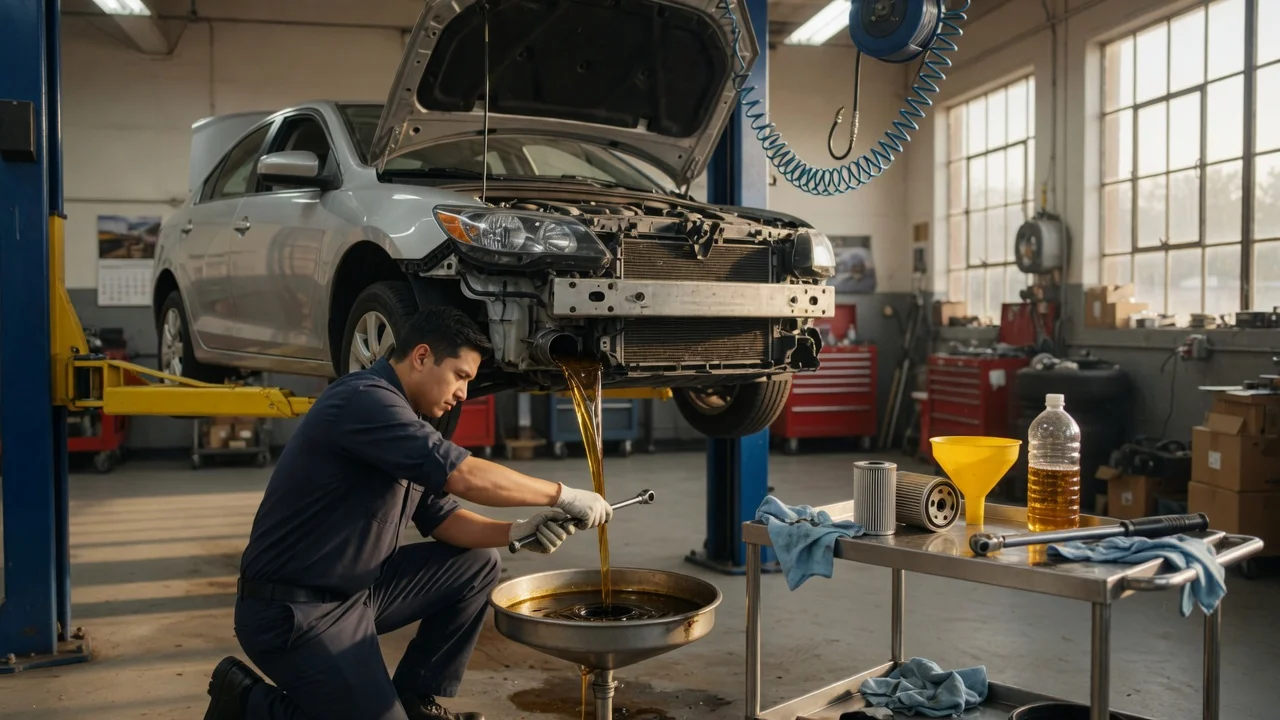
How often synthetic blend oil should be changed
The correct change interval for synthetic blend motor oil is the mileage and time schedule in the vehicle owner's manual for the oil specification that engine requires. Synthetic blend, also called semi-synthetic, is typically serviced on a longer schedule than conventional mineral oil and a shorter schedule than many full synthetics, but there is no single universal mileage that applies to every model year, powertrain, trim, or market. If the vehicle has an oil-life monitor, that reading plus the manual's maximum time limit is the governing instruction.
What synthetic blend oil is
Synthetic blend motor oil is a mixture of conventional petroleum base stock and a portion of synthetic base stock, plus a detergent, dispersant, anti-wear, and antioxidant additive package. The synthetic portion is included to improve oxidation resistance, high-temperature stability, and cold-flow compared with a typical conventional oil of the same SAE viscosity grade, such as 5W-20 or 5W-30. That chemistry is why many product labels and some owner's manuals allow a longer drain than the older 3,000-mile conventional-oil habit. A blend still has to meet the API service category, ILSAC GF standard, ACEA sequence, or maker-specific spec printed in the manual before that longer interval applies.
What actually sets the interval
Manufacturers publish oil-change intervals as a mileage figure, a time figure, or both, and often with a separate severe or special-operating-conditions schedule. Those figures assume the crankcase is filled with oil of the required viscosity and performance specification for that engine and market. Common spec families include API service categories, ILSAC GF standards, ACEA sequences, and maker-specific approvals such as GM dexos, Ford WSS, or a Volkswagen Group oil spec. A synthetic blend that meets the listed spec may be used on the published interval for that spec and duty cycle. A blend that only meets a generic API rating, or a bottle's front-label mile claim, does not extend a schedule the engine was never certified for.
Typical published ranges
Outside a named owner's manual, product and shop guidance commonly groups drain intervals as in the table below. These are industry generalizations used for planning, not dynamometer or fleet-test results for a specific engine. The vehicle's manual, warranty booklet, and oil-life monitor override them.
Oil type Common published drain range How to treat the figure; Conventional (mineral) About 3,000-5,000 miles or 3-6 months Older default schedule; many current manuals have moved past a strict 3,000-mile rule when the specified oil is used; Synthetic blend About 5,000-7,500 miles or around 6 months Typical product and service guidance when the blend meets the required spec; Full synthetic About 7,500-15,000 miles, or the oil-life monitor reading, plus a time cap Depends on the approved long-life spec and engine family
Mileage, months, and oil-life monitors
Most manuals require service at whichever limit comes first: miles or months. Time still counts on a low-mileage vehicle because short trips and cold starts leave water, unburned fuel, and acids in the sump even when the odometer moves slowly. A six-month or twelve-month cap is common; use the time figure printed for that model year and market. Vehicles with an oil-life monitoring system estimate remaining oil life from operating data such as coolant and oil temperature, engine revolutions, trip length, and load. When that system is fitted, manufacturers generally instruct owners to change the oil when remaining life reaches the indicated threshold, or at the maximum calendar interval if the vehicle is driven very little. Reset the monitor after each fill so the next calculation starts from a complete oil and filter change.
Conditions that shorten the interval
Manuals typically move the vehicle onto a severe or special-service schedule when operating conditions raise soot, fuel dilution, heat, or contamination. That schedule can cut the mileage interval substantially compared with the normal schedule. Turbocharged, supercharged, and many gasoline direct-injection engines can be harder on oil because of higher sump temperatures, shearing, and fuel dilution; follow the powertrain-specific notes rather than a generic blend mileage on the bottle.
Repeated trips of a few miles, especially in cold weather, before the oil reaches full operating temperature; Stop-and-go traffic, extended idling, or commercial delivery use; Towing, hauling, roof cargo, or mountainous driving; Dusty, sandy, or unpaved roads; Very hot or very cold ambient temperatures; Taxi, patrol, or other high-idle vocational duty
How to confirm the interval for one vehicle
Read the engine-oil section of the owner's manual for that model year, market, and engine code, including the normal and severe schedules. Note the required SAE viscosity and performance specification (API, ILSAC, ACEA, or maker approval). If an oil-life monitor is fitted, use its remaining-life reading together with the manual's maximum time interval. Match the fill to that spec; a synthetic blend is acceptable only when it carries the required approvals. Change the oil filter at the same service and reset the monitor after the fill. During the warranty period, stay on the manufacturer's schedule unless the maker documents an approved oil-analysis program.
Filter, capacity, and topping off
Replace the oil filter at each change with a filter that meets the manufacturer's efficiency and capacity requirements. After the service, fill to the dipstick or electronic oil-level mark with the engine at the temperature and parking attitude the manual describes, usually fully warm and on level ground. For topping off between changes, use the same viscosity and the same or a higher listed specification so the remaining drain interval stays valid. Used-oil analysis can help set a custom interval on a high-mileage or severe-duty engine after warranty, but it is a laboratory method and does not replace the manual schedule unless the manufacturer allows it.
Gaps this guide cannot close
No mileage figure is documented here for every model year, generation, powertrain, trim, or regional market. Warranty terms, required oil specifications, and normal-versus-severe schedules vary by manufacturer; some European long-life programs differ from typical North American fixed-interval schedules. Front-label mile claims on oil bottles are marketing statements. Where the manual, the oil-life monitor, and a product label disagree, the vehicle manufacturer's instruction for that powertrain is the schedule that matches the certified oil specification and the warranty position. Specific interval numbers for a named engine should be taken from that vehicle's owner's manual.