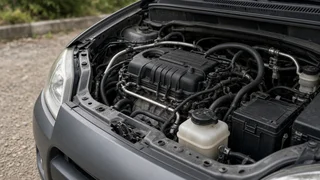
Suzuki Wagon R engine oil
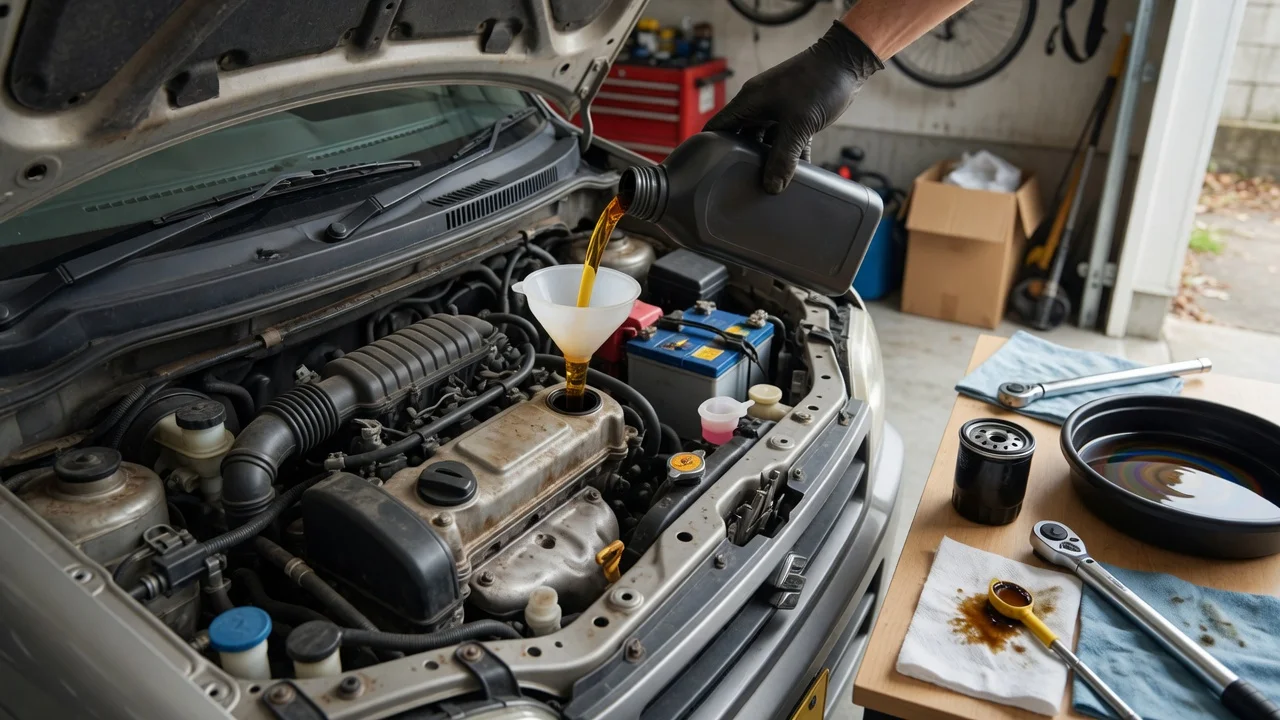
What engine oil does a Suzuki Wagon R need?
The essential answer depends on the generation, engine and market. Most petrol Wagon R models are designed around a 5W-30 or 10W-30 viscosity, with later Indian-market K-series engines commonly specified for 0W-20 or 5W-30 depending on model year and emissions calibration. The Wagon R is an A-segment tall hatchback sold mainly in Japan, India and several other Asian markets, so the correct oil cannot be stated as one universal grade. Always check the owner’s manual or the oil filler cap for the factory recommendation for the specific car.
Recommended oil by Wagon R generation
Generation and market | Typical engine | Common recommended grade; First generation Japan, 1993-1998 | F6A or K6A petrol | 5W-30 or 10W-30; Second generation Japan, 1998-2003 | K6A petrol | 5W-30; Later Japan and export models | K6A petrol | 0W-20 or 5W-30; India Wagon R, 2010-on K-series | K10B petrol | 0W-20 or 5W-30; India Wagon R, 1.2 litre K12 | K12M/K12N petrol | 0W-16, 0W-20 or 5W-30 depending on year
The stated grades are typical rather than universal. Japanese-market K6A engines often allow 0W-20 for fuel-economy-focused operation, while older examples may specify 10W-30 in warmer conditions. Indian Wagon R models with the 1.0-litre K10B are frequently filled with 0W-20 at the factory, but Suzuki service guidance has also accepted 5W-30 where 0W-20 is unavailable. The 1.2-litre K12 engines introduced in later Indian cars may use 0W-16 in the newest variants, though 0W-20 and 5W-30 remain common service options.
Viscosity explained
The number before the W describes cold-start flow. A 0W oil flows more easily at low temperatures than a 10W oil, which helps protect the engine during cold starts. The second number is the high-temperature viscosity. In a small naturally aspirated engine such as the Wagon R’s K-series, a lower second number such as 16 or 20 reduces internal drag and can improve fuel economy. A 30 grade can provide a larger safety margin in very hot climates or with sustained high-load use, provided it is approved for the engine.
Oil capacity and filter data
Oil capacity also varies by engine. The K6A typically takes around 2.7 to 3.0 litres with a filter change. Indian 1.0-litre K10B engines usually require about 2.9 to 3.1 litres including the filter, while 1.2-litre K12 engines are commonly in the 3.0 to 3.5 litre range. These figures should be treated as approximate because the sump design and dipstick calibration can differ between model years and markets. A partial fill followed by a dipstick check is the safe method.
Oil change interval
Suzuki service schedules for the Wagon R generally recommend an oil and filter change every 10,000 km or 12 months under normal conditions, whichever comes first. Japanese and export manuals may allow 5,000 km intervals for older models or severe use, while some newer Indian Wagon R variants list 10,000 km or 12 months. Severe conditions such as repeated short trips, dusty roads, heavy traffic or frequent cold starts can justify a shorter interval. The vehicle’s service booklet remains the authoritative source for the specific car.
Choosing a suitable oil
Use the viscosity grade shown for the exact model year and engine. Choose oil meeting an applicable API, ILSAC or JASO standard if specified in the manual. Do not mix radically different viscosities when topping up. Replace the oil filter at the scheduled interval rather than reusing an old filter. Verify the level with the dipstick after filling, because stated capacities are approximate.
Important qualification
The Wagon R has been produced across multiple generations, engine families and markets since 1993. A recommendation that is correct for a Japanese K6A model may be wrong for a newer Indian K12 variant. For this reason, the most supported next action is to confirm the engine code and model year, then use the grade printed in the owner’s manual or on the oil filler cap. Where stated capacities and factory schedules conflict, the specific vehicle documentation takes priority.