Subaru Transmission Valve Body Replacement Cost
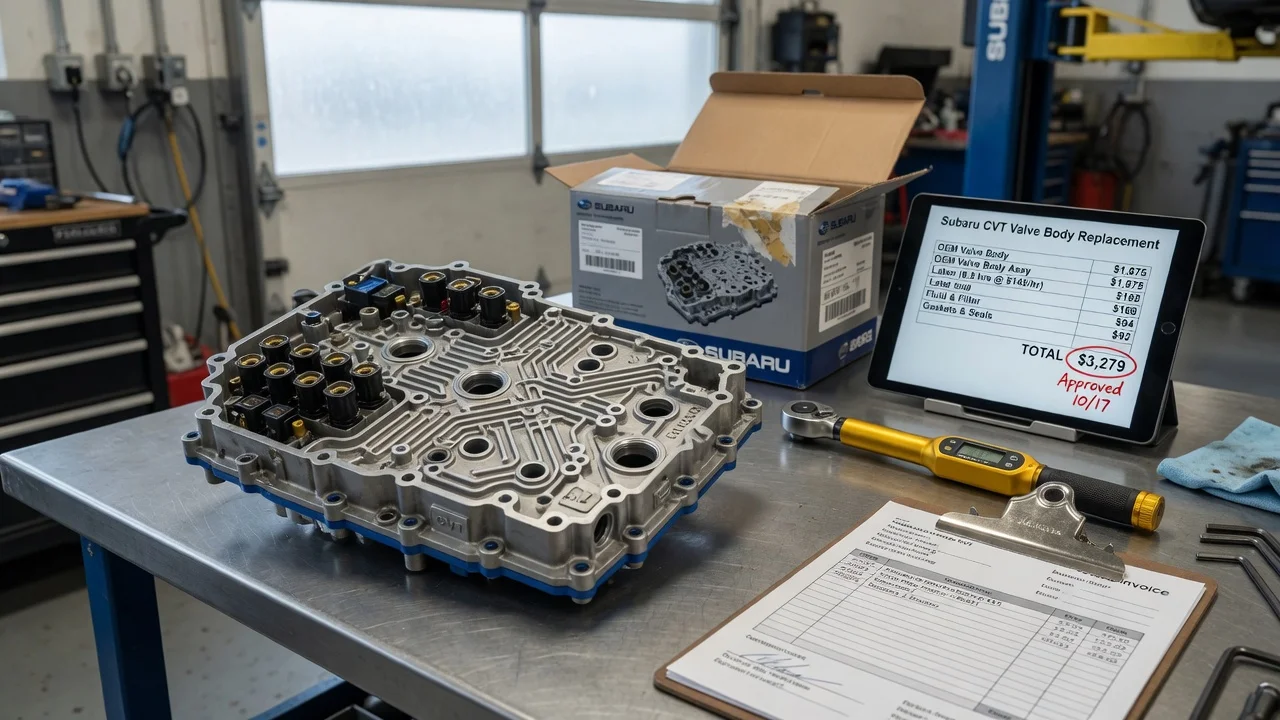
Replacing the valve body on a Subaru can be a middle-ground repair between a fluid service and a full transmission replacement, but quotes for it vary widely. The price depends on which transmission your vehicle has, whether the valve body is actually the cause of the problem, which parts are used and what associated work is included. This guide explains how to read and compare these estimates so you can tell whether a quote fits your car and your situation.
What the estimate includes
The valve body is the hydraulic control center of an automatic transmission or CVT. It contains fluid passages, valves and, on most Subaru units, electronic solenoids. Together these direct pressure to apply clutches or to control pulley ratio and torque converter lock-up. A complete estimate for replacing it should cover several items: • The valve body assembly itself; • Labor to remove the pan and install the new unit; • A new pan gasket or sealant; • A filter or strainer where the design uses one; • Fresh fluid that meets the correct fluid specification; • Any programming, calibration or learning procedure the transmission control module needs afterward; • A road test to confirm normal shift behavior
Partial quotes are common. Some list only the price of the part. Others quote labor but leave out fluid, diagnostic time or software work. A separate diagnostic fee before the repair is normal, but ask whether it is credited toward the job. Compare total prices rather than headline figures. Also ask whether the quote assumes the valve body alone will fix the problem, or whether the shop expects further repairs might be needed.
What changes the cost
Transmission type is the biggest variable. Most recent Subaru models use a Lineartronic CVT, which comes in several versions depending on engine and model. Older vehicles may have a conventional four- or five-speed automatic. Each design has its own valve body, part numbers, fluid and procedures, so a price quoted for one does not apply to another. Check fitment using your VIN rather than the model year alone, because variants of the same model can differ. Some CVT valve bodies also require data to be entered into the control module or learned by it. That can call for dealer-level software and adds labor time.
Several other factors shift the total: • Parts: new genuine assemblies, remanufactured units and used salvage parts differ in price, condition and warranty. • Labor: rates vary by region and type of shop, and book time differs between transmissions. • Fluid: CVTs need a specific Subaru fluid, and the fill and level check often must be done at a set temperature. • Scope: if the problem involves the torque converter, belt or chain, or internal clutches, a valve body will not fix it, and the realistic option becomes a rebuild or replacement transmission. • Coverage: Subaru has extended warranty coverage on certain CVTs and issued service bulletins, which can sharply reduce your out-of-pocket cost. Ask a dealer to check your VIN before you pay.
Compare like-for-like options
For a suspected valve body fault, the usual repair options are: • Replacing the valve body with a new or remanufactured part; • Replacing an individual solenoid, if it is sold separately and testing supports that diagnosis; • Rebuilding the transmission; • Installing a remanufactured or used complete transmission; These options do not cover the same work. A valve body replacement leaves wear elsewhere in the transmission untouched. A remanufactured complete unit replaces most wear components and usually carries a longer warranty.
To compare offers fairly, check each one on the same points: • What exactly is being replaced; • Whether the part is new, remanufactured or used; • How long the warranty lasts; • Whether the warranty covers parts only or parts and labor; • Whether it is honored at other shops nationwide; • Whether fluid, programming and any cooler flushing are included; A cheaper valve body quote can be the better value when testing confirms the fault is limited to hydraulic control. If the transmission has mechanical damage, it becomes the worse value, because you may end up paying twice. Ask each shop how confident they are in the diagnosis and what happens if the symptoms continue after the repair.
Read an itemized quote
A useful quote names your transmission and confirms the part number against your VIN. It should list these costs separately: • The part; • Labor hours and hourly rate; • Fluid type and quantity; • Gaskets and filter; • Diagnostic time; • Programming or learning procedures; • Shop supplies and taxes; The diagnostic section should list the diagnostic codes retrieved, the tests performed and the findings that led to recommending a valve body. Typical tests include pressure checks, solenoid circuit measurements and a review of live data. A code alone points to a circuit or operating condition. It does not confirm that the valve body has failed.
Look for exclusions and extra charges, such as: • Core charges on remanufactured parts; • Extra fluid if a flush or repeated drain-and-fill is needed; • Separate fees for software updates; • Wording that allows additional work without your approval; Ask whether the price changes if the technician finds more damage once the pan is off, such as debris that suggests internal wear. Share your service history as well. Records of fluid changes, earlier repairs and software updates help the shop judge whether the fault is isolated, and some warranty claims depend on that documentation.
Decide the next step
Start by confirming your transmission type and VIN. Then have the vehicle checked by a dealer or transmission shop that can read Subaru transmission data, not just generic engine codes. Before paying for parts, ask whether any recall, service bulletin, software update or extended coverage applies. Write down your symptoms precisely: when the shudder, slipping, delayed engagement or harsh shift happens, and at what speed and engine temperature. This helps the technician reproduce the problem and avoid replacing parts by guesswork.
Avoid shortcuts that can make the problem worse: • Topping up with a universal fluid that is not approved for your transmission; • Installing a valve body bought online without confirming fitment and programming requirements; • Approving a replacement based only on a code read at a parts store; Get at least two itemized quotes for the same scope of work and compare their warranties. Choose the repair whose diagnosis you trust, not simply the lowest price.