Straight vs swivel trailer hitch ball mount

Choosing between a straight and swivel trailer hitch ball mount changes how a trailer behaves during towing, especially on uneven ground or tight turns. The correct configuration depends on the trailer’s coupler style, the loaded tongue weight, and whether the setup must allow rotation around the ball. Comparing these options through practical towing mechanics helps a driver avoid binding, premature wear, or unsafe load transfer without guessing at unsupported specifications.
Direct answer
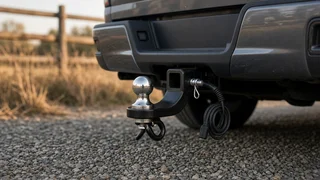
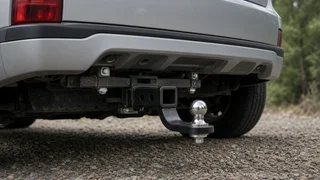
A straight trailer hitch ball mount is the common fixed choice for standard towing when the trailer coupler sits at a height that matches the receiver with little or no rise or drop. The ball remains rigid in the mount, which keeps the connection predictable and minimizes moving parts. This setup suits most utility, boat, and cargo trailers used on pavement and moderate grades, where the loaded trailer tracks smoothly behind the vehicle and the coupler does not need to articulate independently around the ball.
A swivel trailer hitch ball mount allows rotation between the ball and the mounting shank, which can reduce binding when a trailer pivots sharply or travels over uneven ground. That articulation helps certain pintle-style or specialized couplers follow terrain without twisting the receiver or trailer tongue. It is not automatically better for every load; the swivel introduces an additional wear point and must be paired with a coupler and towing mode that actually benefit from rotational freedom rather than a conventional ball socket.