Steering Angle Sensor Calibration Cost and Where to Get It Done
A steering angle sensor calibration restores the electronic stability system’s reference for straight-ahead travel after suspension work, alignment changes, or module replacement. Drivers searching for steering angle sensor calibration near me usually notice a traction or stability warning, a crooked wheel when driving straight, or a scan tool code pointing to the sensor. The price depends on shop equipment, vehicle design, and whether related services such as wheel alignment are needed. Before choosing a shop, it helps to understand what the procedure actually corrects and how the sensor is identified on the vehicle.
The direct answer
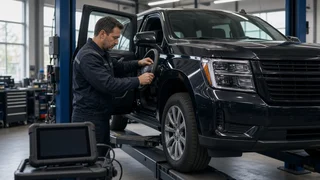
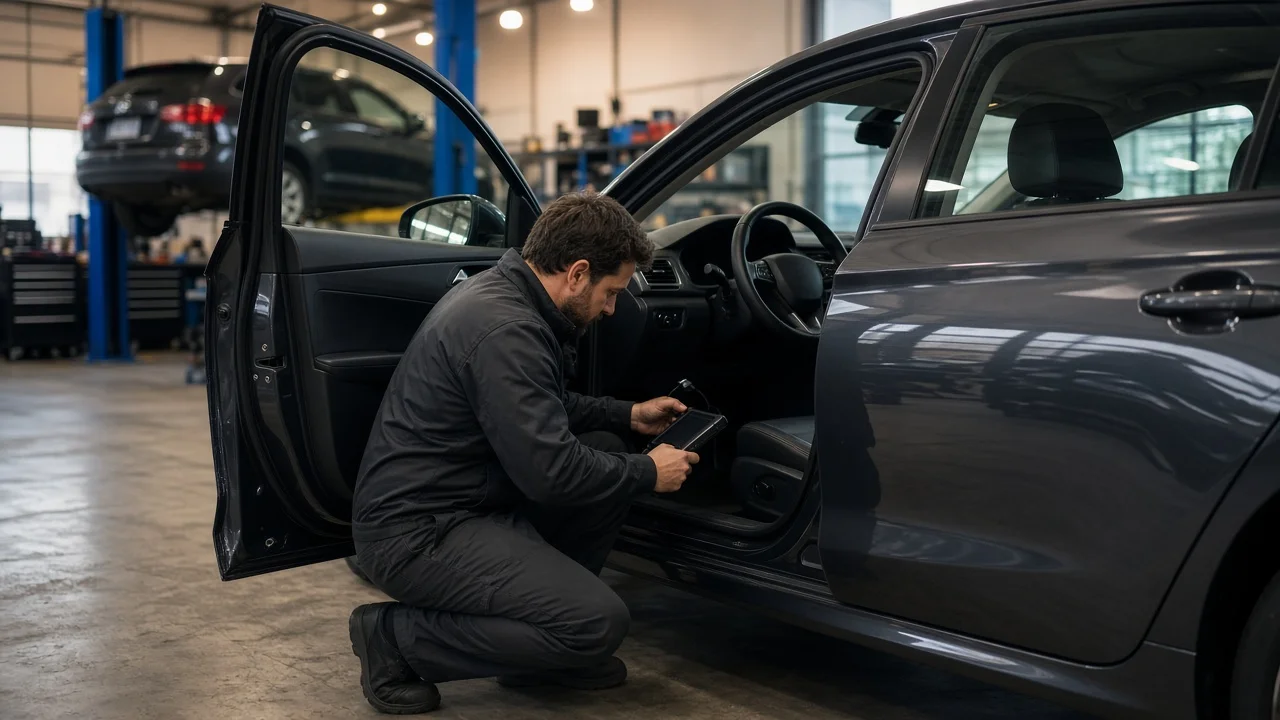
Steering angle sensor calibration cost is not a single fixed figure because the job ranges from a quick electronic reset to a longer procedure paired with chassis measurements. On many vehicles, the calibration is performed with a scan tool after a wheel alignment brings the front toe and steering rack into the correct centered position. Shops often bundle the reset into the alignment labor, while a standalone calibration may carry a separate diagnostic or programming charge when the module has lost its zero point.
For models such as VW steering angle sensor calibration cost can differ depending on whether the vehicle uses a dedicated control module or an integrated sensor inside the steering column. A Volkswagen or Audi may also require the stability control module to complete a basic setting routine that reads steering angle, yaw, and lateral acceleration values. The condition that materially changes the estimate is whether the sensor is healthy and only needs a zero-point reset, or whether a faulty component, damaged clock spring, or incorrect alignment is preventing the calibration from completing.
Identification and location
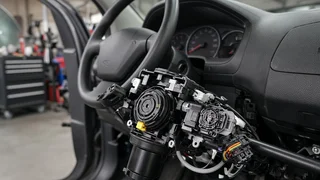
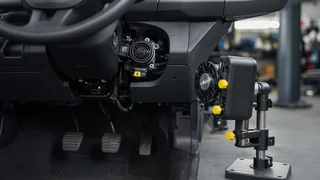
Identifying the correct component starts with understanding where the sensor lives. On many cars it is integrated into the steering column assembly near the steering wheel, often combined with the clock spring and turn signal cancel mechanism. On other designs the angle data comes from a sensor built into the steering rack or the electric power steering motor. Because these locations affect labor access, a shop first verifies which version the vehicle uses before quoting a calibration rather than assuming a universal procedure.
Physical landmarks and documentation also help resolve look-alike variants. Ride height changes, worn mounting points, or joint play in the steering linkage can alter the relationship between the steering wheel and the road wheels, making a sensor appear miscalibrated when the real issue is mechanical. Checking the vehicle support and fastener specification during suspension repairs matters because loose or shifted components can introduce repeat faults. Manufacturer-dependent routines require vehicle-specific confirmation, so the correct year, trim, and module coding should be matched to the scan tool procedure.