Slide Hammer and Swan Neck Bead Breakers for Semi Truck Tires
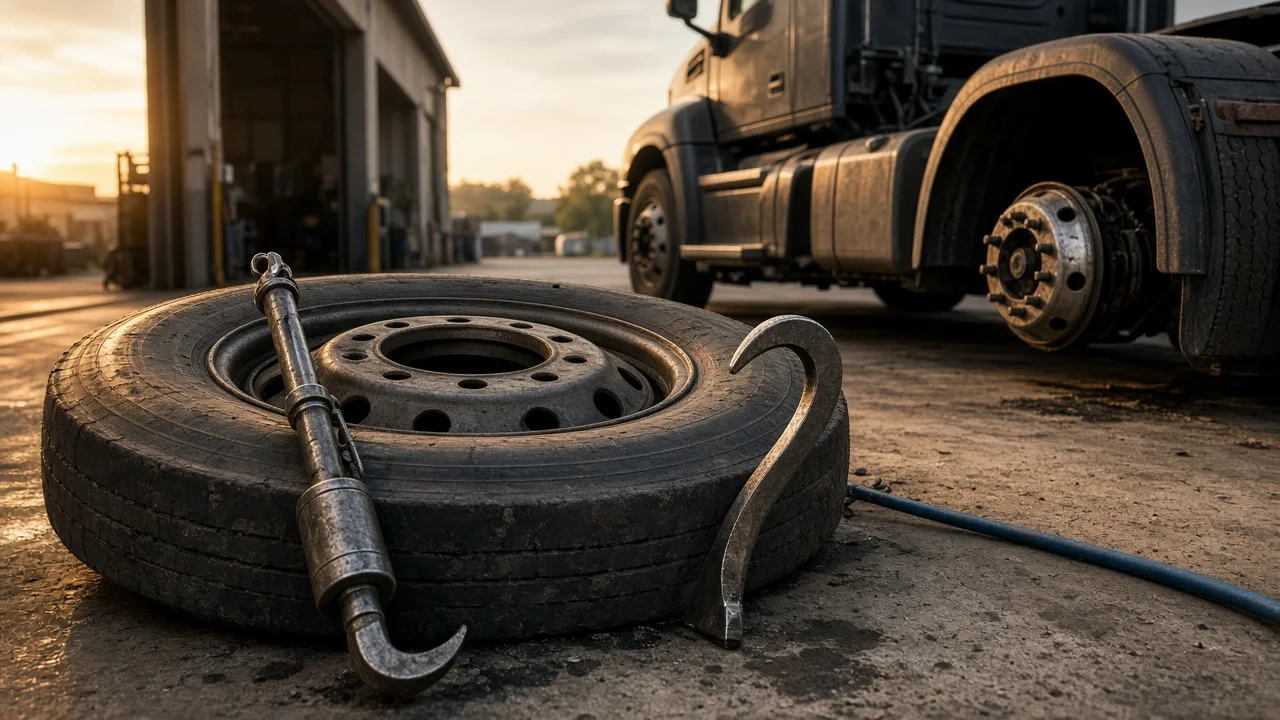
Choosing a slide hammer or swan neck bead breaker for semi truck tires means matching the tool to the stubborn rust and load-forged bead seats common on commercial wheels. A slide hammer design stores force in a sliding mass and releases it through a narrow tip, while a swan neck beak reaches behind the rim flange with less rim contact. For fleet service, the right breaker reduces sidewall damage and effort when dismounting high load index tires that have been run at inflation pressure near the vehicle placard limit.
The direct answer
For most semi truck tire work, a swan neck bead breaker is the more practical primary choice because its curved beak follows the drop center profile and concentrates pressure at the bead seat without requiring a large swing arc. A slide hammer tire bead breaker excels when a compact, portable strike is needed, especially on a corroded aluminum rim where controlled impact near the flange matters. The better purchase depends on whether your service happens on a shop floor or beside a disabled truck.
Once the tire is deflated and the wheel secured, the goal is to push the bead away from the rim ledge, not to shear rubber. A swan neck spreads that load across a longer contact patch and often walks the bead loose with repeated repositioning. A slide hammer bead breaker directs a shorter, sharper blow that can break a heavily seized semi tire bead breaker point, but it demands accurate placement to avoid marking the wheel face or cutting the chafer.
Tire size changes the working angle more than the basic technique. A wide-base tire with a low sidewall may leave little room for a bulky swan neck, while a tall sidewall on a steer tire accepts a deep reach. Load index and speed rating do not alter the bead diameter, but they can indicate stiffer casing construction that resists flex. Matching the tool nose to the rim contour prevents most damage that looks like installation error.
Inflation pressure history also predicts how hard the bead will release. A tire that ran underinflated may have polished or galled the bead area, while one kept at the vehicle placard value usually separates more cleanly. Tread depth is not directly related to bead adhesion, but a tire worn far enough to be replaced often has older, harder rubber at the lower sidewall. Drivetrain position matters because drive tires accumulate more heat cycles and rim corrosion from road spray.