How sleeping key fobs help prevent relay theft
The short answer
A sleeping key fob is a keyless-entry fob with a built-in motion sensor. When it has been left still for a while, such as on a hallway table overnight, it stops answering the car's wake-up signal. A relay attack depends on the fob answering, so a fob that has gone to sleep gives thieves nothing to relay. That is the main protection it offers.
The protection has a clear limit. It works only while the fob is stationary. If the fob is moving, for example in a pocket or a bag that is being carried, it stays awake and can still be relayed. It also does nothing against theft methods that bypass the fob entirely.
How a relay attack works
Passive keyless entry, often sold as keyless entry or keyless go, lets a car unlock and start when it detects its fob nearby. The car sends out a short-range, low-power radio signal, and a fob within range replies with a coded response. Because the system assumes the fob is close, it does not ask the driver to press anything.
A relay attack exploits that assumption. One thief stands near the car with a device that picks up its signal. A second thief stands near the home, close to where the fob is kept, with a device that rebroadcasts that signal. The fob replies, the reply is passed back to the car, and the car behaves as if the key were standing beside it. The attackers do not need to crack the code. They simply extend its reach.
What the sleep function changes
A sleeping fob contains an accelerometer, a small sensor that detects movement. When the sensor registers no motion for a set period, the fob's radio stops listening for or replying to the car's signal. A relay device near the house then has nothing to capture or forward. When the fob is picked up again, the sensor detects the movement and the fob wakes, so normal keyless entry returns without any action from the owner.
This differs from simply carrying a fob. Nothing about the owner's routine has to change, and the defense works overnight, which is when a fob is most often left still in a predictable spot near a door.
Where the protection falls short
A fob that is moving stays awake. A relay attempt made while the owner is walking, sitting in a restaurant or shopping can still succeed. The idle period before the fob sleeps varies by manufacturer and model, and no specific timings were available for this article. A relay attempt made within that window may still work. It does not stop methods that avoid the fob altogether, such as programming a new key through the diagnostic port or attacking the car's internal wiring network. It does not protect a spare fob that lacks the feature, so every fob for the vehicle needs it to close the gap.
How it compares with other relay defenses
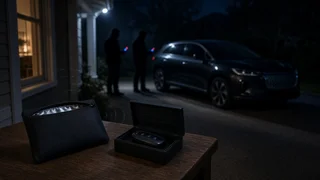
Defense | How it works | Main trade-off; Sleeping fob | Motion sensor turns off the fob's response when it is still | Offers no protection while the fob is moving; Signal-blocking pouch or box | A metal-lined enclosure blocks radio signals to and from the fob | Works only if the owner uses it every time, and worn pouches can lose effectiveness; Disabling keyless entry | Some vehicles let the owner switch off passive entry in settings or with a button sequence | Removes the convenience of hands-free entry; Distance-measuring fob technology | Some newer systems measure signal travel time to check the fob is genuinely close | Depends on the vehicle and fob supporting it; Physical deterrent such as a steering lock | Adds a visible mechanical barrier | Must be fitted and removed manually each time
Does your fob have it?
Whether a fob sleeps depends on the manufacturer, model, model year and sometimes the market. The same model can ship with a sleeping fob in one generation and a conventional one in another. No confirmed list of vehicles or model years was available for this article, so the reliable check is the owner's manual or a franchised dealer, giving the vehicle identification number. Ask also whether a replacement or upgraded fob is offered for older vehicles, since some manufacturers have made one available while others have not.
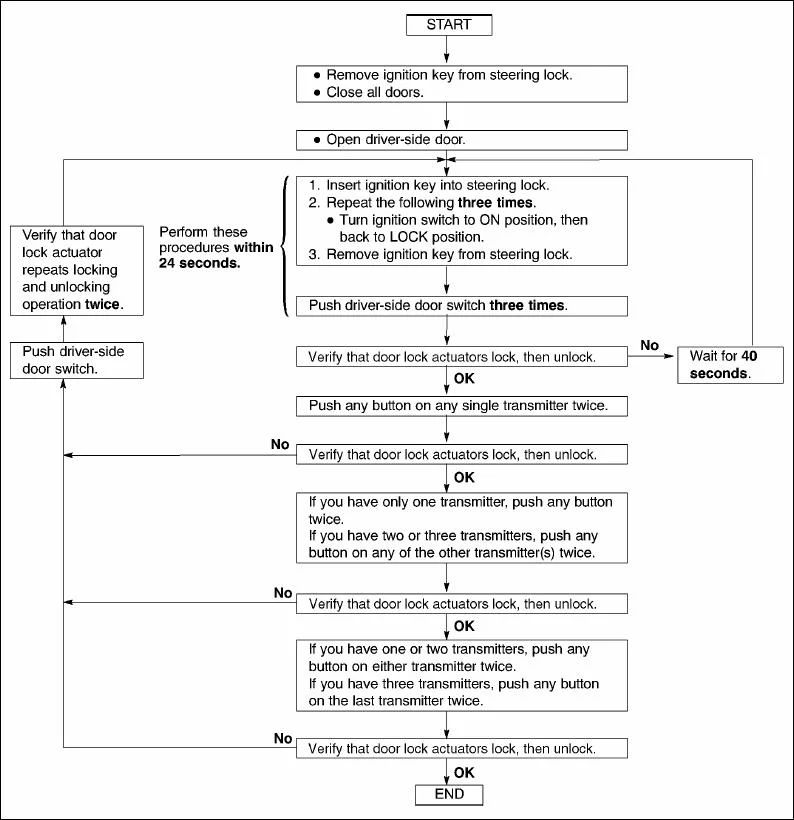
Some fobs also offer a manual sleep mode triggered by a button sequence. Where one exists, the exact steps vary by vehicle and are described in the owner's manual.
Bottom line
A sleeping key fob effectively blocks relay theft while the key sits still at home, which addresses the most common relay scenario without any change in habits. It does not cover a fob in motion or theft methods that ignore the fob, so it works best alongside other measures such as a signal-blocking pouch for times away from home or a physical deterrent.