Should you cross trailer safety chains
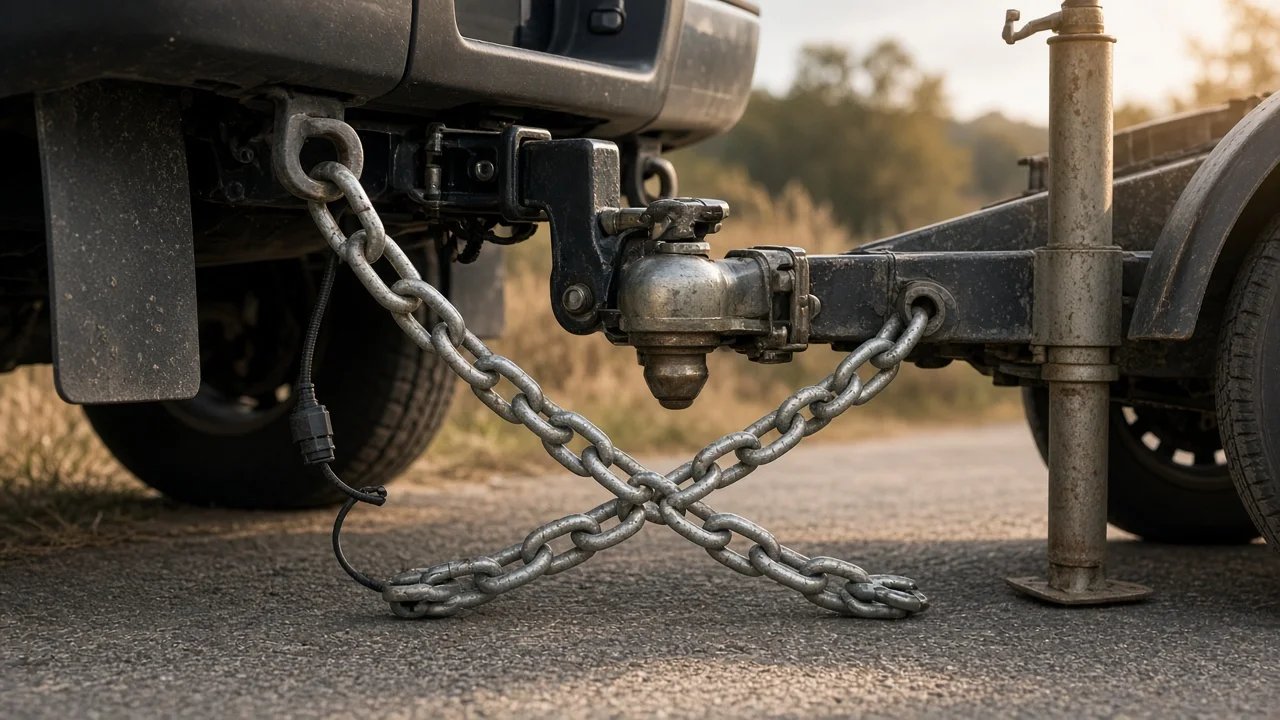
When a trailer separates from the tow vehicle, the safety chains become the last mechanical link that can keep the trailer from running free. Crossing the chains under the coupler creates a cradle that can catch the tongue if it drops, reducing the chance of the coupler digging into the road. For most light-duty and utility trailers, crossing the chains is the standard practice because it preserves steering control long enough to slow down and pull over. The correct answer depends on chain length, attachment points, and how the trailer is configured.
Essential answer
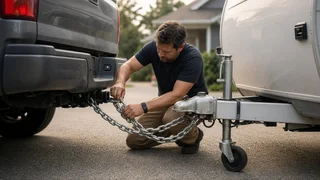
Yes, you should cross trailer safety chains below the hitch coupler when the trailer uses a conventional ball mount and has two chains attached near the tongue. The crossed arrangement forms a shallow net under the coupler. If the coupler separates from the ball, the tongue falls a short distance onto the crossed chains instead of striking the pavement. The chains then remain engaged while the driver reduces speed gradually.
The exception is a trailer with a single center-mounted chain or a manufacturer-designed attachment that routes the chains differently. Crossing also requires enough slack for tight turns without dragging, but not so much that the cradle hangs near the ground. Before towing, confirm that the crossed chains still allow full articulation and that the combined weight rating, tongue weight, and axle rating of the tow vehicle remain within the trailer configuration limits.