How Long Should Trailer Safety Chains Be

Getting trailer safety chain length right is about more than passing an inspection. If the chains are too short, they can bind or snap when the tow vehicle turns; too long, and they may drag or fail to catch the coupler if the hitch separates. Many owners ask how long trailer safety chains should be because the correct measurement changes with coupler height, hitch style, and trailer configuration. The goal is a crossover pattern that supports the tongue if it drops while still allowing full steering movement without slack dragging on the road.
Essential answer
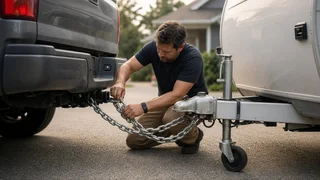
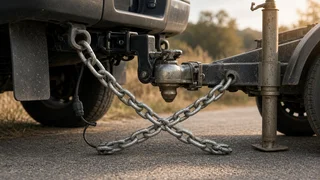
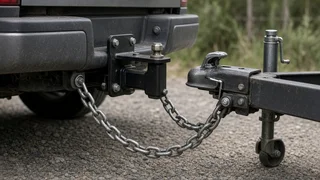
There is no single universal length for trailer safety chains because the right dimension depends on the vertical distance from the tow vehicle’s hitch point to the trailer tongue and the path the chains must follow. A useful rule is to make each chain long enough to permit full turning and articulation, but short enough that the crossed chains form a cradle beneath the coupler and cannot scrape the ground if the tongue falls. The measured working length should include the attachment point, chain links, and hook or latch at the free end.
When fitting chains, owners should consider how tongue weight and suspension movement alter the distance between the hitch and trailer A-frame. A chain that clears the ground on level pavement may drag over a curb or driveway transition if too much slack is present. For a typical ball mount and A-frame coupler, the crossed arrangement under the tongue also helps steer a separated trailer rather than letting the coupler drop straight into the pavement. Exact length should be adjusted after the loaded trailer is level and the tow vehicle is settled.