Semi Truck Brake Pads: How to Tell If You Need Them and How to Match the Right Set
The short answer
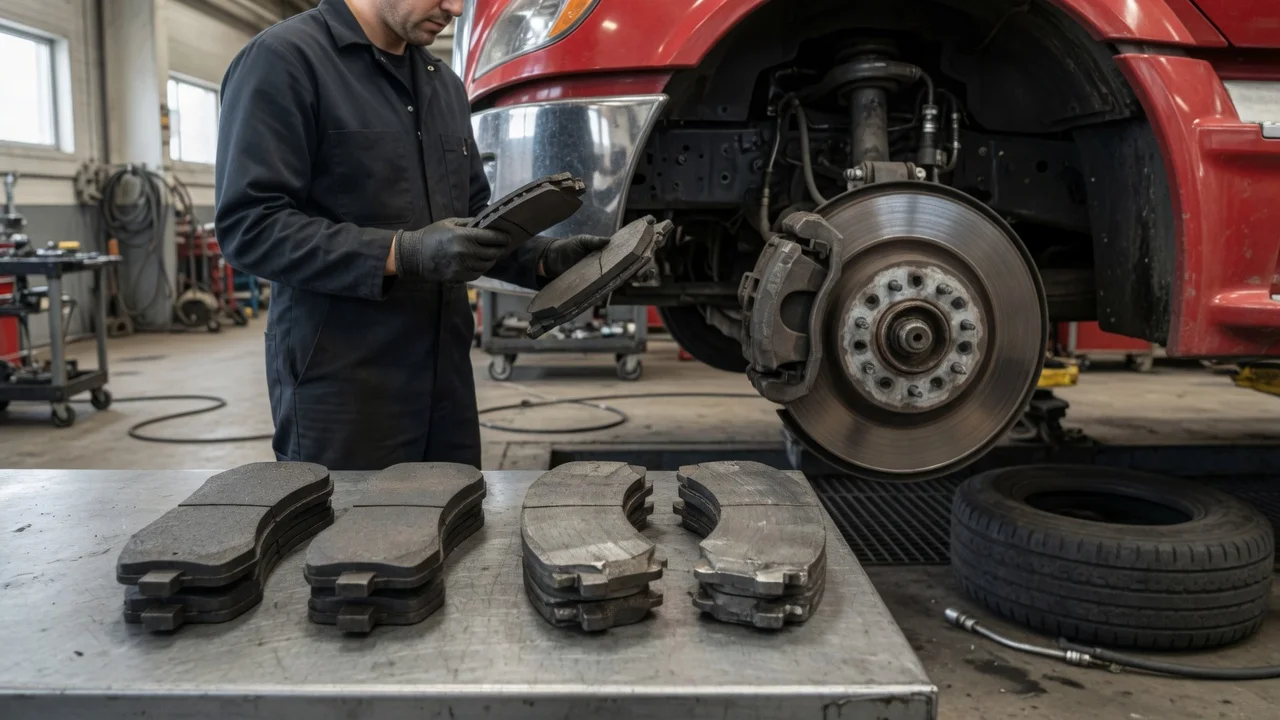
Brake pads are only used on semi trucks equipped with air disc brakes. Many heavy trucks, especially in North America, still use air-operated drum brakes, which use brake shoes with friction linings instead of pads. If your truck has disc brakes, the correct pad is set by the caliper manufacturer and model, not by the truck brand alone. Two trucks of the same make and model year can carry different calipers depending on axle, build specification and market, so identify the caliper before you order anything.
Confirm whether the axle uses pads or shoes
A semi truck can mix brake types. One common arrangement is disc brakes on the steer axle with drums on the drive axles, though configurations vary by build. Check each axle on its own rather than assuming the whole truck matches.
Air disc brake: a rotor (disc) is visible behind the wheel, with a caliper clamped over it. This axle uses pads. Drum brake: a closed drum sits behind the wheel, usually with an air chamber and slack adjuster on the back of the axle. This axle uses shoes and linings, not pads. Build sheet or spec record: the original truck specification normally lists the brake type and supplier for each axle. Dealers can often pull it from the VIN.
How to identify compatible pads
Heavy-truck disc pads come in many backing-plate shapes and thicknesses that look similar but are not interchangeable. Use these identifiers, in roughly this order of reliability:
Caliper make and model: cast or stamped on the caliper body or shown on a label. This is the most direct route to the correct pad. Pad reference number: commercial vehicle pads are commonly catalogued by a WVA number, an industry numbering system that identifies the pad shape and dimensions. If you can read the number from the old pad's backing plate or packaging, it narrows the search quickly. OEM part number: the truck or caliper maker's part number from the old pad, the parts catalogue or a dealer lookup. Axle position: steer, drive and trailer axles may use different calipers and therefore different pads, even on the same vehicle. VIN-based dealer lookup: useful when markings are worn off, but confirm the result against the physical caliper, since components may have been changed since the truck was built.
What to check and buy alongside the pads
Replace pads as an axle set: both wheel ends on an axle should get the same pad so braking stays balanced side to side. Hardware and retainers: many caliper designs use retaining clips, springs or pins. These are often sold as a kit with the pads or separately, and worn hardware can cause uneven wear or noise. Wear sensors: some calipers use electrical wear indicators. Check whether your pads need a new sensor or whether it comes included. Rotor condition: inspect rotors for cracking, scoring, heat damage and thickness against the caliper or rotor manufacturer's limits before fitting new pads. Caliper function: check that the caliper slides and adjusts freely. New pads will not fix a sticking or poorly adjusting caliper.
When replacement is due
The minimum allowable pad and rotor thickness comes from the caliper manufacturer's service information, and inspection criteria can also be set by the regulations where the truck operates. Use those documents for your specific caliper rather than a general figure. Uneven wear between inner and outer pads, or between sides of an axle, is a sign to inspect the caliper and its adjustment as well as replacing the pads.
OEM versus aftermarket pads
Both original-equipment and aftermarket pads are sold for common air disc calipers. The practical deciding factors are an exact match to the caliper, friction material intended for the truck's duty cycle (for example, long-haul highway use compared with frequent stop-and-go or heavy-grade work), and consistency across the axle. Check that any pad you consider is specified for your caliper model by its manufacturer, and keep both sides of an axle on the same product.
What this guide cannot confirm
No model-specific data was available for this article, so it does not list exact pad numbers, caliper fitments by truck make or model year, wear limits, prices or test results for particular brands. For a definitive match, confirm the caliper model on the truck itself and check it against the caliper manufacturer's or dealer's parts catalogue. Brake work on air systems affects safety and roadworthiness, so if you are not familiar with caging spring brakes and caliper service procedures, have a qualified heavy-vehicle technician do the job.