Search Vehicle by VIN: How to Identify a Car and Read Its Specifications

Searching a vehicle by its VIN is the most reliable way to confirm what a car actually is: who built it, where, for which model year, and in what basic configuration. A free decoder can identify a car by VIN number in seconds. A decoder reads only what is encoded in the number itself. Ownership records, accident history and full option lists come from separate databases, so they need a different kind of lookup. This guide explains what information you can get from a VIN number, how to read it yourself, and which tool fits which question.
The Short Answer
Enter the 17-character vehicle identification number into a VIN decoder. A decoder translates the code into vehicle details such as manufacturer, make, model, model year, body style, engine type and assembly plant. The government safety agency NHTSA offers a free decoder and a free recall search. If you need title status, previous damage or odometer records, use a vehicle history report, which is usually a paid service. If you want to find the owner from a VIN, personal owner information is generally not available to the public.
What a Vehicle Identification Number Is
A vehicle identification number is a unique code assigned by the manufacturer to a single vehicle. Since the 1981 model year, vehicles sold in the United States have used a standardized 17-character format. The letters I, O and Q are never used, so they can't be confused with the numbers 1 and 0. Older vehicles have shorter, manufacturer-specific serial numbers. Standard decoders often can't interpret those, so pre-1981 cars usually need marque-specific references or club resources.
Where to Find the VIN
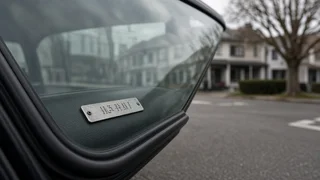
Lower corner of the windshield on the driver's side, visible from outside on a dashboard plate; Label on the driver's door jamb or door edge; Vehicle title and registration documents; Insurance card or policy paperwork; Window sticker (Monroney label) on a new car; On some vehicles, stampings on the frame, engine bay or other body panels
Before buying, check that the VIN on the dashboard, the door label and the title all match. A mismatch, or a plate that looks tampered with, should stop the transaction until it is explained.
How the 17 Characters Break Down
Every standardized VIN follows the same structure, although manufacturers decide how they use some of the positions. That is why a generic decoder can always read the basic layout, while the finer details depend on that maker's own coding.
Position | Section | What it identifies; 1 | World Manufacturer Identifier (WMI) | Country or region of the manufacturer; 2–3 | WMI (continued) | Manufacturer and often the vehicle type or division; 4–8 | Vehicle Descriptor Section | Model line, body style, restraint system, engine type and similar attributes, as defined by the manufacturer; 9 | Check digit | Calculated value used to detect typing errors and invalid VINs; 10 | Model year | Coded model year; 11 | Assembly plant | Factory where the vehicle was built, using the manufacturer's own plant codes; 12–17 | Production sequence | Serial number of the individual vehicle
The first character points to where the manufacturer is based. Common examples are 1, 4 or 5 for the United States, 2 for Canada, 3 for Mexico, J for Japan, K for South Korea and W for Germany. This reflects the manufacturer's registered identifier and usually matches the assembly region. It doesn't always reveal the exact factory, which comes from position 11.
Reading the Model Year
The 10th character encodes the model year using a cycle of letters and numbers that repeats every 30 years. The letters I, O, Q, U and Z and the number 0 are skipped. The model year is the manufacturer's designation and can differ from the calendar year the car was built.
Code | Model year; A | 1980 or 2010; B | 1981 or 2011; L | 1990 or 2020; S | 1995 or 2025; T | 1996 or 2026; V | 1997 or 2027; Y | 2000 or 2030; 1 | 2001 or 2031; 9 | 2009 or 2039
Because each code repeats, context settles which year is meant. For passenger cars, multipurpose vehicles and light trucks, US rules use the 7th character to help. A number in that position indicates the 1980–2009 cycle, and a letter indicates 2010 onward. For other vehicle types, the general age and design of the vehicle usually make the answer obvious.
What a VIN Decoder Can and Cannot Tell You
A decoder reliably returns the information built into the number's structure. Its limits matter when you need more than basic identity.
Usually available: manufacturer, make, model, model year, body style, vehicle type, engine displacement or family, fuel type, restraint systems, and assembly plant. Sometimes available: drivetrain, transmission type, series or trim level. This depends on how much the manufacturer encodes and how complete the decoder's data is. Usually not available: exact trim code, paint and interior codes, individual factory equipment and option packages, and dealer-installed accessories. Never available from the number alone: accident history, title brands, mileage, ownership, or current condition.
For a full list of factory equipment, look at the original window sticker or a build sheet. A franchised dealer for the brand can often retrieve build information from the manufacturer's system using the VIN, and some manufacturers offer window-sticker reprints. Trim and paint codes are often printed on the door-jamb label or a service parts label in the vehicle.
Market specification is another detail the decoder may not settle. A vehicle built for the US market is certified to US safety and emissions standards. A gray-market import, or a car originally built for Canada or another market, may differ in lighting, emissions equipment, instrument units or warranty coverage. The WMI and plant code give hints. The certification label on the door jamb is the more direct indicator of which standards the vehicle was built to meet.
Decoding vs. History Reports vs. Reverse VIN Lookup
People use "VIN lookup" for three different tasks. Knowing which one you need saves time and money.
Lookup type | Answers | Typical source | Cost; VIN decoding | What the vehicle is: make, model, year, engine, plant | NHTSA decoder and many commercial decoders | Usually free; Recall check | Whether open safety recalls apply to this specific vehicle | NHTSA recall search, manufacturer owner sites | Free; Vehicle history report | Title brands, reported accidents, odometer readings, past registrations | Commercial history providers; NMVTIS-approved providers for title data | Usually paid; Theft and total-loss check | Whether the vehicle was reported stolen and unrecovered or declared a total loss by participating insurers | NICB VINCheck | Free, limited in scope
A "reverse VIN lookup" usually means one of two things. Most often it means running a history report to learn a vehicle's past. Sometimes it means trying to identify the owner. Personal details from state motor vehicle records, such as names and addresses, are protected under the federal Driver's Privacy Protection Act. They are released only for specific permitted purposes. No legitimate free tool will show the owner of a car from its VIN.
Free vs. Paid Vehicle Information by VIN
Free tools cover identification and safety well. Decoding the VIN, checking recalls and running a basic theft or total-loss check costs nothing. Paid reports add value when you are about to buy a used car, because they compile title, accident, service and odometer records from many sources. Even a paid report shows only what was reported to its data suppliers. A clean report doesn't replace a pre-purchase inspection by an independent mechanic.
Looking Up a New Car's VIN
A new car VIN lookup is mostly about confirming that the vehicle on the lot matches what you agreed to buy. Compare the VIN on the window sticker, the purchase paperwork and the car itself. Use a decoder to confirm the model year, engine and body style. Run a recall check before delivery, since a brand-new vehicle can already be covered by an open campaign. A very recently built vehicle may not yet show up fully in every third-party database. If a lookup returns little detail, the dealer's build record and the window sticker are the authoritative references.
Step-by-Step: How to Search a Vehicle by VIN
1) Copy the full 17-character VIN from the vehicle, not only from an online listing, and confirm it matches the title. 2) Run it through a free decoder to confirm make, model, model year, engine and assembly plant. 3) Compare the decoded details with what the seller or listing claims, such as engine type, drivetrain and body style. 4) Check for open safety recalls using the same VIN. 5) For a used purchase, run a theft and total-loss check, then consider a full history report. 6) For exact trim, paint and factory equipment, check the door-jamb and parts labels or ask a brand dealer for the build record. 7) Have the vehicle inspected before money changes hands.
Common Problems When You Identify a VIN Number
Decoder rejects the VIN: check for typos, especially an O entered instead of 0 or an I instead of 1. Those letters never appear in a valid modern VIN. A failed check digit usually means a transcription error. VIN is shorter than 17 characters: the vehicle likely predates the 1981 standard, or it is a trailer, motorcycle or specialty vehicle with incomplete data. Decoded details don't match the car: the listing may be wrong, parts may have been swapped, or the VIN may not belong to that vehicle. Investigate before going further. Decoder returns only partial data: some manufacturers encode fewer attributes, and some imports or low-volume vehicles are less complete in databases. Use the vehicle's labels and dealer records to fill the gaps.
Bottom Line
A VIN search answers what a car is, and a free decoder handles that well. Questions about where the car has been, such as title problems, damage or mileage, need a history report. Exact equipment and trim need the window sticker or a dealer build record. Owner identity is protected and not something a VIN lookup should provide. Choose the lookup that matches your question, and verify the physical VIN on the car before relying on any result.