Find vehicle identification and specifications by VIN

The short answer
A vehicle identification number (VIN) can tell you a lot about a car, including its manufacturer, model year, assembly plant, body style and often its engine. Run the VIN through a decoder, such as the free one run by the US National Highway Traffic Safety Administration (NHTSA) or a manufacturer or dealer lookup. The decoder translates the code into the specifications the manufacturer reported for that vehicle.
One limit matters most: a VIN does not always identify the exact engine or transmission. How much powertrain detail the VIN carries depends on the manufacturer, model year and market. Many VINs include an engine code. Transmission type is less often encoded and may only appear on build documents, option labels or a tag on the transmission itself.
What a VIN is and how it is structured
For road vehicles sold in the US from the 1981 model year onward, the VIN is a standardized 17-character code. It uses digits and capital letters but leaves out I, O and Q so they can't be mistaken for 1 and 0. Older vehicles have shorter, manufacturer-specific serial numbers that general-purpose decoders may not read.
Position | Section | What it generally indicates; 1–3 | World manufacturer identifier (WMI) | Country or region of manufacture, manufacturer and often vehicle type or division; 4–8 | Vehicle descriptor section (VDS) | Manufacturer-defined attributes such as model line, body style, restraint system and frequently engine type; 9 | Check digit | A calculated character used to detect transcription errors in North American VINs; 10 | Model year | A coded character for the model year, not necessarily the year the vehicle was built or sold; 11 | Plant code | The assembly plant; 12–17 | Production sequence | The serial number that makes the individual vehicle unique
The fixed parts of the layout are the manufacturer identifier, check digit, model-year position and serial section. The meaning of each character in positions 4 through 8 is set by the manufacturer. That is why you need a decoder or manufacturer documentation to interpret them, and why one character position can mean different things on different brands.
Engine and transmission codes: what the VIN can and cannot show
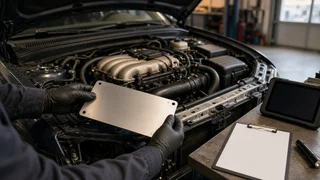
Engine information usually sits in the vehicle descriptor section, positions 4 through 8. Many manufacturers assign one character in that range to the engine, and a decoder may return displacement, cylinder count, fuel type or the manufacturer's engine code. Which position carries the engine code, and how detailed it is, varies by manufacturer and model year. No single position works for every vehicle.
Transmission information is less consistent. Some VINs include a character that distinguishes manual from automatic or identifies a driveline configuration, but many do not. If the decoder result is blank or general for the transmission, other sources usually fill the gap:
Original window sticker or build sheet, which lists factory equipment for that specific vehicle; Service parts identification or option-code labels, which some manufacturers place in the glovebox, trunk or door jamb; The identification tag or stamping on the transmission housing itself; A franchised dealer's parts or service lookup, which can often pull factory build data from the full VIN
VIN data reflects how the vehicle left the factory. If an engine or transmission has since been replaced, the VIN will still describe the original unit. To confirm what is fitted now, check the codes stamped or tagged on the component itself.
Where to find your VIN
Exact placement varies by vehicle, so confirm the locations against the owner's manual for your model and configuration. Common places to check include:
The lower corner of the dashboard on the driver's side, readable from outside through the windshield; A label or plate on the driver's door jamb or the door pillar; Vehicle title, registration and insurance documents; Service records and previous repair invoices; Stampings or labels on the frame, engine bay or body panels on some vehicles
Read the VIN from the vehicle when you can, and compare it with the paperwork. A mismatch between the dashboard plate, door label and title is worth investigating before you rely on the decoded specifications or complete a purchase.
Avoiding common mix-ups
VIN versus engine serial number: the number stamped on an engine block identifies the engine, not the vehicle, and does not follow the 17-character VIN format; Model year versus build date: the 10th character gives the model year, while the actual production month usually appears on the door jamb label; Letters versus digits: because I, O and Q are never used, a character that looks like one of them is a 1 or a 0; Decoder output versus actual equipment: a decoder reports what the manufacturer associated with that VIN, which may be a range of options rather than the exact trim or package
Getting reliable information about your car
Start with the government decoder or a manufacturer source for factory specifications. These come from manufacturer-reported data rather than third-party estimates. Commercial vehicle history services are a different product. They report events such as title brands, reported accidents or odometer records, and their coverage depends on what was reported to them.
Use the check digit as a quick sanity test. If a decoder rejects the VIN or returns no result, first re-read the characters from the vehicle. A single transcription error is the most common cause. For pre-1981 vehicles, imports not originally built for the US market and low-volume or specialty vehicles, expect incomplete decoder results and plan to rely on manufacturer records or the component tags themselves.
Gaps to keep in mind
This guide covers the general VIN structure used in the US. It does not list engine or transmission code positions for specific makes or models, because those assignments are defined by each manufacturer and differ across model years. For a code-level answer on your vehicle, consult the manufacturer's VIN decoding documentation, a factory service manual or a dealer lookup for that model year and powertrain.