RV Liability Insurance: What It Covers and How It Differs From Other RV Coverage
The Short Answer
RV liability insurance pays for injuries and property damage you cause to other people while using your recreational vehicle. It covers other people and their property. It does not pay to repair or replace your own RV. How it applies depends on the type of RV. Motorized RVs, such as motorhomes, are generally insured much like cars and need their own liability coverage. Towable RVs, such as travel trailers and fifth wheels, usually rely on the tow vehicle's auto policy for liability while they are hitched and moving. Once a trailer is unhitched and parked, that protection may not apply, so check your policy terms for that situation.
What Liability Coverage Typically Includes
In US auto and RV policies, liability coverage is usually split into two parts:
Bodily injury liability: helps pay medical costs, lost wages and legal claims from people injured in an accident you are responsible for. Property damage liability: helps pay for damage you cause to someone else's property, such as another vehicle, a fence, a building or campground fixtures. Legal defense: many liability policies also cover the cost of defending you if you are sued over a covered incident. The details vary by insurer and policy.
Limits can be written as separate amounts for each person, each accident and property damage (split limits). They can also be written as one total amount per accident (a combined single limit). A larger RV can cause more damage in a crash than a typical passenger car, so it is worth comparing your limits with what you would have to pay yourself if a claim exceeded them. That comparison is an editorial suggestion, not a requirement.
How It Differs From Other RV Coverages
Coverage | Who or what it protects | Typical role; Liability | Other people and their property | Usually required by state law for motorized vehicles; Collision | Your RV, after a crash | Optional by law; often required by a lender if the RV is financed; Comprehensive | Your RV, from non-collision events such as theft, fire, weather or vandalism | Optional by law; often required by a lender; Medical payments or personal injury protection | You and your passengers | Optional or required depending on the state; Uninsured/underinsured motorist | You, when the at-fault driver lacks enough insurance | Required in some states, optional in others
Many people assume that "full coverage" means liability alone, or that liability will fix their own RV after an accident. It won't. Liability pays for damage you cause to others. Damage to your own RV falls under collision or comprehensive coverage.
Motorhomes Versus Towable RVs
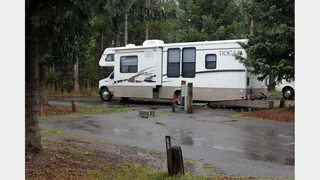
Motorhomes are self-propelled. This includes Class A, Class B (camper vans) and Class C models. They are registered and driven on public roads, so states generally require them to carry liability insurance, much as they do for cars.
Travel trailers, fifth wheels, pop-up campers and toy haulers have no engine. While one is attached to the tow vehicle, liability for an accident generally runs through the tow vehicle's auto policy. Coverage for the trailer itself, and for incidents while it is parked at a campsite, is a separate question. Some insurers offer optional coverage for those situations. Confirm with your insurer how your specific policy treats a detached trailer.
Liability When the RV Is Parked or Lived In
Road liability covers accidents involving the vehicle. A different risk arises when someone is hurt at your campsite, for example by tripping over a leveling block or being injured by an awning. Some RV policies include or offer campsite or vacation liability for these situations. People who live in their RV full time may need broader personal liability coverage, similar to what a homeowners policy provides, because a homeowners or renters policy may not extend to an RV used as a primary residence. Whether these options are available, and what they include, depends on the insurer and the state.
If You Need to File a Liability Claim
Make sure everyone is safe, and contact emergency services if anyone is injured. Exchange insurance and contact details with the other parties involved. Document the scene with photos and notes, including road conditions and damage. Report the incident to your insurer promptly. If you are towing, notify both the tow vehicle's insurer and the trailer's insurer, even if they are the same company. Avoid admitting fault at the scene. Fault is determined through the claims process and, where relevant, under state law.
What This Guide Cannot Confirm
No specific figures were available for this overview. That includes state minimum liability limits, premium costs, or the terms offered by particular insurers. Minimum limits differ from state to state, and coverage definitions, especially for detached trailers, campsite incidents and full-time RV living, vary between policies. Check your state's current requirements and read your policy's declarations page, or ask your insurer, before relying on any assumption about what is covered.