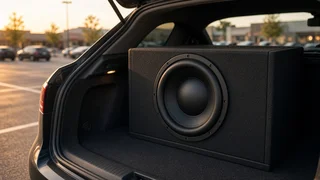
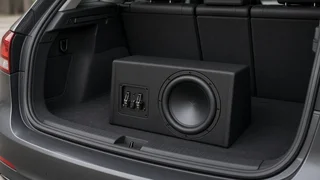
Rockville Car Subwoofers
Choosing a Rockville car subwoofer means matching the driver’s impedance, power handling, and enclosure requirements to the amplifier and listening goals instead of buying on wattage claims alone. Shoppers often search “rockville car subwoofer” or “rockville subwoofer car” while trying to decide whether an entry-level or higher-output model fits a factory or aftermarket system. The right choice depends on available space, the head unit’s signal output, and whether the system will use a sealed or ported box. A practical approach starts with electrical compatibility, then considers installation and tuning trade-offs before purchase.
The direct answer
A Rockville car subwoofer can be a sensible low-cost upgrade when the buyer confirms the voice coil configuration, RMS power range, and enclosure volume before ordering. The immediate decision should rest on whether the subwoofer’s final impedance is safe for the amplifier and whether the box matches the driver’s recommended sealed or ported airspace. A subwoofer that looks powerful in peak wattage can still perform poorly if it is wired to the wrong load or crammed into an undersized enclosure.
Installation context also changes the answer. If the factory head unit lacks a dedicated subwoofer pre-out, the buyer may need a line output converter or an amplifier with speaker-level inputs to preserve a clean audio source. Vehicle integration matters because trunk shape, cabin gain, and available mounting depth influence low-frequency output more than a simple diameter comparison. Confirm those electrical and physical details first, and the purchase becomes a targeted upgrade rather than a guess.