Riding side-saddle on a motorcycle
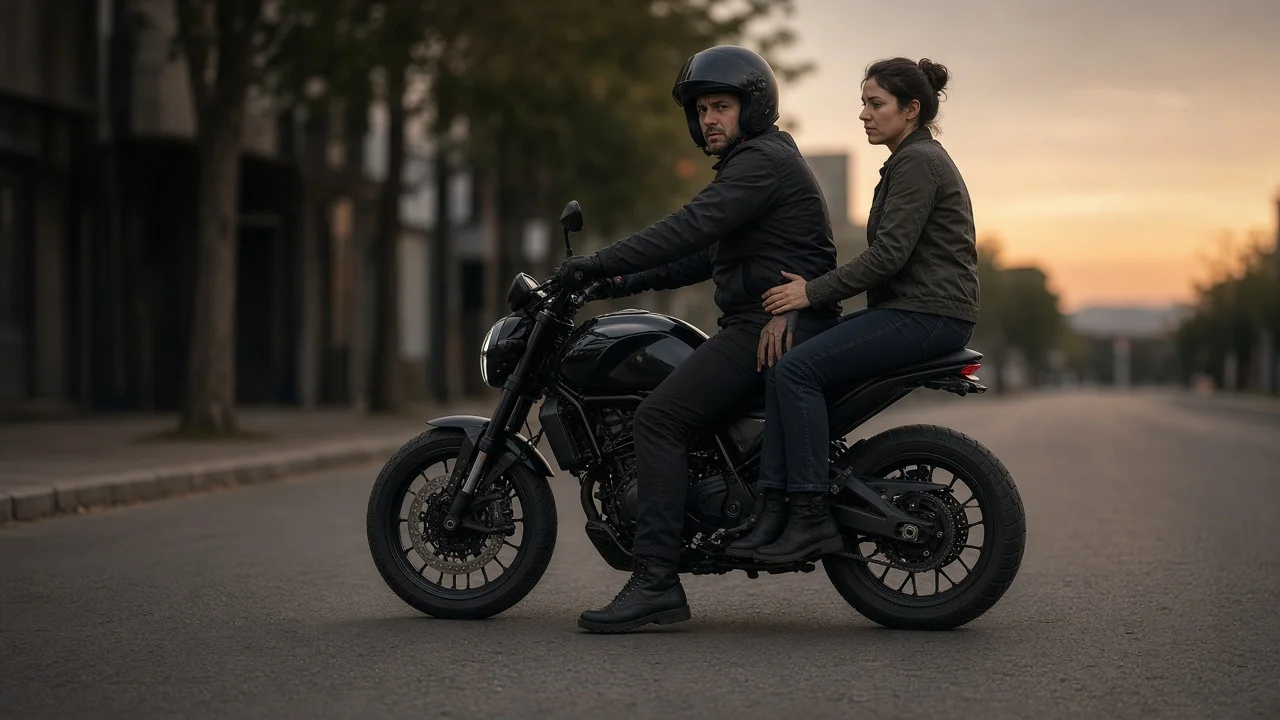
The short answer
Riding side-saddle means a passenger sits with both legs on the same side of the motorcycle instead of straddling the seat. It is physically possible on many bikes, but motorcycles, seats and passenger footpegs are designed for a passenger who sits astride, facing forward, with one leg on each side. In the US, side-saddle riding is generally discouraged on safety grounds and, in many states, conflicts with passenger-seating rules. Anyone considering it should check their own state's motor vehicle code first.
What side-saddle riding is
The term comes from horseback riding, where a side-saddle is a special saddle that lets a rider sit with both legs on one side. On a motorcycle there is no equivalent dedicated equipment on a standard bike. The passenger simply turns sideways on the normal pillion seat, which is the rear passenger section of the seat. The style has historically been associated with riders wearing skirts or dresses, and it is still seen in some parts of the world, but it is uncommon on US roads.
How it differs from sitting astride
The difference is not just posture. It changes how the passenger is supported and how the motorcycle handles.
Grip: a passenger sitting astride can hold the bike with their knees and thighs; a side-saddle passenger cannot, so they rely almost entirely on their hands and their hold on the rider. Foot support: passenger footpegs are placed on both sides for a straddling passenger. Sitting side-saddle usually leaves the feet without proper support or resting on one peg at an awkward angle. Weight distribution: with both legs and much of the body mass off to one side, the load is no longer centered over the bike, which can affect balance at low speed and during turns. Cornering: motorcycles turn by leaning. A straddling passenger leans naturally with the rider, while a sideways passenger is harder to keep in line with the bike and may resist or exaggerate the lean. Braking and acceleration: facing sideways, the passenger has less ability to brace against forward and rearward forces, raising the risk of sliding or being thrown off. Exposure: legs hanging on one side can be closer to the exhaust, rear wheel or chain, depending on the motorcycle's layout.
Legal considerations in the US
Motorcycle passenger rules are set at the state level, so there is no single nationwide answer. Many state vehicle codes require a passenger to ride on a permanent seat designed for a passenger, often with language specifying that the passenger sits astride or facing forward with one leg on each side, and that footrests be provided for the passenger. Where such wording exists, side-saddle riding would not comply. Specific state-by-state wording, penalties and any exceptions were not available for this article, so readers should confirm the current rules with their state's motor vehicle agency or the statute itself.
Model and equipment variations
Seat shape, passenger footpeg position and exhaust routing vary by make, model year and body style, so how awkward or hazardous side-saddle sitting would be differs from bike to bike. No manufacturer specifications or test results addressing side-saddle use were available for this article. As a general principle, an owner's manual describes the intended passenger position, and following it is the safest reference point for any specific motorcycle.
Practical takeaway
For most US riders, the sensible choice is for the passenger to sit astride, face forward, keep both feet on the passenger pegs and hold on securely, which is how the motorcycle is designed to carry a second person. If clothing makes straddling the seat difficult, changing into suitable riding gear is the practical fix rather than sitting sideways.
Gaps in available information
This overview is based on general principles of motorcycle passenger carrying. No crash statistics, measured handling effects, state-specific legal citations or manufacturer guidance specific to side-saddle riding were supplied, so those details should be verified independently before relying on them.