Retractable hardtop convertibles: history and models

A retractable hardtop convertible combines open-air driving with the security and quietness of a fixed roof, using a multi-panel metal top that folds and stores automatically. The Chrysler retractable hardtop convertible remains a landmark because it brought this concept to a mainstream American audience during a period when most convertibles used fabric tops. Understanding the first retractable hardtop convertible and the production history behind these designs helps buyers and enthusiasts separate meaningful engineering advances from short-lived experiments. This overview explains how the mechanism developed, why it appealed to drivers, and what model generations represent in the broader retractable-hardtop story.
Essential answer
The essential answer is that a retractable hardtop is a convertible whose roof panels are made of rigid metal or composite material rather than cloth, and the panels fold into a dedicated trunk or storage bay when lowered. The Chrysler retractable hardtop convertible represents one of the more accessible examples of this idea in the American market, applying the folding-roof principle to a car designed for everyday ownership. Unlike a conventional soft top, the metal roof preserves a closer coupe-like silhouette and typically reduces wind noise at highway speed. The tradeoff is added mass, complexity, and reduced luggage space because the folded roof consumes a large portion of the rear storage area.
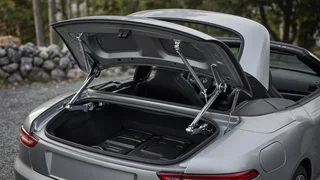
Drivers often confuse retractable hardtops with targa or removable-panel designs, but the defining feature is automatic or power-operated storage without removing panels by hand. On a retractable hardtop convertible, the decklid opens rearward, the roof sections articulate, and the stack lowers into the space behind the seats. This requires careful packaging of the powertrain layout and fuel tank, which is one reason the configuration historically appeared on select model generations rather than across an entire lineup. The result is a vehicle that can shift between enclosed comfort and open-air driving, though the mechanism itself deserves attention during inspection and ownership.
History and development
The history of the retractable hardtop begins well before the modern era, because the first retractable hardtop convertible attempted to solve a fundamental problem: how to offer open-air enjoyment without the noise, weather sealing, and security compromises of fabric. Early experiments used manually operated or complex hydraulic systems that were often too heavy and costly for widespread production. The principle depended on advances in body engineering, because a folding metal roof requires rigid mounting points, precise latch alignment, and enough rear packaging to accept the stacked panels. These technical constraints shaped the design development from show cars and limited experiments into factory specification vehicles.
Chrysler's connection to this history became especially important when the company applied the folding-hardtop concept to a car that ordinary buyers could realistically own. Although the exact production period and market introduction details vary by source, the approach demonstrated that the mechanism could work in a volume-oriented American product. Over subsequent model generations, manufacturers refined the roof kinematics, reduced operation time, and improved trunk access when the roof was stowed. Each refinement helped establish the retractable hardtop as more than a novelty, even though the added complexity continued to influence cost, maintenance needs, and long-term durability.