Replacing a Valve Stem Without Removing the Tire
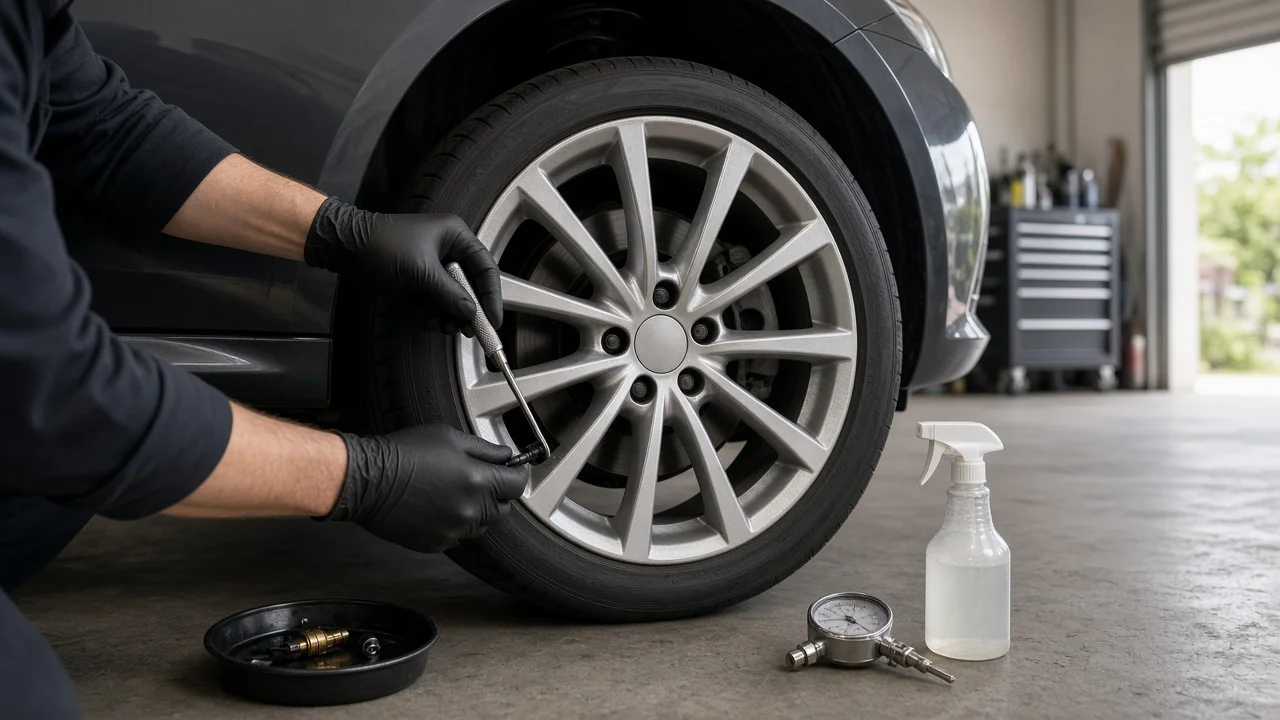
A leaking or cracked valve stem does not always require the expense and labor of dismounting a tire from its wheel. Many drivers ask whether a valve stem can be replaced without removing the tire, and the practical answer depends on wheel design, access to the back of the rim, and the type of stem installed. Understanding the difference between a snap-in rubber stem and a clamp-in metal assembly helps clarify when an in-place swap is possible and when tire dismounting becomes necessary for safe, reliable inflation pressure retention.
Essential answer
Yes, a valve stem can often be changed without removing the tire from the wheel, but the technique works best when the wheel is off the vehicle and the tire is deflated. With the wheel assembly laid flat, the sidewall can be pressed down near the valve hole to create enough clearance behind the rim. This exposes the base of the stem so it can be pulled through, though the tire bead usually remains seated on the opposite side.
The method is primarily suited to snap-in rubber valve stems, which are designed to compress and pull into place through the rim opening. Clamp-in metal stems, often used with tire pressure monitoring sensors, have a different retention system and may require specific hardware or full tire removal. If corrosion, a sensor, or a damaged rim seat is involved, the direct answer changes: some valve stems cannot be safely replaced without breaking the tire bead and working from inside the barrel.