Replace 2003 Jeep Grand Cherokee brake pads
The short answer
Replacing the brake pads on a 2003 Jeep Grand Cherokee is a standard disc-brake service. You lift the vehicle and remove the wheel, unbolt the caliper, swap the worn pads for new ones, retract the caliper piston, reinstall everything to the correct torque, and bed in the new pads. A home mechanic with basic tools and a jack and stands can do it. Getting the correct parts and specifications for your particular vehicle matters more than the general procedure.
The 2003 model year belongs to the WJ generation of the Grand Cherokee. Brake hardware within a model year can vary by trim, drivetrain and production date. Treat the steps below as a general outline, not a vehicle-specific service procedure.
What changes the answer for your vehicle
Front and rear axles use different pads. Buy the set for the axle you are servicing, or both sets if you plan to do all four wheels. Caliper and pad fitment can vary within the 2003 model year. Match parts by VIN, or compare the old pads with the new ones before you install them. The rear brakes may include a separate parking-brake mechanism. Check how it is arranged on your vehicle before you disassemble anything. Rotor condition decides whether a pad-only job makes sense. Scored, warped or thin rotors should be resurfaced or replaced at the same time.
General procedure outline
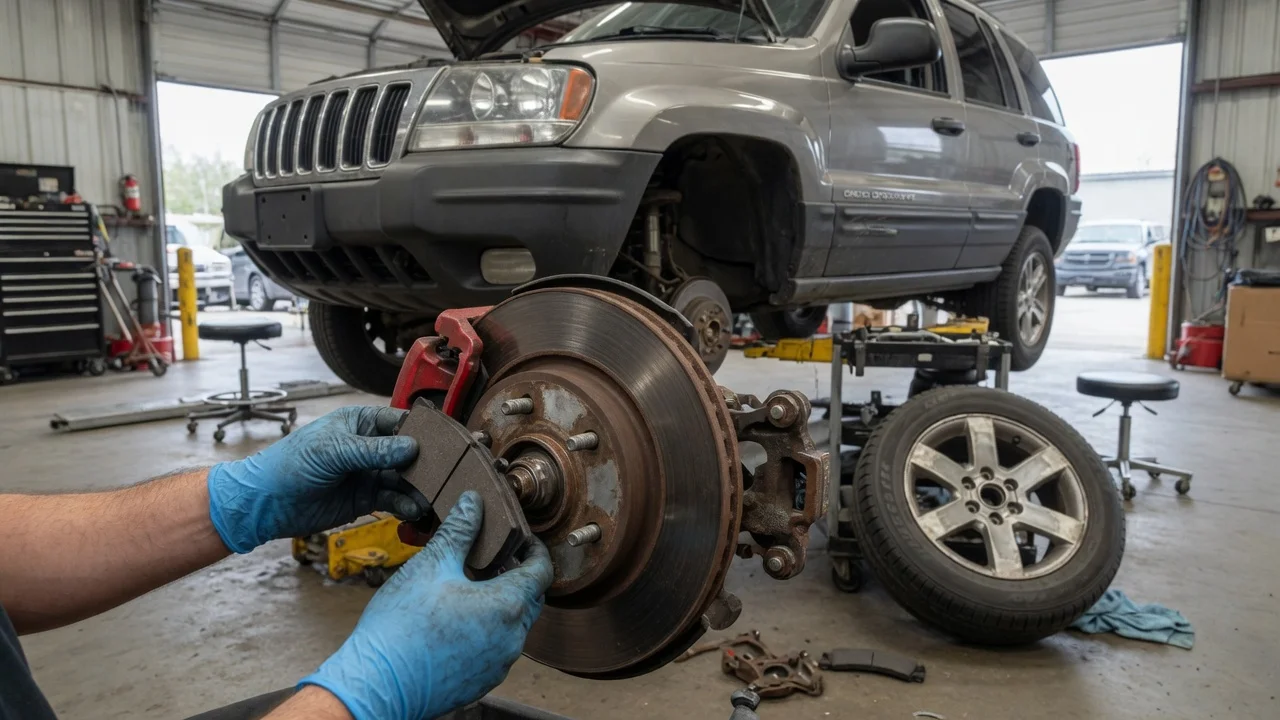
Park on level ground. Chock the wheels that stay on the ground, loosen the lug nuts, then raise the vehicle and support it on jack stands. Never work under a vehicle held only by a jack. Remove the wheel and inspect the brake assembly before you take it apart. A photo helps with reassembly. Remove the caliper mounting bolts and lift the caliper off the rotor. Support it so it does not hang by the brake hose. Remove the old pads and any clips or shims. Note which pad sits on the inner side and which on the outer side, and check whether a wear indicator is fitted. Inspect the rotor surface and thickness. Look over the caliper slides and boots, and clean and lubricate the slide points with a brake-specific lubricant where appropriate. Retract the caliper piston slowly with a caliper tool or C-clamp. Watch the brake fluid reservoir, because the level rises as the piston goes back. Install the new pads and any supplied hardware, then refit the caliper and tighten the bolts to the specified torque. Refit the wheel and torque the lug nuts to specification. Before you drive, pump the brake pedal until it feels firm. This pushes the pistons back against the new pads. Bed in the pads by following the pad manufacturer's procedure.
Specifications to confirm before you start
No verified figures were available for this article, so it does not state caliper bolt torque, lug nut torque, minimum rotor thickness, pad wear limits or part numbers. Take these values from a service manual for the 2003 Grand Cherokee or from the parts supplier's fitment data for your VIN. Do not rely on generic numbers.
When to stop and get help
Have the brakes inspected professionally before driving if any of these occur: the pedal stays soft after pumping, the fluid looks contaminated or leaks are visible, a caliper piston will not retract or a slide is seized, or a brake hose is damaged. These problems go beyond a routine pad replacement and affect braking safety directly.