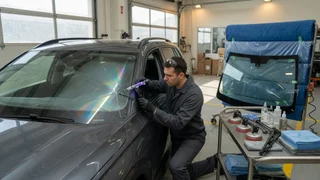
Repair truck glass
Truck glass repair becomes urgent once a windshield crack or side window chip starts spreading through the heavy-duty pane. Large commercial vehicles, pickups, and semis depend on structurally sound glazing that supports the cab, keeps weather out, and preserves clear visibility on long routes. A small impact pit from highway debris is not automatically a full replacement; repair methods can often stabilize the damaged area when the glass specification and laminate construction allow it. Understanding what truck glass repair covers helps owners choose between a resin fill, a reseal, or complete glass replacement without losing time off the road.
Essential answer
Truck glass repair is the process of fixing damaged glazing on commercial trucks, heavy-duty pickups, and other work vehicles rather than immediately replacing the entire pane. The scope typically includes repairing small bullseye cracks, star breaks, and chips in the windshield, as well as addressing failed sealing surfaces around side windows or rear glass. The direct answer depends on damage size, location, and glass type. Laminated windshields are often repairable when the defect is small and outside the driver's critical viewing area, while tempered side glass usually shatters and requires replacement instead of repair.
Fitment and glass specification shape whether a repair is practical. Heavy-duty truck windshields may be thicker, curved, or bonded with different adhesive compatibility requirements than passenger car glass. A proper repair must restore optical clarity and maintain the mounting points that keep the cab rigid. If the crack is in the driver's line of sight, a resin fill may still leave distortion that reduces visibility. Owners should treat a repairable chip as a time-sensitive problem because vibration, temperature swings, and chassis flex can turn a contained break into a long crack that forces a costlier replacement.
Diagnosing a problem
When a truck windshield shows a fresh impact point or moisture begins to collect along the lower edge of a side window, the first observable check is the size and depth of the damage. A shallow pit that has not penetrated the inner laminate layer may respond well to a clear resin fill, especially if it is smaller than a coin and away from the windshield edge. A long crack extending toward the glass boundary usually means the structural integrity of the pane is already compromised. Because heavy-duty vehicles flex more than cars, a crack near the edge can spread quickly and should be evaluated before the next trip.
Glass repair is not simply a cosmetic decision; it involves the sealing surface that keeps water, dust, and road noise out of the cab. If a windshield is leaking around the rubber or urethane bond, the problem may be failed adhesive rather than broken glass. In that case, a reseal or proper reinstallation may solve the leak without replacing the pane. However, any damage that reaches through multiple layers, is located directly in the driver's sightline, or extends into the mounting points requires a professional assessment. Do not continue driving if the crack distorts traffic signals or the glass has shifted out of its original position.