Repair Truck Glass: Understanding the Scope and Smart Next Steps
The Essential Answer
Truck glass repair is the process of restoring a damaged windshield or other glass panel to a structurally sound and visually clear condition without replacing the entire pane. The most common candidate is a windshield chip or crack caused by road debris. Repair is generally viable for small, non-complex damage located away from the driver's direct line of sight and the edge of the glass. If the damage is large, deep, or in a critical zone, replacement becomes the only safe option. The scope of repair covers laminated windshields almost exclusively; tempered side or rear glass shatters into small pieces when broken and cannot be repaired, only replaced.
Diagnosing the Damage: What You Can Check
Before deciding on a repair, assess the damage carefully. The type, size, and location of the break determine whether a repair is safe and effective. Use a clear ruler or a coin for scale, and photograph the damage in daylight.
Check the Type of Break
Bullseye or half-moon: A circular break with a dark impact point at the center. Usually the best candidate for repair. Star break: Short cracks radiating from a central impact point. Repairable if the legs are short and few. Combination break: A bullseye with radiating cracks. Repairability depends on total diameter and crack length. Surface pit: A small, shallow chip where glass is missing but no crack has formed. Often repairable with a fill resin. Long crack: A single crack extending more than a few inches. Not repairable; replacement is required.
Measure the Damage
As a general rule, a chip smaller than the diameter of a quarter (about 1 inch or 25 mm) and with a total crack length under 3 inches (about 75 mm) may be repairable. However, many repair technicians use stricter limits. A crack over 6 inches (about 150 mm) is almost always a replacement. If the damage penetrates both the outer and inner layers of the laminated glass, or if it reaches the edge of the windshield, repair is not safe because the structural integrity of the pane is compromised. In those cases, the windshield must be replaced.
Consider the Damage Location
Damage directly in the driver's primary viewing area, roughly the width of the steering wheel and the swept area of the wipers in front of the driver, is usually a reason to replace rather than repair. Even a well-executed repair leaves a small optical distortion that can catch light and distract the driver. Damage within 2 inches (about 50 mm) of the windshield's edge is also a replacement indicator because the edge is a high-stress zone where repairs often fail.
Conditions Requiring Stopped Use or Professional Diagnosis
If a crack is spreading while you drive, if you can feel the break with a fingernail from the inside of the glass, or if moisture or dirt has entered the break, stop attempting any do-it-yourself repair and consult a professional. A spreading crack means the pane is under stress and may fail further. Dirt or moisture inside the break prevents repair resin from bonding correctly. Continued driving is generally possible for a short distance, but the vehicle should not be considered structurally sound for any impact or rollover until the glass is professionally assessed.
The Repair Process
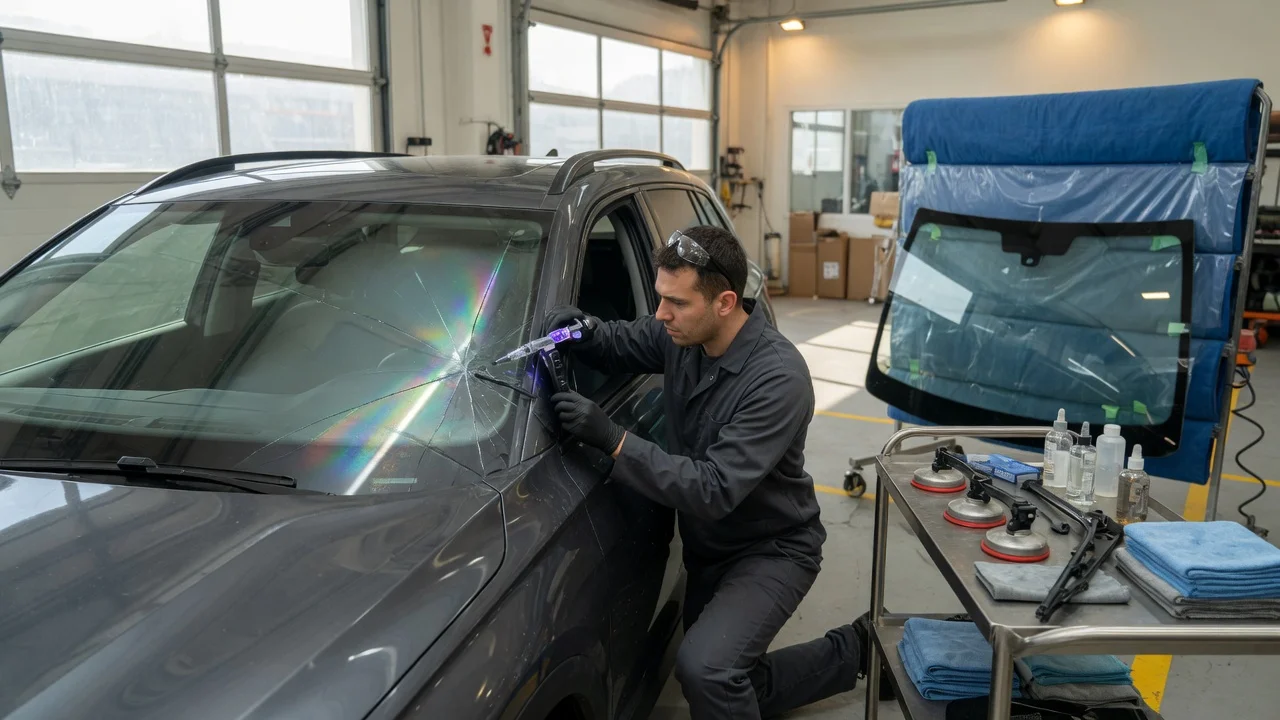
A professional repair involves cleaning the damaged area, creating a vacuum to remove air and moisture from the break, and injecting a clear, curable resin under pressure. The resin fills the crack and is then cured with ultraviolet light. The surface is scraped and polished. The result restores structural strength and prevents the crack from spreading, but it does not make the damage invisible. A small scar or distortion typically remains.
Cost, Time, and Insurance
A windshield repair typically takes 30 to 60 minutes. In many regions, comprehensive auto insurance policies waive the deductible for a repair, because replacing a windshield is more expensive for the insurer. Check your policy before paying out of pocket. A repair is usually a fraction of the cost of a replacement. If your truck has advanced driver-assistance systems such as a forward-facing camera mounted behind the windshield, a replacement may require recalibration of those systems, which adds time and expense. A simple chip repair that does not disturb the camera usually requires no recalibration.
Material Gaps and Uncertainty
Repair limits vary by equipment, resin type, technician training, and regional standards. The measurements given here are common industry thresholds, not universal legal requirements. A definitive yes-or-no decision requires an in-person inspection by a qualified glass technician. This guide does not replace that inspection for your specific truck, model year, and glass type.