Repair a tailgate dent
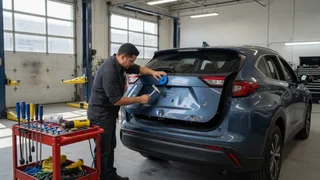
A dented tailgate is frustrating because it sits at eye level and gets noticed every time you approach the truck or SUV. Whether the damage came from a trailer tongue, a garage door, or a loose load, the repair usually falls between paintless work and conventional body refinishing. A do-it-yourself approach can reduce the visible crease without immediately replacing the panel, but the right method depends heavily on the metal's location, the depth of the impression, and whether the paint film has cracked or scraped through.
Essential answer
A DIY tailgate dent repair is most realistic when the impression is shallow, the paint is intact, and the damaged area is not directly over a reinforced edge or internal brace. On many trucks and SUVs, the tailgate's outer skin is a large, relatively flat steel or aluminum panel. That flatness makes gentle crowns and shallow depressions visible, but it also means a careful push from the back side can sometimes bring the metal back close to its original contour. The surrounding latch, hinge, strut, and actuator hardware usually remains serviceable if the impact did not distort the mounting structure.
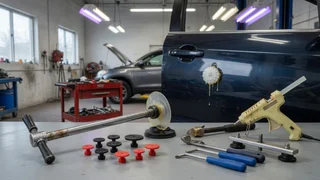
If the paint is cracked, deeply scratched, or the metal is stretched into a sharp crease, the scope changes. Stretched sheet metal will not simply spring back with suction or heat. A body filler and repaint route becomes more predictable, while paintless dent repair removes small deflections without sanding when the film can flex. Access is another important qualification. Some tailgates allow you to reach the inner cavity through a trim panel, drain opening, or access cover; others have internal stiffeners that block direct pressure. Vehicle fitment and the exact impact point determine whether a home repair is a cleanup of the visible surface or a temporary improvement before refinishing.
Diagnosing a problem
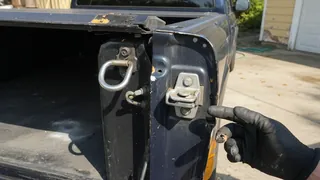
Begin by checking the dent in raking light and running a clean hand across the perimeter. A dull, shallow dish without a hard ridge often responds to controlled outward pressure. A sharp crease, paint split, or visible stretch indicates the sheet metal has yielded beyond its elastic range. Also inspect the tailgate's operating envelope after impact. Open and close it slowly while watching the latch and striker alignment. If the gate binds, drops, or requires a slam, the damage may have moved the panel relative to its hinge pivots, which is a structural concern rather than a simple cosmetic blemish.
Verify the weather seal still meets the gate evenly around the opening, and listen for unusual movement from the support cables or gas struts. A dent near the bottom edge can change local stiffness but usually does not affect the actuator or latching force. However, if the gate no longer closes squarely, the striker may be contacting the latch at an angle and wearing the mechanism. In that case, stop using the gate heavily and have the mounting alignment checked. For paint damage that has exposed bare metal, keep the area dry and sealed until you can apply primer or touch-up coating, because corrosion can begin long before the visible dent becomes worse.